


Buying wall art can be surprisingly difficult. You may find a print for $30, while another piece costs several hundred or even thousands of dollars. So, how much should you actually spend on wall art?
There is no fixed price that works for every home. A reasonable budget depends on the size of the artwork, the materials, how it was made, the room you are decorating, and how much you value the piece.
For most homes, it makes sense to choose a budget first and then look for artwork that fits both your space and your style. You do not need to spend a fortune to make an empty wall look finished.
How Much Does Wall Art Usually Cost?
Wall art can range from less than $20 to several thousand dollars. The price varies widely depending on whether you are buying a mass-produced print, a framed piece, or original handmade artwork.
As a general starting point:
- Under $50: Small prints, posters, simple framed artwork, and budget-friendly decor
- $50–$150: Better-quality prints, medium-sized framed pieces, and some handmade artwork
- $150–$500: Larger artwork, textured pieces, handmade wall art, and higher-quality framed options
- $500 and above: Large original paintings, statement pieces, and artwork made with premium materials
These are only rough price ranges. A $100 piece can be a better choice for your room than a $1,000 painting if the size, colors, and style work better with your space.

What Determines the Price of Wall Art?
Several factors affect how much wall art costs. Understanding them can help you decide whether a piece is worth the price.
Size
Size is one of the biggest factors.
A small 12-by-16-inch print usually costs much less than a 40-by-60-inch painting. Larger pieces require more material and often take more time to produce, frame, package, and ship.
This is also why large wall art can look expensive at first glance. You are not comparing the same amount of artwork.
If you have a large empty wall, buying one substantial piece may actually be more practical than purchasing several small pieces.
Materials
The materials used to create the artwork also affect the price.
A basic paper print will usually cost less than artwork printed on high-quality canvas. Handmade pieces may use paint, plaster, wood, textured mediums, or other materials that require more time and craftsmanship.
Frames can also add considerably to the final price. A simple unframed print and a professionally framed artwork may look similar online but have very different production costs.
Original vs. Reproduction
Original artwork is generally more expensive because you are buying a unique piece rather than a reproduction.
Prints can be a practical option if you love a particular style but have a smaller budget. They allow you to bring artwork into your home without paying the price of an original painting.
Neither option is automatically better. It depends on what you want from the piece.
If uniqueness and craftsmanship are important to you, handmade or original artwork may be worth spending more on. If you mainly want a certain color or visual style, a good-quality print may be enough.
Handmade vs. Mass-Produced
Handcrafted wall art often costs more than mass-produced decor because more time and attention go into making each piece.
For example, textured artwork may involve multiple layers, hand-applied materials, and finishing work. Small variations can also make each piece slightly different.
If you are trying to avoid artwork that looks generic, this can be one reason to spend more.
Framing
Do not forget to include the frame when setting your budget.
A $70 artwork may become a $150 purchase after adding a quality frame. On the other hand, an unframed canvas or gallery-wrapped piece may not need additional framing.
Before comparing prices, check what is included.

How Much Should I Spend on Wall Art for Each Room?
Your wall art budget can vary depending on the room, wall size, and the role you want the artwork to play. These ranges can give you a general starting point.

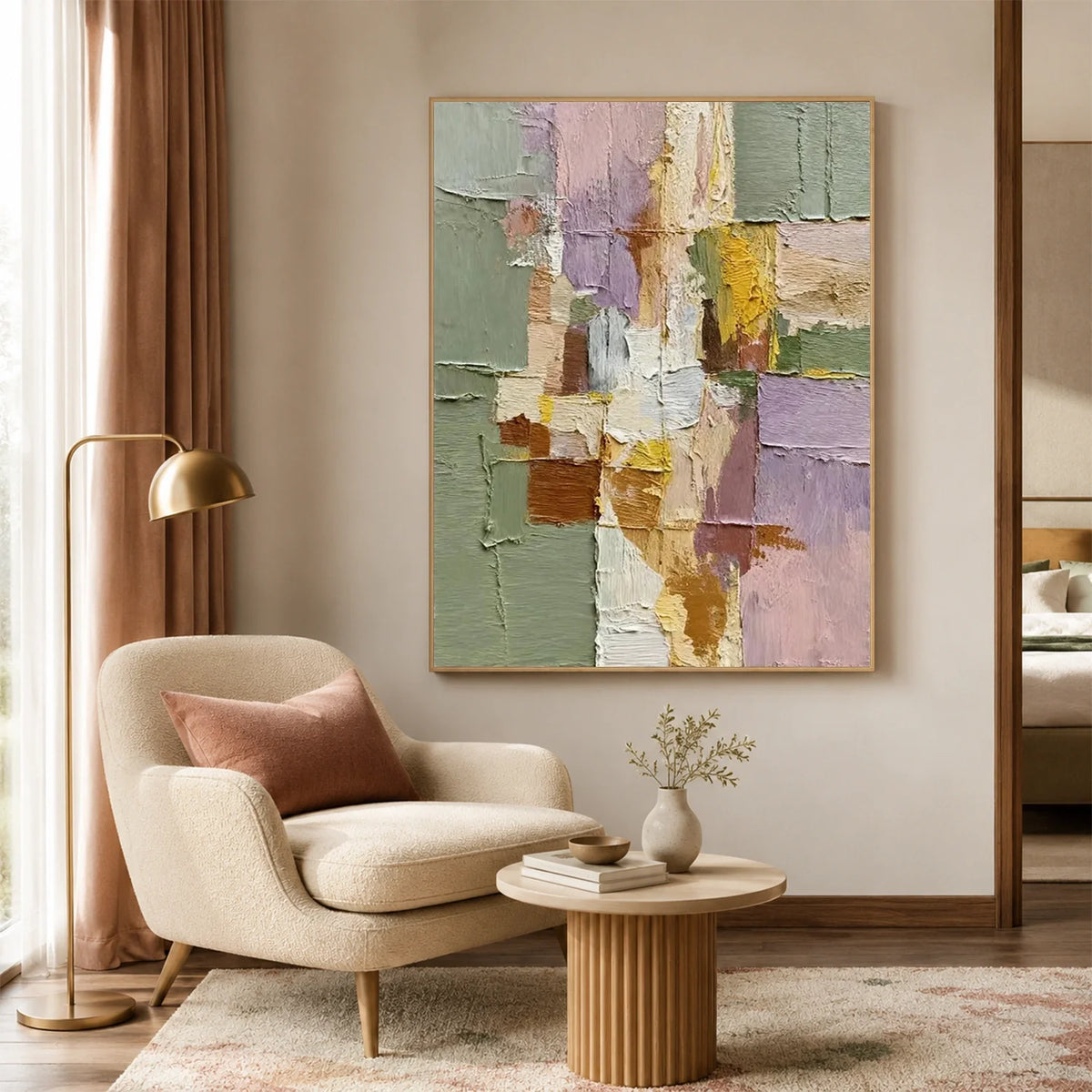
Living Room: $150–$500+
The living room is often a good place to invest in wall art, especially for a large wall above a sofa or fireplace. A large statement piece may cost $200–$500 or more, while smaller artwork can work with a lower budget.
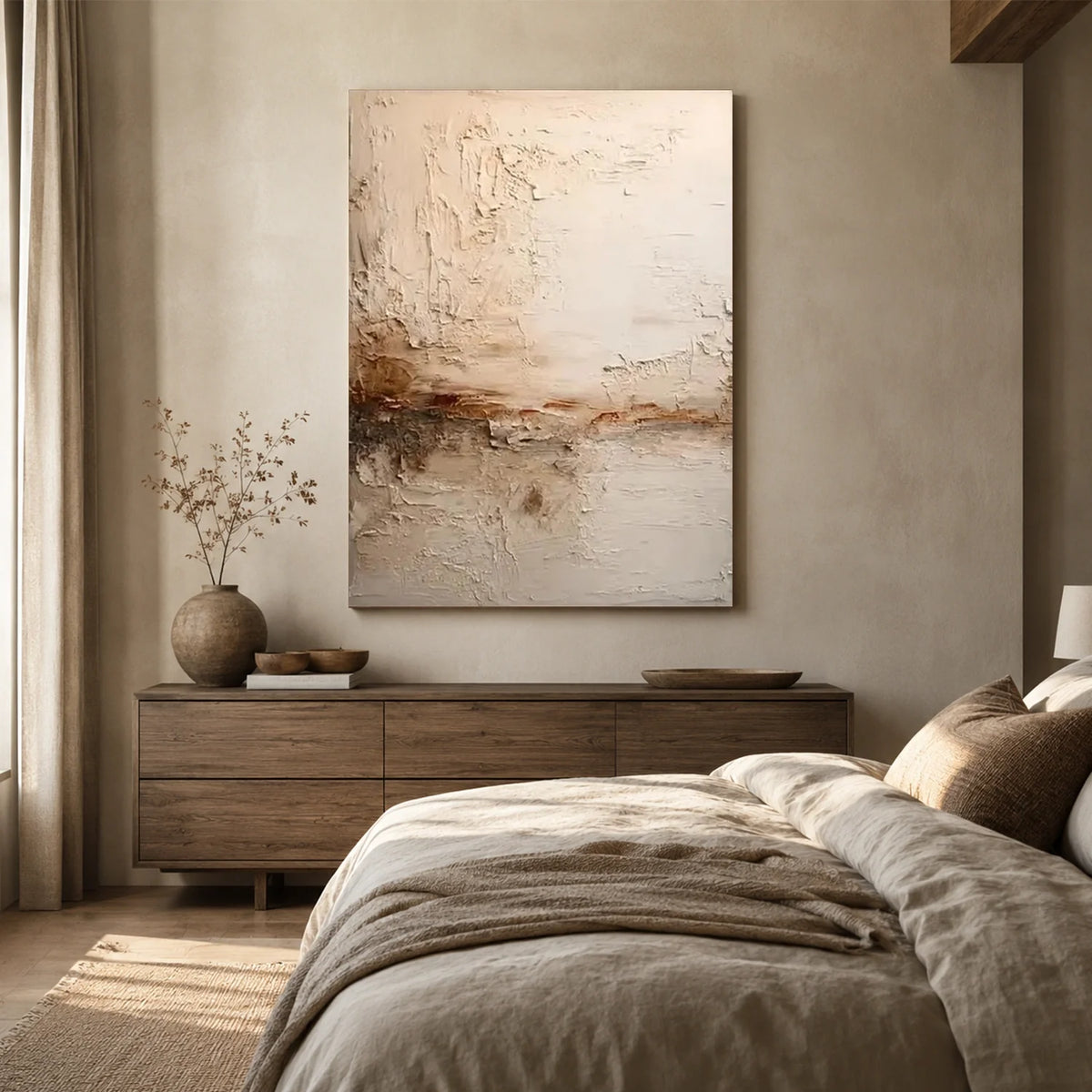
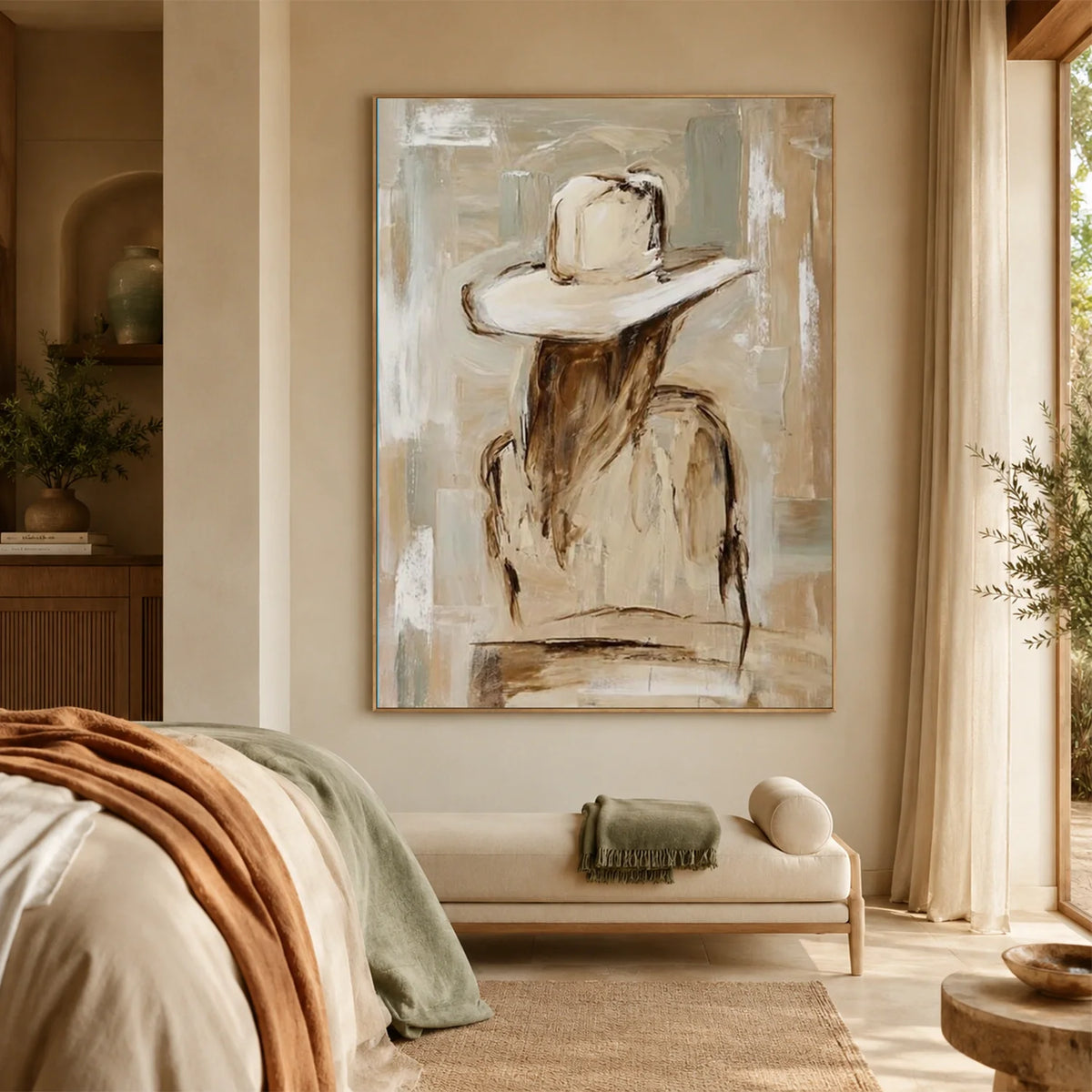
Bedroom: $50–$250
You usually do not need to spend as much on bedroom wall art. Framed prints, abstract artwork, and textured pieces in the $50–$250 range can add personality without overwhelming the room. Focus on colors and designs that create a relaxed atmosphere.
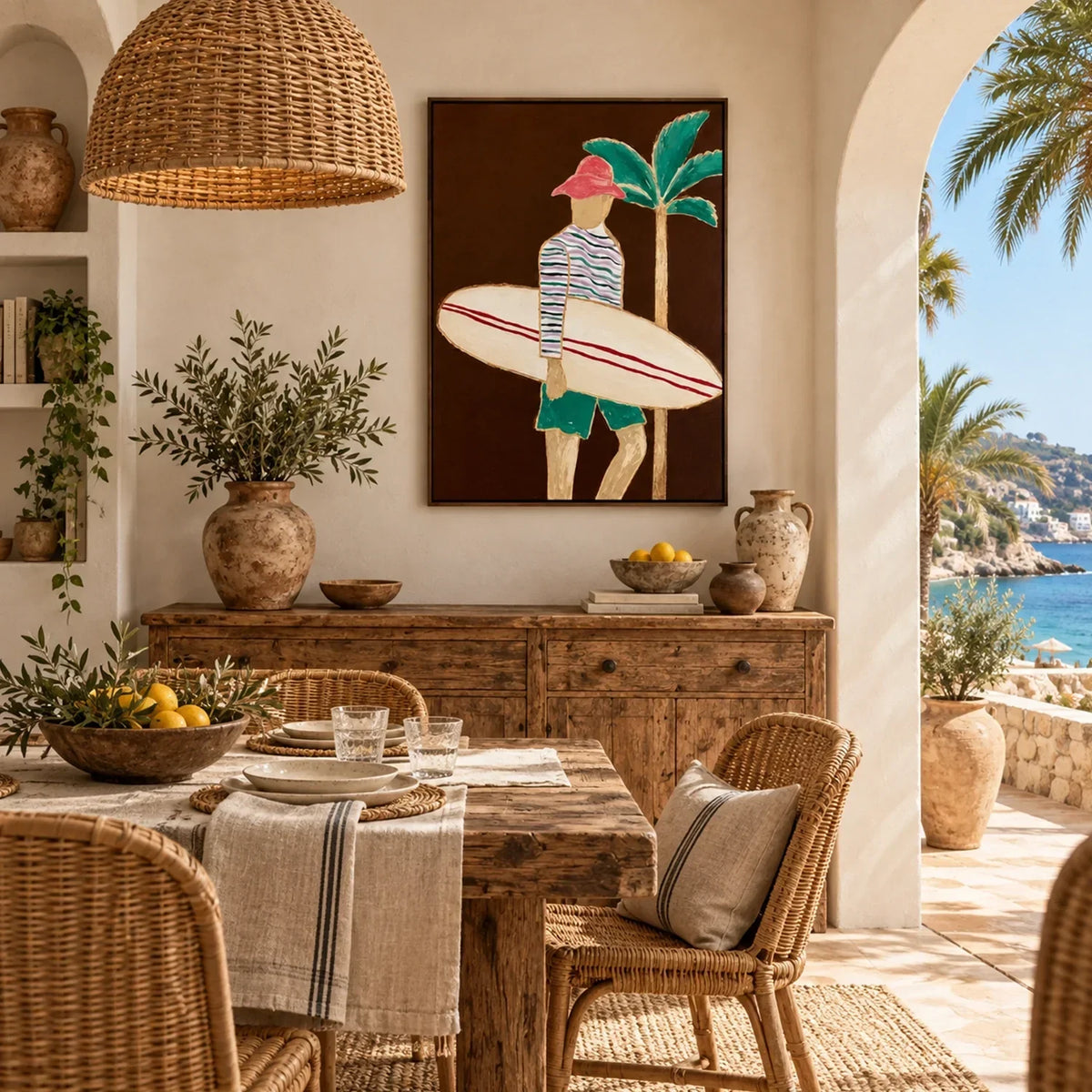
Dining Room: $100–$350
A medium-sized artwork can add a focal point to a dining room without competing with the furniture. If the room already has plenty of color or patterns, consider a simple design or textured artwork.
Entryway: $50–$200
A single piece above a console table can make an entryway feel more finished. Since entryways are often smaller, choose artwork based on the available wall space rather than simply choosing the largest piece you can afford.
Home Office: $50–$250
Wall art can make a home office feel more personal and inviting. A medium-sized piece or a few coordinated artworks can work well behind or near a desk. Choose something you enjoy looking at while you work.
Kids' Room: $30–$200
For a kids' room, a smaller budget is often practical because their interests can change quickly. Colorful prints, playful designs, and simple artwork can add personality without requiring a large investment.
How Much Should I Spend on a Large Piece of Wall Art?
Large wall art generally costs more than smaller pieces because it requires more materials, time, and often more expensive shipping or framing.
As a general guide, you might spend $150–$500 on a large piece of wall art, while oversized or handcrafted pieces can cost $500 or more. The exact price depends on the size, materials, craftsmanship, and whether the artwork is original or mass-produced.
However, size alone should not determine the price. A $300 piece may offer better value than a $500 piece if it is better made, uses higher-quality materials, or fits your space more effectively.
If you are decorating a particularly large or empty wall, spending more on one substantial piece can also be more practical than buying several smaller artworks.

What Is a Reasonable Wall Art Budget?
A practical approach is to decide how important the artwork is going to be in the room.
If you are decorating a rental, updating a guest room, or simply filling a small empty wall, spending $30 to $100 may be enough.
For a main living room wall, bedroom focal point, or dining room, you may want to spend somewhere around $100 to $500, especially if you are looking for a larger or more distinctive piece.
If the artwork is going to be the main focal point of the room, it can make sense to spend more. A large, well-chosen piece can have a bigger visual impact than several inexpensive decorations that compete for attention.
The key is to think about the artwork as part of the room rather than looking for the lowest possible price.
How to Save Money When Buying Wall Art
You do not have to buy the most expensive artwork you can find. There are several ways to keep your budget under control.
Choose One Large Piece Instead of Several Small Pieces
If you have a large blank wall, several small pieces may seem cheaper individually, but the total cost can add up quickly.
One large statement piece can sometimes create a more finished look with fewer items.
Look for Unframed Artwork
Frames can be expensive, especially for large artwork.
If you are comfortable choosing your own frame or displaying the artwork without one, an unframed option can reduce the overall cost.
Consider Handmade Pieces
Handmade does not always mean extremely expensive. Smaller handcrafted pieces can offer more texture and character without requiring the budget of a large original painting.
Buy Artwork You Actually Love
This sounds obvious, but it can save money in the long run.
Buying inexpensive artwork simply because a wall feels empty can lead to replacing it later. Spending a little more on one piece you genuinely like may be more economical than repeatedly buying decor that does not feel right.
FAQ
Is $100 a lot to spend on wall art?
Not necessarily. A $100 piece can be reasonable if it is well-made, the right size for your space, and something you genuinely like.
How much should I spend on large wall art?
A budget of $150–$500 can provide plenty of options for large wall art, while oversized or handcrafted pieces may cost more.
Is expensive wall art worth it?
It can be if you value the artwork’s materials, craftsmanship, uniqueness, and long-term appeal. Price alone does not determine quality.
Should I buy one large piece or several smaller pieces?
One large piece can work well as a focal point on a large wall, while several smaller pieces can create a more collected gallery-wall look. The best choice depends on your space and style.
Final Thoughts
So, how much should you spend on wall art?
For many homeowners, $50–$500 offers plenty of options, but there is no one-size-fits-all budget. Focus on the artwork’s size, quality, and how well it fits your space rather than the price alone.
Good wall art does not have to be expensive. It just needs to suit your home and be worth the money to you.
If you are looking for wall art with more texture and character, Eleanos Gallery offers handcrafted wall art in a range of abstract, minimalist, and textured styles.




Leave a comment
This site is protected by hCaptcha and the hCaptcha Privacy Policy and Terms of Service apply.