



Choosing the right desk layout can make a big difference in how comfortable and functional your home office feels. The best home office desk layout depends on the size of the room, where the windows and doors are located, how you use the space, and how much storage you need.
Whether you have a dedicated office or a small workspace in a bedroom or living room, a thoughtful desk placement can make the room easier to work in and more visually balanced.
What Is the Best Home Office Desk Layout?
For most home offices, the best desk layout is one that gives you enough workspace, comfortable movement, and access to natural light without creating distractions. Placing the desk against a wall or near a window is often a practical choice, especially in a smaller room.
However, there is no single layout that works for every home office. Before deciding where to put your desk, consider the room's size, traffic flow, lighting, and what you need to keep within easy reach.
Place Your Desk Against a Wall
Placing a desk against the wall is one of the easiest home office layouts to work with. It keeps the center of the room open and gives you a clear wall for shelves, artwork, or other storage.
This layout is particularly useful in a small home office because it makes efficient use of limited floor space. You can also add floating shelves above the desk to create additional storage without taking up room on the floor.
Put Your Desk Near a Window
A desk near a window can bring plenty of natural light into your workspace. It can also make the office feel brighter and more inviting, especially if you spend several hours working there.
If possible, position the desk so that the window is beside you rather than directly in front of or behind your monitor. This can help reduce glare and make it easier to see your screen.

Face Your Desk Toward the Door
Some people prefer to position their desk so they can see the door while working. This layout can make the room feel more open and lets you see people entering without having to turn around.
It can also work well for video meetings, especially if you have a clean and attractive wall behind your desk. Artwork, shelves, or a few simple decorative pieces can create a polished background without making the space feel cluttered.

Place the Desk in the Center of the Room
If you have a larger home office, you don't necessarily need to push the desk against a wall. Placing it in the center of the room can create a more open and intentional layout.
This works particularly well with larger desks, L-shaped desks, or executive-style setups. Just make sure there is enough space around the desk for comfortable movement.

Try an L-Shaped Desk Layout
An L-shaped desk can be useful if you need more workspace or use multiple monitors. One side can be used for your computer, while the other can hold notebooks, equipment, or paperwork.
This layout works best in a corner or along two adjoining walls. In a small room, however, make sure the desk doesn't block doors, windows, or walking paths.

Create a Desk and Storage Wall
If storage is a priority, consider combining your desk with wall-mounted shelves or cabinets. This creates a dedicated work zone while keeping office supplies organized and easy to reach.
A combination of open shelves and closed storage can also make the space look more balanced. Use the open sections for books, plants, and decorative items, while keeping less attractive office supplies behind cabinet doors.

Use a Small Desk for a Small Room
A small room doesn't always need a large desk. A compact desk can provide enough workspace while leaving more room for a chair, storage, and comfortable movement.
Wall-mounted desks and slim desks are also useful options when floor space is limited. Keep the area around the desk relatively simple to prevent the office from feeling cramped.

Position the Desk for Video Calls
If you regularly work from home, think about what will appear behind you during video calls. A blank wall, simple artwork, bookshelf, or a few well-placed decorative pieces can create a clean and professional background.
Avoid placing the desk directly in front of a cluttered storage area. A simple background can make video calls feel more polished without requiring a complete office makeover.

Leave Enough Space Around Your Desk
A good desk layout is not just about where the desk sits. You also need enough room to pull out your chair, walk around comfortably, and access drawers or storage.
Avoid placing the desk where it blocks a doorway, window, or frequently used walkway. Even a beautiful office can become frustrating if the layout makes everyday movement difficult.

Best Desk Layout for a Small Home Office
Place the Desk Against a Wall
Placing your desk against a wall is one of the easiest ways to save space in a small home office. It keeps the center of the room open and also gives you a wall for shelves, artwork, or storage.
Use a Corner for Your Desk
A corner can be an overlooked but useful workspace. A compact or L-shaped desk can fit neatly into the corner while making use of space that might otherwise go unused.
Choose a Compact Desk
A small office doesn't need a large desk. Choose a desk that provides enough room for your computer and daily essentials without taking up more floor space than necessary.
Use Vertical Space
When floor space is limited, make better use of your walls. Floating shelves, wall-mounted organizers, and tall storage can keep office supplies within reach while leaving the floor relatively clear.
Keep the Layout Simple
Avoid filling a small office with too much furniture or decoration. Leave enough space to move your chair comfortably and choose only the pieces you actually need for work and storage.
Consider Natural Light
If possible, position your desk near a window to take advantage of natural light. Placing the window to the side of the desk can provide daylight while helping reduce glare on your computer screen.

What Should You Put on the Wall Behind Your Desk?
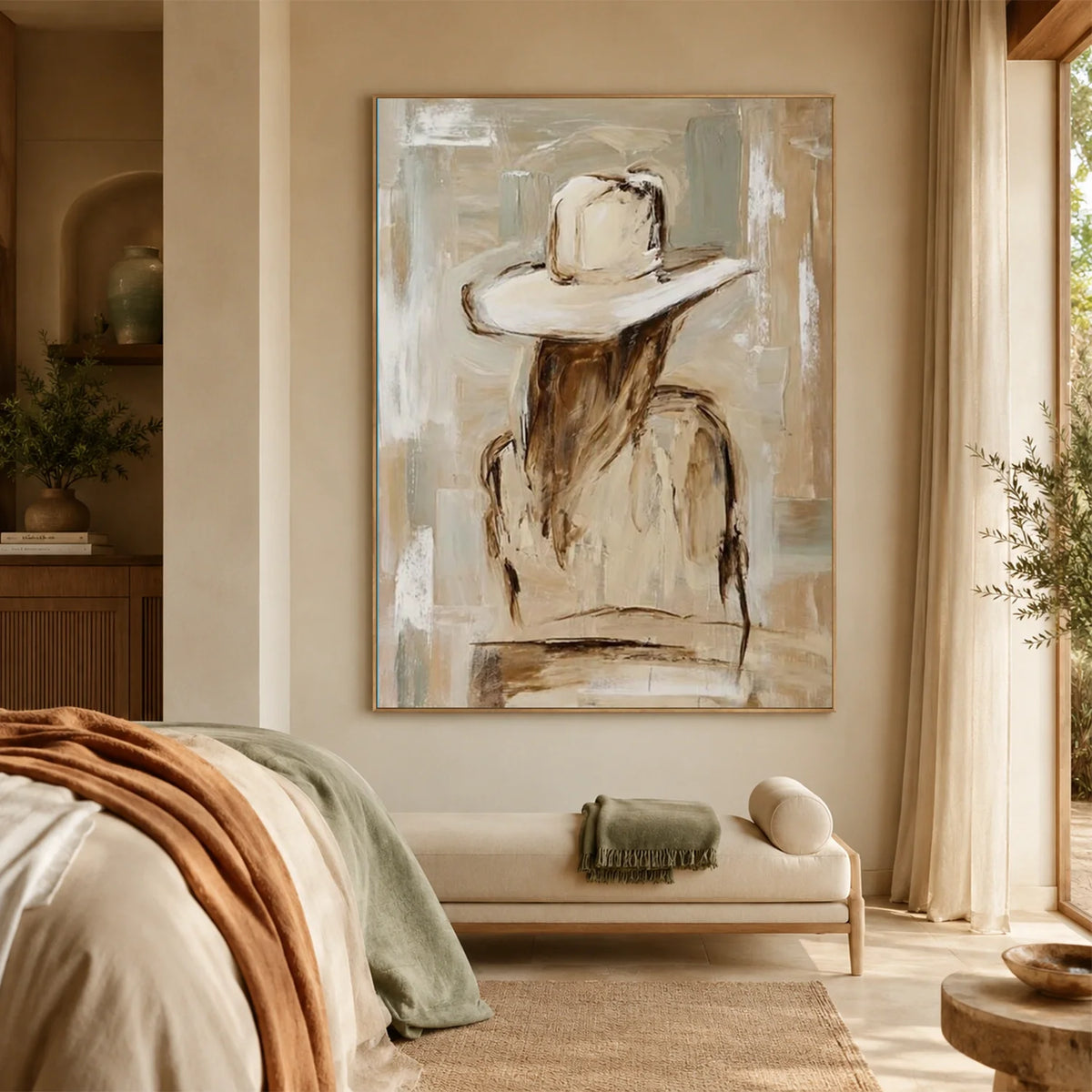
The wall behind your desk can become an important part of your home office design. You can use it for artwork, floating shelves, a gallery wall, plants, or practical storage.
If you prefer a simple look, one large piece of wall art can create a focal point without making the workspace feel busy. For a more functional setup, combine artwork with shelves or wall-mounted organizers.
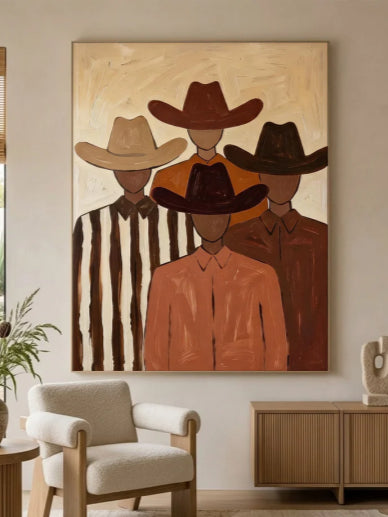
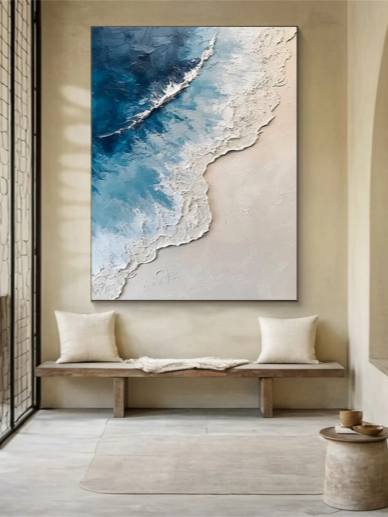
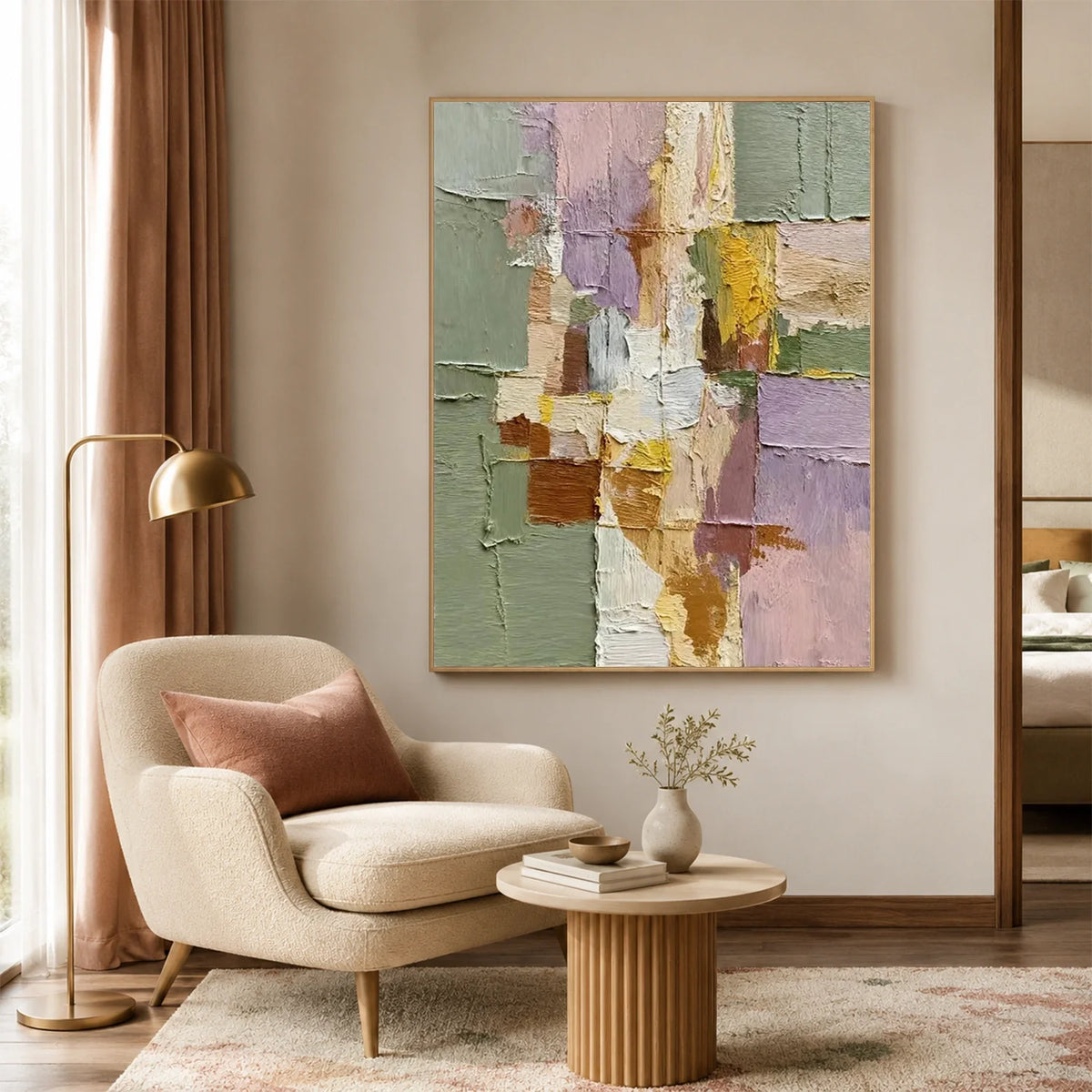
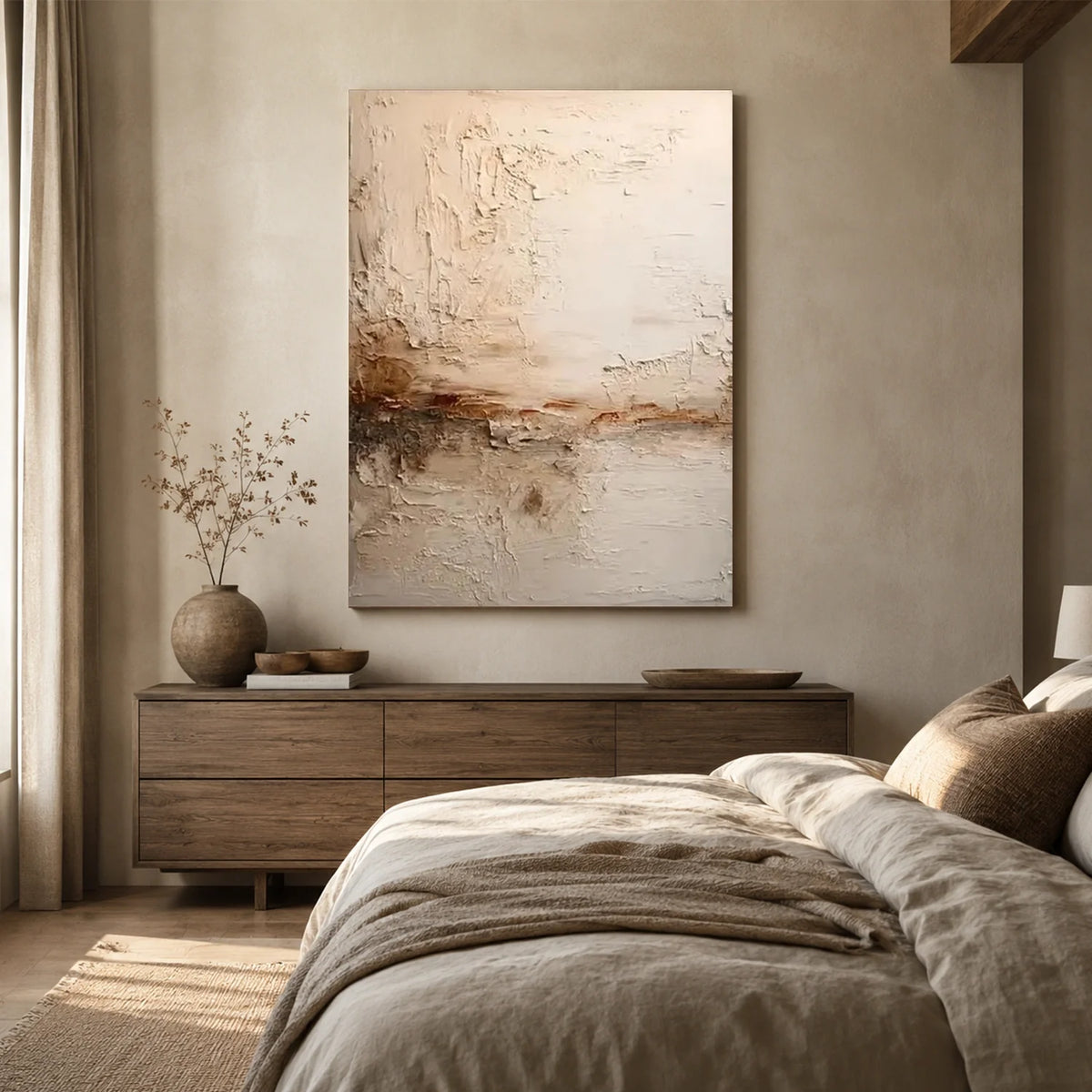
If you're looking for handcrafted designs, Eleanos Gallery offers a variety of handcrafted wall art, including textured, minimalist, and abstract pieces. These styles can add color and texture to the wall behind your desk while keeping the overall workspace clean and balanced.

Common Home Office Desk Layout Mistakes
Choosing a Desk That Is Too Large
A large desk may provide plenty of workspace, but it can quickly overwhelm a small home office. Choose a desk that fits the room comfortably while still giving you enough space for your everyday work.
Blocking Windows or Doors
Placing a desk in front of a door or blocking a window can make the room harder to use. Before settling on a layout, make sure you can move around easily and access the parts of the room you use regularly.
Ignoring Screen Glare
Positioning your monitor directly in front of or behind a window can create uncomfortable glare. If possible, place the desk so natural light comes from the side rather than directly onto the screen.
Leaving Too Little Space Around the Desk
A desk may fit physically into a room but still make the space feel cramped. Leave enough room to pull out your chair, stand up, and move around comfortably.
Forgetting About Storage
Without enough storage, a home office can become cluttered quickly. Consider adding shelves, drawers, or wall-mounted organizers near the desk so frequently used items are easy to access.
Overcrowding the Workspace
Too much furniture or decoration can make even a well-planned office feel busy. Keep the desk area simple and choose a few useful or decorative pieces instead of trying to fill every available space.
FAQs
Should a home office desk face the wall or the room?
Both can work. Facing the wall can reduce distractions and save space, while facing the room creates a more open feel.
Is it better to put a desk near a window?
A desk near a window can provide natural light. Position the window to the side when possible to reduce screen glare.
What should be behind a desk for a home office?
Artwork, shelves, plants, or simple storage can all work. For video calls, keep the background clean and uncluttered.
How much space should you leave around a desk?
Leave enough room to pull out your chair and move around comfortably without blocking doors or walkways.
Final Thoughts
The best place for your home office desk depends on more than just available floor space. Natural light, room layout, storage, movement, and your video-call background all deserve consideration.
In many rooms, a desk near a window, against a wall, or in a corner can work well. The goal is to create a workspace that feels comfortable, functional, and easy to use every day.
Take a little time to test different positions before settling on one. Even moving your desk a few feet can change the lighting, layout, and overall feel of your home office.






Leave a comment
This site is protected by hCaptcha and the hCaptcha Privacy Policy and Terms of Service apply.