
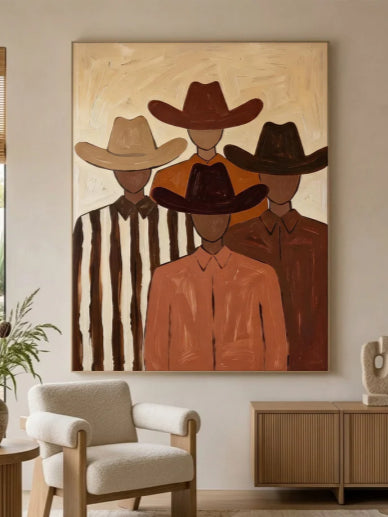
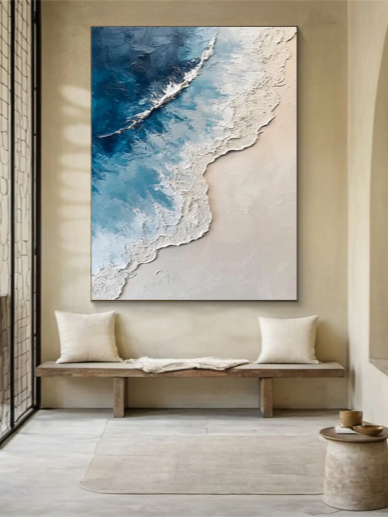


Hanging a new piece of artwork is one of the quickest ways to transform a room. But as soon as you hold that canvas up against the wall, a common interior design question pops up: Should wall art be centered on the wall, or centered over your furniture?
Hanging art in the wrong spot can instantly make a room feel unbalanced, even if the artwork itself is stunning. Here is a clear, visual guide to help you decide which rule to follow for every room in your home.
Should You Center Wall Art on the Wall or Furniture?
As a general rule, center artwork above the furniture it is meant to complement. This creates a visual connection between the painting and the furniture, making the entire arrangement feel more balanced.
For example, if you're hanging a painting above a sofa, align the center of the artwork with the center of the sofa rather than the entire wall.

However, this doesn't mean you should always ignore the wall's dimensions. If you're decorating a large, empty wall without furniture underneath, centering the artwork on the available wall space is usually a better option.

The key is to identify the main focal point of the area before deciding where to hang your art.
How to Center Wall Art Above Different Furniture
Different pieces of furniture create different visual layouts. Here are some simple guidelines for positioning artwork in common areas of your home.
Above a Sofa
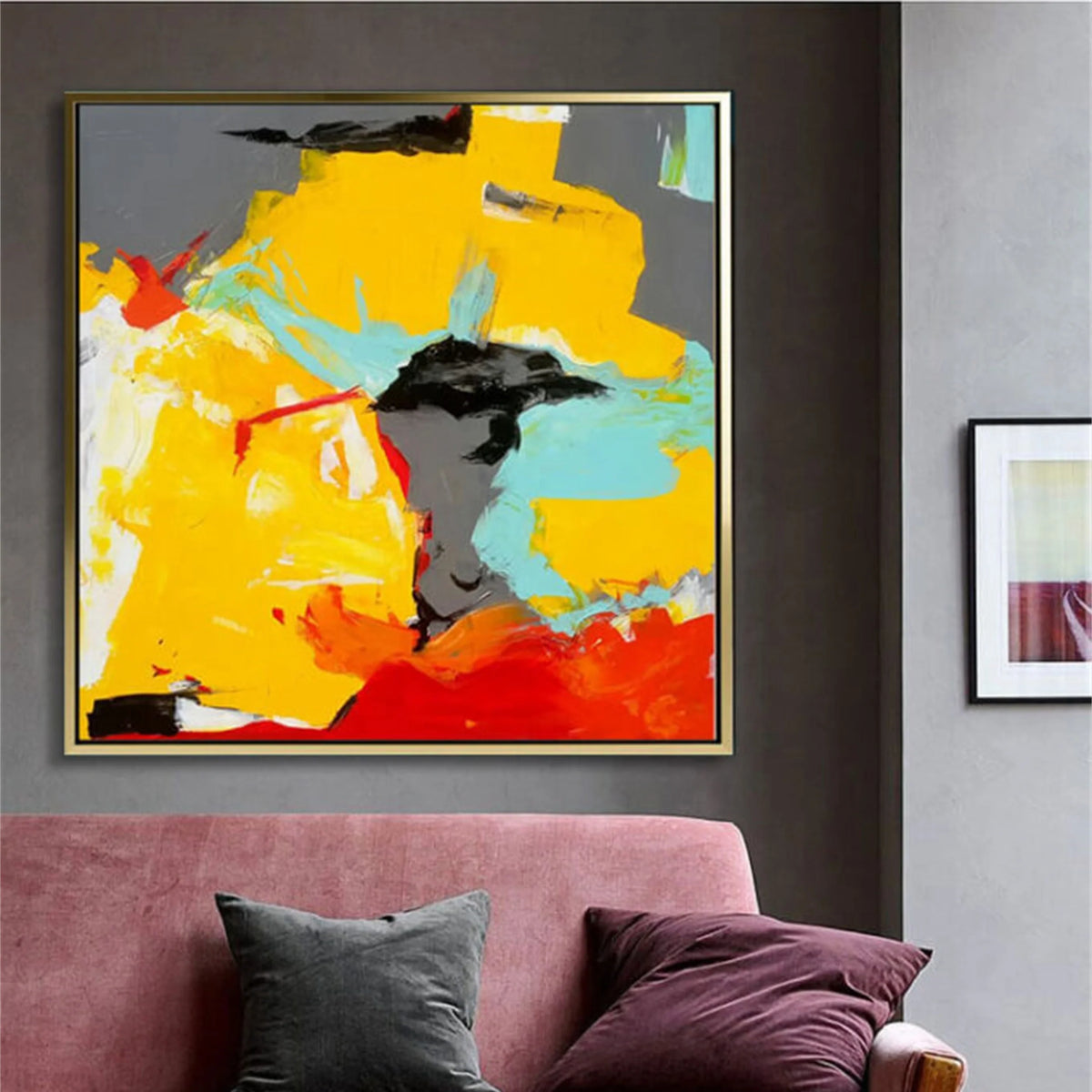
When hanging artwork above a sofa, center it with the sofa rather than the entire wall. This helps connect the artwork to the seating area and creates a more intentional look.
For size, a good general guideline is to choose artwork that is about two-thirds to three-quarters of the sofa's width. A painting that's too small may look disconnected, while one that's too large can overwhelm the furniture.
If you're using multiple pieces, treat the entire arrangement as one large artwork and center the group above the sofa.
Above a Bed
The same principle applies to bedroom walls. Center the artwork with the bed or headboard rather than the full width of the wall.
A wide horizontal painting works well above a large headboard, while two or three smaller pieces can create a more decorative arrangement.
For a balanced appearance, make sure the artwork is not wider than the bed and leave enough space between the frame and the headboard.
Above a Console Table
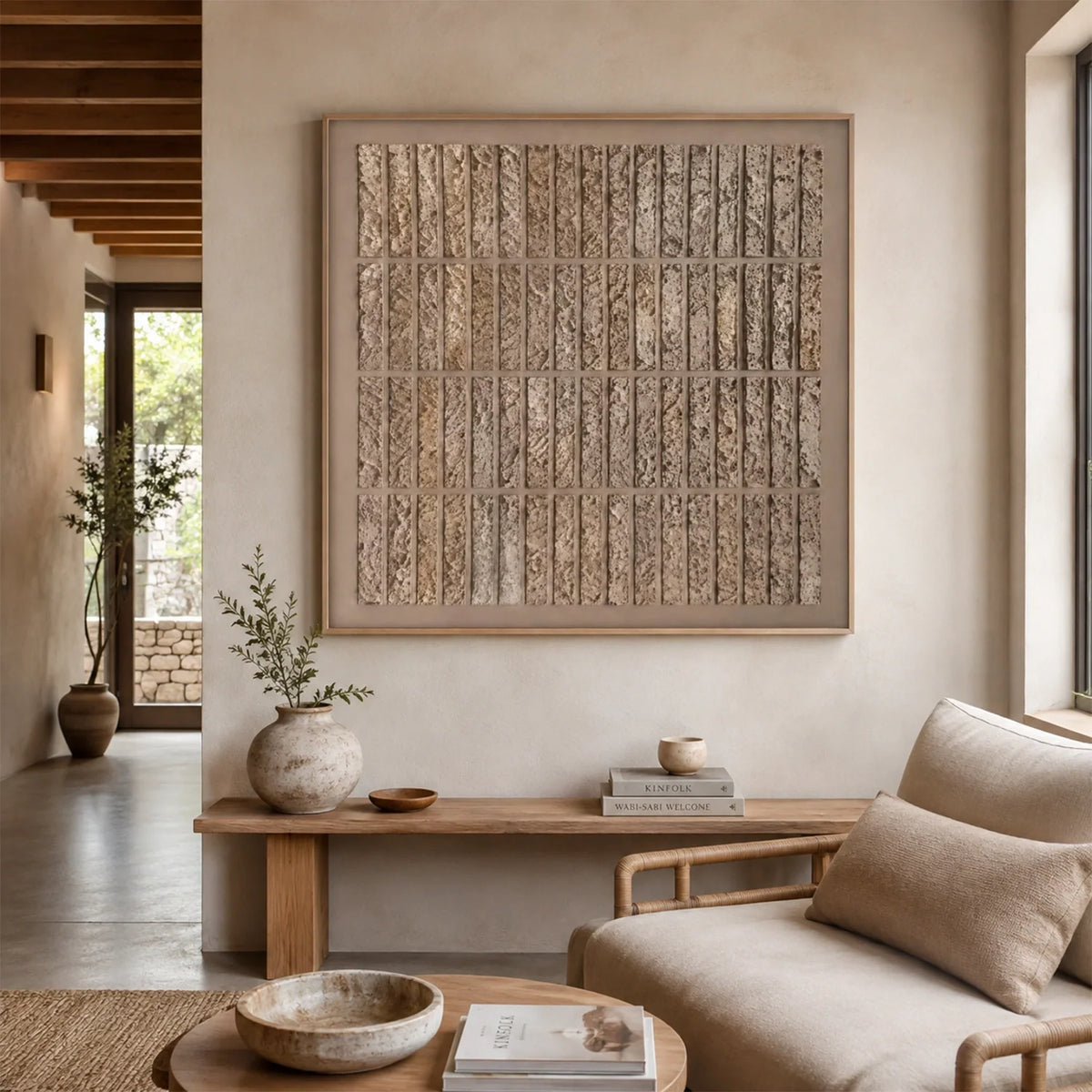
Console tables are often placed in entryways, hallways, and living rooms. When hanging artwork above one, center the painting with the table to create a natural connection between the two.
You can choose one larger statement piece for a simple look or combine several smaller artworks for a gallery-style display.
If the table is narrow, avoid choosing artwork that's too wide or visually heavy for the space.
Above a Dining Table
Artwork above a dining table should generally follow the table's center rather than the center of the entire wall.
A horizontal painting is often a good fit for a rectangular dining table because its proportions complement the furniture. For round tables, consider a square or compact artwork that doesn't extend too far beyond the table's visual boundaries.

When Should You Center Artwork on the Wall Instead?
Although centering art above furniture is usually the better approach, there are situations where the wall itself should be your reference point.
On an Empty Wall
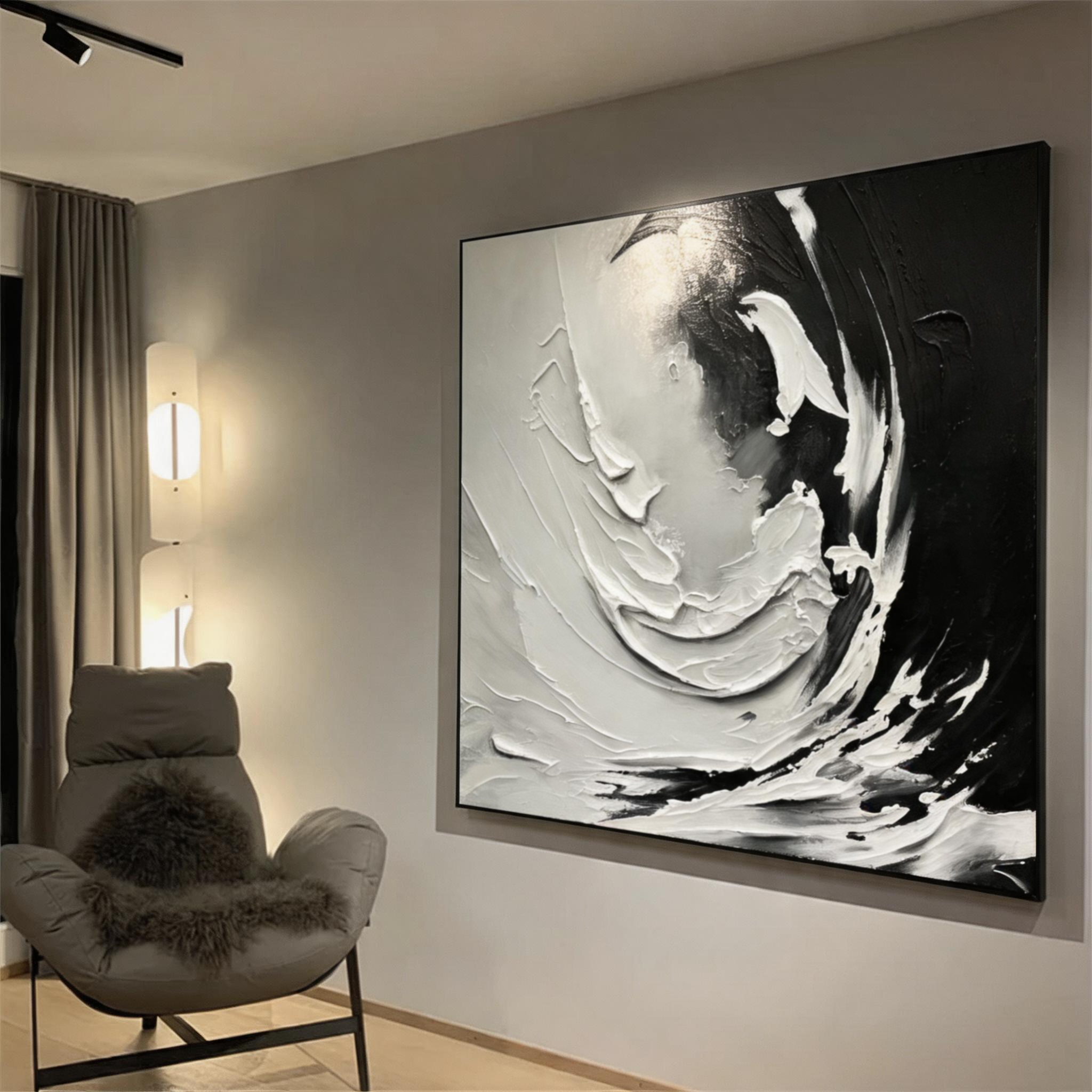
If there's no sofa, table, or other large furniture underneath, use the available wall space as your guide. Centering a painting horizontally on the wall creates a simple and balanced focal point.
This works particularly well in hallways, open living spaces, and large blank areas.
Above a Fireplace
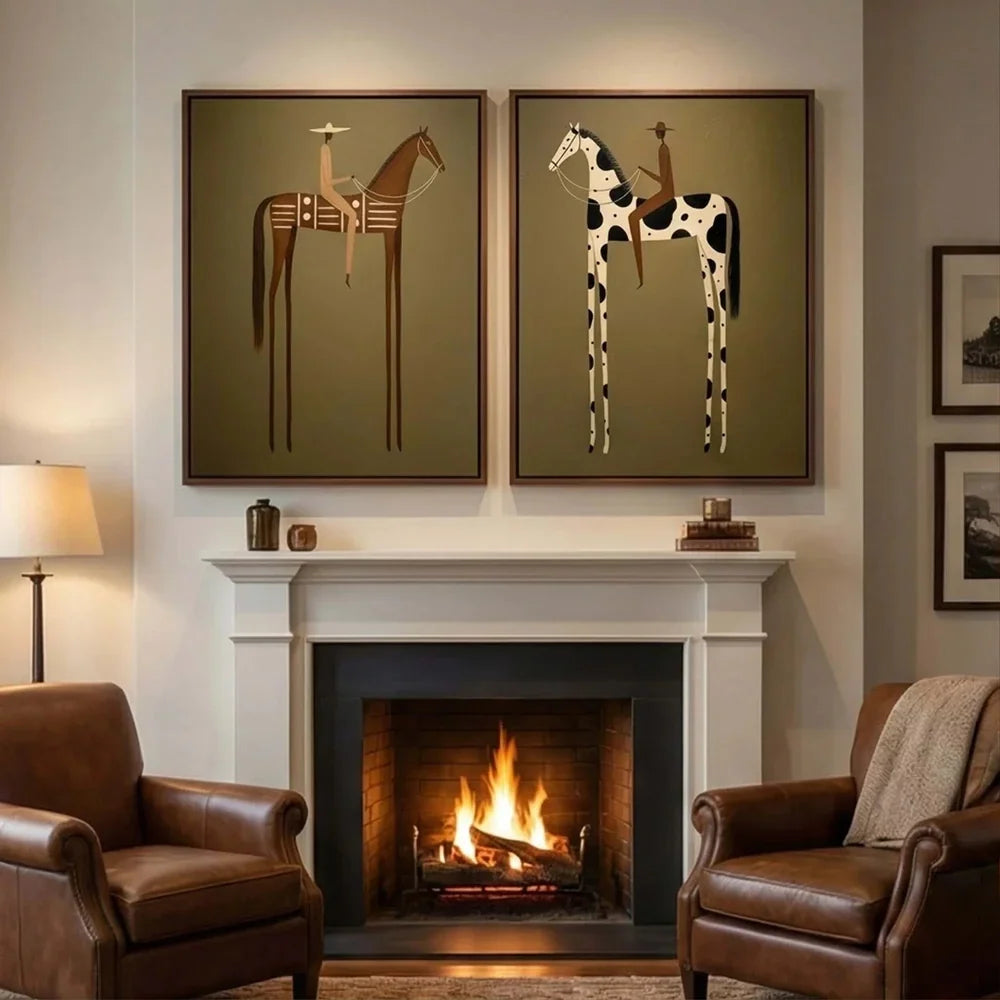
When decorating above a fireplace, center the artwork with the fireplace or mantel. These architectural features naturally serve as the focal point, even when they aren't positioned in the middle of the wall.
A horizontal painting or a large vertical artwork can both work, depending on the width and height of the fireplace.
In Asymmetrical Spaces
Not every room has a perfectly symmetrical layout. A sofa may be positioned closer to one side of the wall, or a window or doorway may take up part of the available space.
In these situations, don't automatically center the artwork on the entire wall. Instead, consider how the painting relates to the furniture and surrounding objects.
Sometimes a slightly off-center arrangement looks more balanced because it takes the room's overall layout into account.

How High Should You Hang Wall Art?
Besides horizontal alignment, hanging height is another important part of artwork placement.
A common guideline is to position the center of the artwork around 57–60 inches from the floor, which is approximately average eye level. However, this is not a strict rule, especially when hanging art above furniture.
When placing artwork above a sofa, bed, or console table, leave approximately 6–8 inches between the bottom of the frame and the furniture below. This helps the artwork feel visually connected to the furniture without making the arrangement look cramped.
For gallery walls, consider the entire collection as one unit when deciding on its height. This makes it easier to keep the overall display balanced.
You Might Also Like: How High to Hang Wall Art: The Ultimate Rule of Thumb
How to Center Multiple Pieces of Wall Art
Centering a single painting is relatively simple, but arranging several pieces can be more challenging.
When hanging multiple artworks together, the most important thing is to treat the entire arrangement as one visual unit rather than centering each piece individually.
Here are three easy approaches:
Two or Three Paintings Side by Side
When displaying multiple paintings above a sofa or bed, arrange them with consistent spacing. Measure the total width of the group, including the gaps between frames, and align its center with the furniture below.
A Gallery Wall
For a gallery wall, combine different artwork sizes and orientations to create an arrangement that feels balanced. Start by identifying the overall boundaries of the display, then center the entire composition above the furniture.
An Asymmetrical Arrangement
You don't always need to place every artwork at the same height. An asymmetrical layout can feel more relaxed and personal, as long as the visual weight is distributed evenly.

Common Wall Art Placement Mistakes to Avoid
Even beautiful artwork can look out of place when it's not positioned properly. Keep these common mistakes in mind:
Centering artwork on the wall instead of the furniture
When a sofa or bed is positioned off-center, aligning the artwork with the wall may make the entire arrangement look disconnected.
Choosing artwork that's too small
A small painting can get lost above a large sofa or on a spacious wall. Consider a larger piece or combine several smaller works.
Hanging artwork too high
Leaving too much empty space between the furniture and the painting can make the arrangement feel disconnected. Keep the artwork close enough to relate visually to the furniture.
Ignoring the surrounding layout
Windows, lamps, shelves, and other decorative objects can affect how balanced an arrangement looks. Consider the entire area instead of focusing on the painting alone.
Forgetting to measure before hanging
Always measure the furniture and artwork before making holes in the wall. You can also use painter's tape to mark the intended position and check how it looks from different angles.
Final Thoughts
In most cases, centering a painting above furniture creates a balanced look, while empty walls are best suited for artwork centered within the open space. Be sure to consider your room layout, furniture proportions, and surrounding decor before hanging your art.
Eleanos Gallery offers handcrafted textured wall art in abstract and minimalist styles, making it simple to find pieces that perfectly complement your space. With the right artwork and placement, even the simplest wall can become a stunning focal point."
FAQs
Should artwork be centered above furniture?
Yes. In most cases, artwork above a bed, sofa, console table, or dining table should be aligned with the center of the furniture rather than the entire wall.
How much space should be between wall art and furniture?
A gap of approximately 6–8 inches between the bottom of the artwork and the top of the furniture is a common guideline. You can adjust this slightly depending on the size of the artwork and the furniture.
Should a gallery wall be centered as one piece?
Yes. When arranging multiple paintings or framed prints, treat the entire gallery wall as one composition. Measure the overall width and height, then center the arrangement with the furniture or wall.
What if my furniture is not centered on the wall?
You don't have to center artwork on the entire wall. In most cases, aligning it with the furniture creates a more natural arrangement. You can also use nearby decor and architectural features to help balance the space.




Leave a comment
This site is protected by hCaptcha and the hCaptcha Privacy Policy and Terms of Service apply.