


Staring at a massive, blank living room wall can feel like an intimidating design challenge. If you leave the expanse entirely empty, the room risks looking cold and unfinished; conversely, if you pack it with too many small items, the space quickly devolves into a cluttered visual mess.
The secret to success isn't about buying more decor to cover every square inch, but rather about choosing properly scaled pieces that create visual balance. Whether your style is modern minimalism or cozy farmhouse, these 12 strategic ideas will help you transform that blank canvas into a stunning feature.
Start by Looking at the Wall's Size
Before you buy a single frame or shelf, stop. Take a few steps back. Look at your long living room wall with fresh eyes. Ask yourself these four simple questions:
1. Is the wall behind your sofa?
If yes, your decor should relate to the sofa’s length. A good rule: your main artwork or shelf should be about two-thirds the width of the sofa, not the whole wall. This creates a natural “grounded” look.
2. Is the wall completely empty?
No windows, no doors, no fireplace? Then you have total freedom—but also total responsibility. An empty wall needs deliberate breaks. You’ll likely need to create multiple zones (like a gallery section + a tall plant + a mirror) to avoid a boring, endless stretch.
3. Does it have windows, doors, or a fireplace?
These are already built-in “decorations.” Don’t fight them. Align your art or shelves with the top of a window frame. If there’s a fireplace, treat it as the anchor and decorate outward from there. For a door, keep the area next to it light (like a slim console table or a single vertical art piece) so you don’t crowd the path.
4. Is your ceiling high or standard height?
High ceiling? Use vertical elements (tall bookshelves, floor lamps, stacked art) to balance the long horizontal wall. Standard height? Avoid crowding the wall top-to-bottom. Leave some blank space between your decor and the ceiling—it makes the room feel more open.
12 Smart Design Strategies for Elongated Walls
1. Make a Statement with Oversized Wall Art
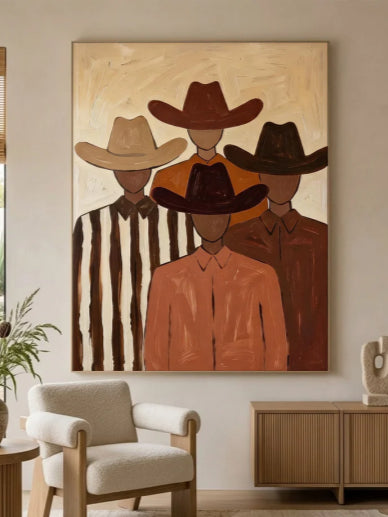
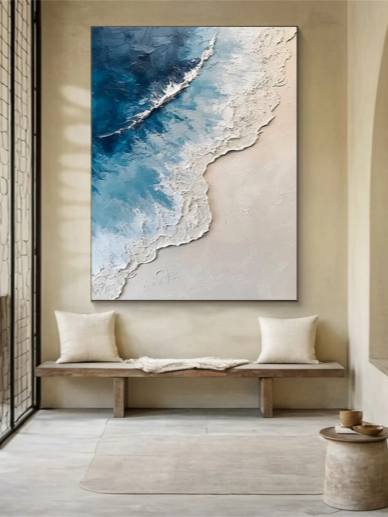
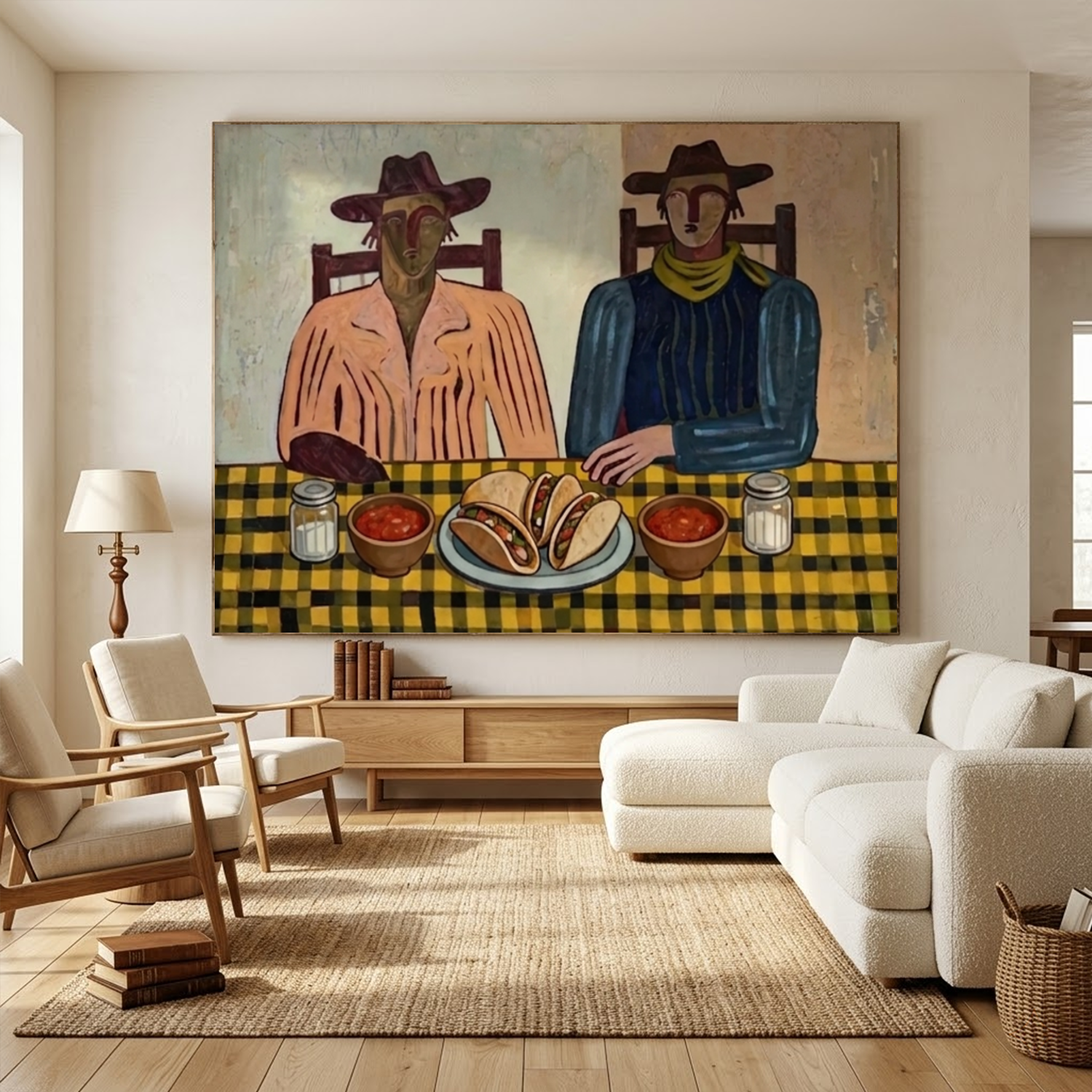
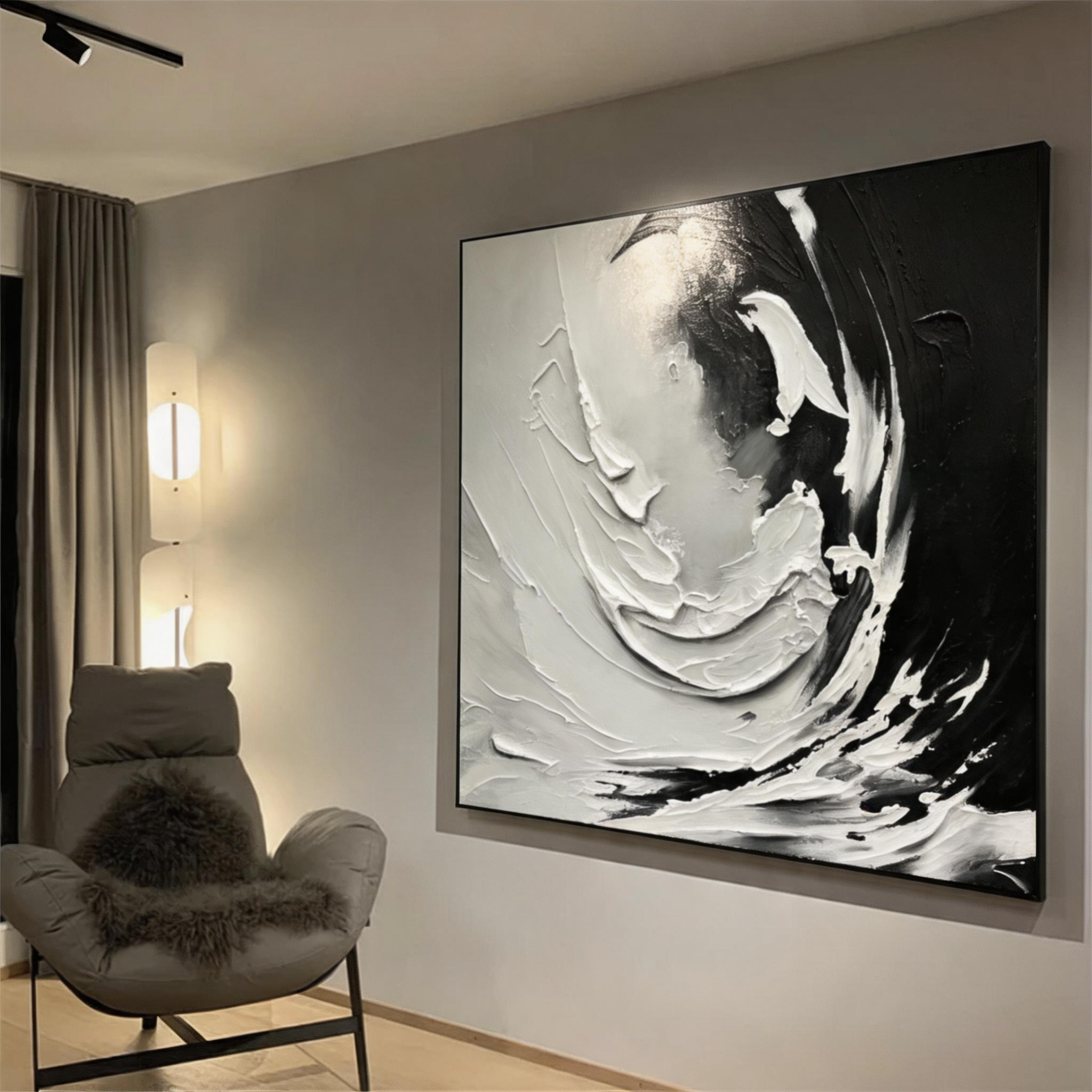
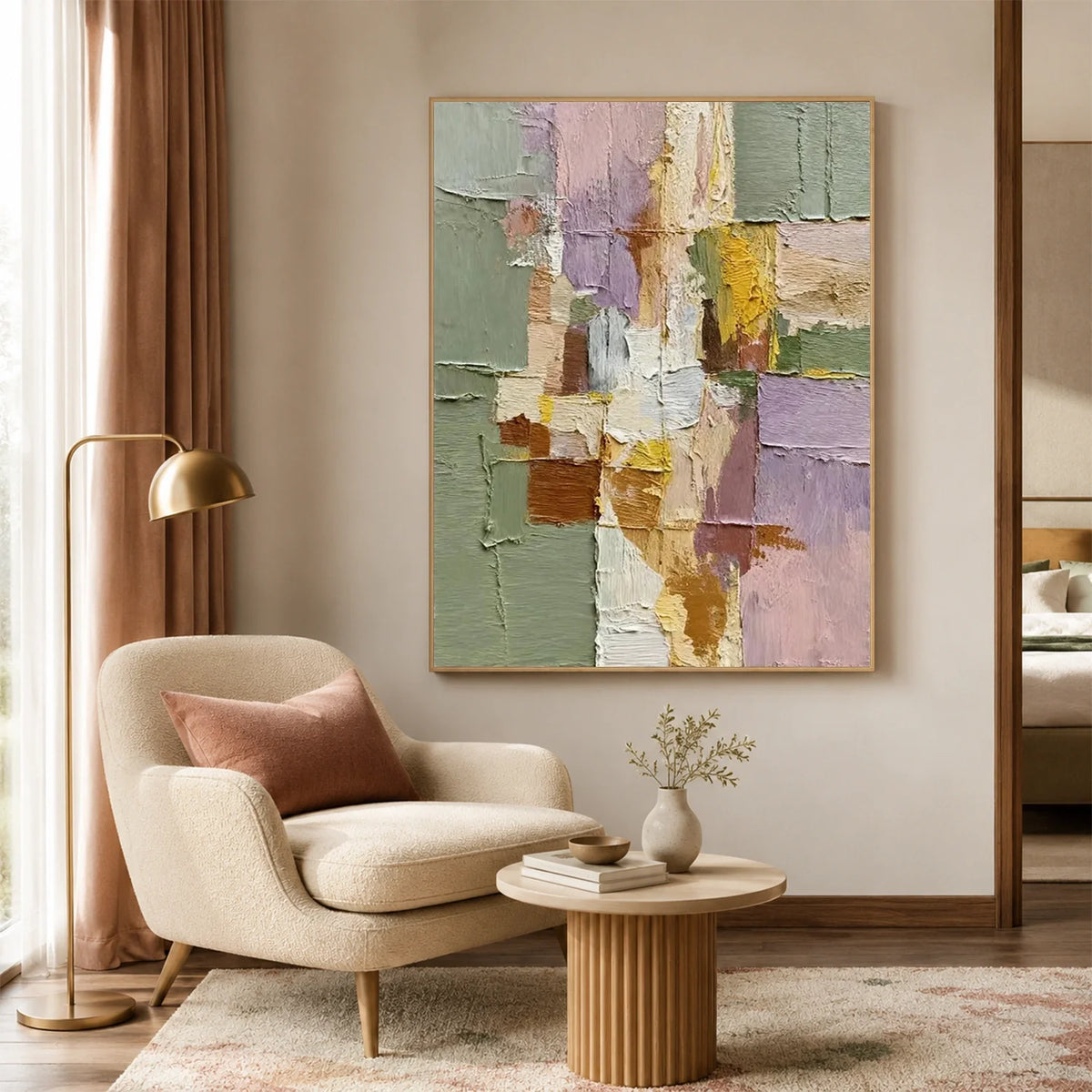
Investing in a single piece of oversized wall art is the most effortless, high-impact method to instantly anchor an empty expanse. It establishes a clear focal point that makes the room feel polished without introducing visual noise, provided the artwork spans approximately 60% to 75% of your sofa’s total width for perfect visual proportions.

2. Curate a Cohesive Gallery Wall
A meticulously curated gallery wall offers the perfect opportunity to showcase personality by blending family portraits, abstract art prints, and textural sketches within matching frames. The secret to achieving a dynamic yet structurally organized look lies in maintaining strict, consistent spacing—usually two to three inches between frames—which you should map out on the floor before hanging.

3. Arrange Symmetric Multiple Art Pieces
Hanging two or three large, equally sized pieces side by side offers an elegant compromise that fills the horizontal plane while maintaining a clean, orderly rhythm. Whether you opt for a diptych, a triptych, or a series of matching botanical prints, leaving a deliberate two-to-four-inch gap between frames ensures the collection feels connected yet remarkably airy.

4. Install Linear Floating Shelves
Floating shelves provide a brilliant dual-purpose solution by seamlessly combining artistic decoration with highly flexible vertical storage. Mounting long, clean-lined ledges allows you to layer framed photographs, trailing houseplants, and architectural books, mixing objects of varying heights and textures while leaving some open breathing room so the display never looks overcrowded.

5. Introduce Character with Wall Molding
Installing classic picture-frame molding, traditional board and batten, or modern geometric wood trim adds incredible architectural depth and shadow lines without demanding any precious floor space. Painting the trim the exact same color as the wall yields a subtle, high-end look, whereas choosing a contrasting tone delivers a striking feature that stands beautifully on its own.

6. Maximize Light and Depth with Mirrors
Hanging an oversized horizontal mirror or leaning a towering arched mirror reflects the opposite side of the room, effectively tricking the eye into perceiving a narrow living room as twice its actual size. For the best results, position your mirrors directly opposite a window to capture and bounce incoming natural light deep into the living area.

7. Invest in Custom Built-In Storage
Incorporating built-in cabinets or custom bookshelves is a highly practical and luxurious upgrade that gives the entire room a sense of permanent, intentional craftsmanship. This layout allows you to utilize open upper shelving to stage your favorite decorative accents while relying on closed lower cabinets to keep everyday media equipment and clutter completely out of sight.

8. Soften the Expanse by Bringing Nature Indoors
Mounting rich wooden wall panels, hanging vibrant trailing plants from high hooks, or arranging a curated collection of hand-woven shallow baskets introduces an immediate sense of warmth and earthy texture. These organic elements soften the starkness of a massive drywall surface with a lively aesthetic that rigid, factory-made decor simply cannot replicate.

9. Master the Art of Layering Textures
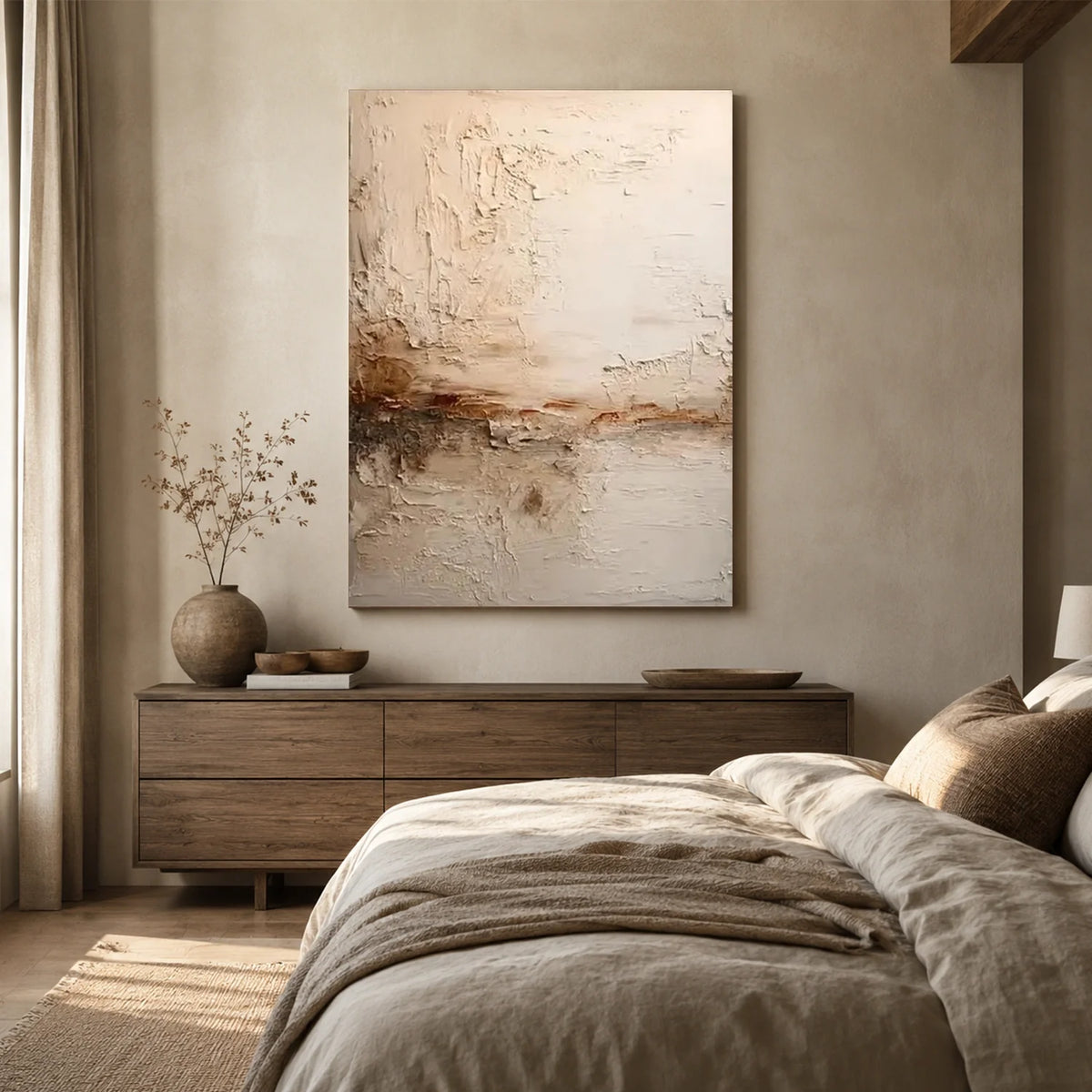
To prevent your living room from feeling flat or sterile, deliberately layer contrasting materials such as heavily textured canvas paintings, rustic wood grain, sleek metal hardware, and soft fabric wall hangings. This thoughtful juxtaposition of hard and soft surfaces creates an inviting visual complexity that naturally draws the eye smoothly across the room.

10. Elevate the Mood with Ambient Accent Lighting
Installing hardwired or plug-in wall sconces, slender picture lights above your favorite artwork, or hidden LED strips beneath floating shelves creates dramatic pools of light that revolutionize how a long wall is perceived at night. This ambient illumination highlights the architectural nuances of your decor while casting cozy, sophisticated shadows throughout the space.

11. Zone the Wall to Define Open-Concept Layouts
In modern open-concept homes, you can use your wall styling to subtly define distinct functional pockets rather than trying to unify the entire length with one massive decor scheme. For instance, anchoring a cozy reading nook with an accent chair on one end while centering a large triptych over the main sofa on the other creates visual separation without physical barriers.

12. Prioritize Negative Space and Balanced Weight
Maintaining an even distribution of visual weight across the horizontal plane is infinitely more critical than trying to fill every available inch. Avoid crowding heavy furniture and dark decor on one side of the room, space your elements evenly across the entire length, and proudly embrace "negative space"—the intentional blank areas that allow your eyes to rest.

Common Long Living Room Wall Decorating Mistakes
Even with the best intentions, it is easy to fall into common decorating traps that make an elongated wall look awkward. Keep these critical guidelines in mind as you execute your design:
- Hanging Art Too High: Ensure the center of your primary artwork sits at standard eye level, which is generally 57 to 60 inches from the floor.
- The "Floating" Decor Phenomenon: Avoid hanging small frames over a bare floor; always anchor floating wall decor with a substantial piece of furniture underneath, such as a console table or a bench.
- Overly Fragmented Styles: Refrain from mixing too many clashing decorating aesthetics; maintaining a cohesive color palette and unified frame styles will ensure a much more harmonious result.
FAQ
How do you fill a long blank wall in a living room without making it look cluttered?
The most effective approach is to rely on scale rather than quantity. Opt for a few substantial elements—such as a long media console topped with an oversized piece of art—rather than hanging dozens of small, unrelated frames that fracture the visual flow.
What size artwork works best on an expansive living room wall?
Large walls demand oversized artwork or multi-panel installations. If you are placing the art directly above a sofa, the total width of the artwork grouping should ideally equal roughly 60% to 75% of the furniture's width to maintain balanced visual proportions.
Should you leave empty space on a long wall?
Yes, absolutely. Incorporating negative space is a vital principle of professional interior design. Leaving purposeful sections of the wall blank prevents the room from feeling claustrophobic, allows your standout feature pieces to shine, and fosters a balanced, sophisticated atmosphere.
Final Thoughts
Decorating a long living room wall does not have to be an overwhelming endeavor. By shifting your focus toward proper scale, balancing visual weight across the horizontal plane, and layering rich elements of texture and ambient lighting, you can easily demystify the design process. Whether you choose the striking simplicity of a single oversized canvas or the functional beauty of custom built-in libraries, a thoughtful approach will transform your plain drywall into an inviting, balanced centerpiece that feels uniquely yours.
If you're ready to bring your ideas to life, choosing the right-sized artwork is the key. Eleanos Gallery offers a wide selection of large canvas art, textured paintings, and modern prints designed to fill oversized walls with ease. A well-chosen statement piece can instantly turn a long blank wall into the focal point of your living room.




Leave a comment
This site is protected by hCaptcha and the hCaptcha Privacy Policy and Terms of Service apply.