
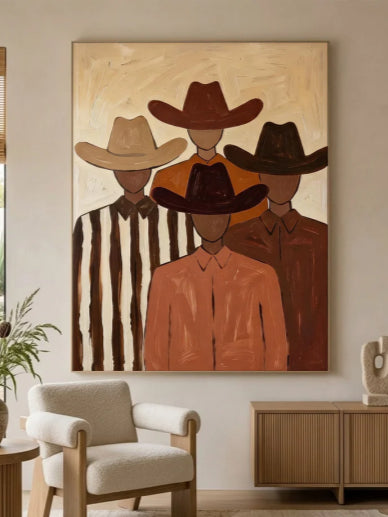
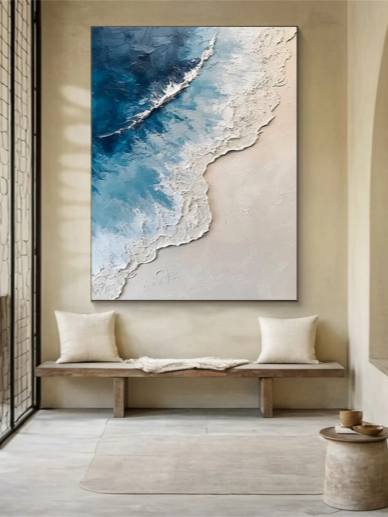


Choosing the right artwork is only half the job. Where you hang it matters just as much.
If you've ever wondered why some rooms look professionally designed while others feel slightly "off," the answer often comes down to proportion. One of the easiest interior design guidelines to follow is the 2/3 rule for wall art.
In this guide, we'll explain what the 2/3 rule is, why designers use it, when you should follow it, and when it's okay to break it.
What Is the 2/3 Rule for Wall Art?
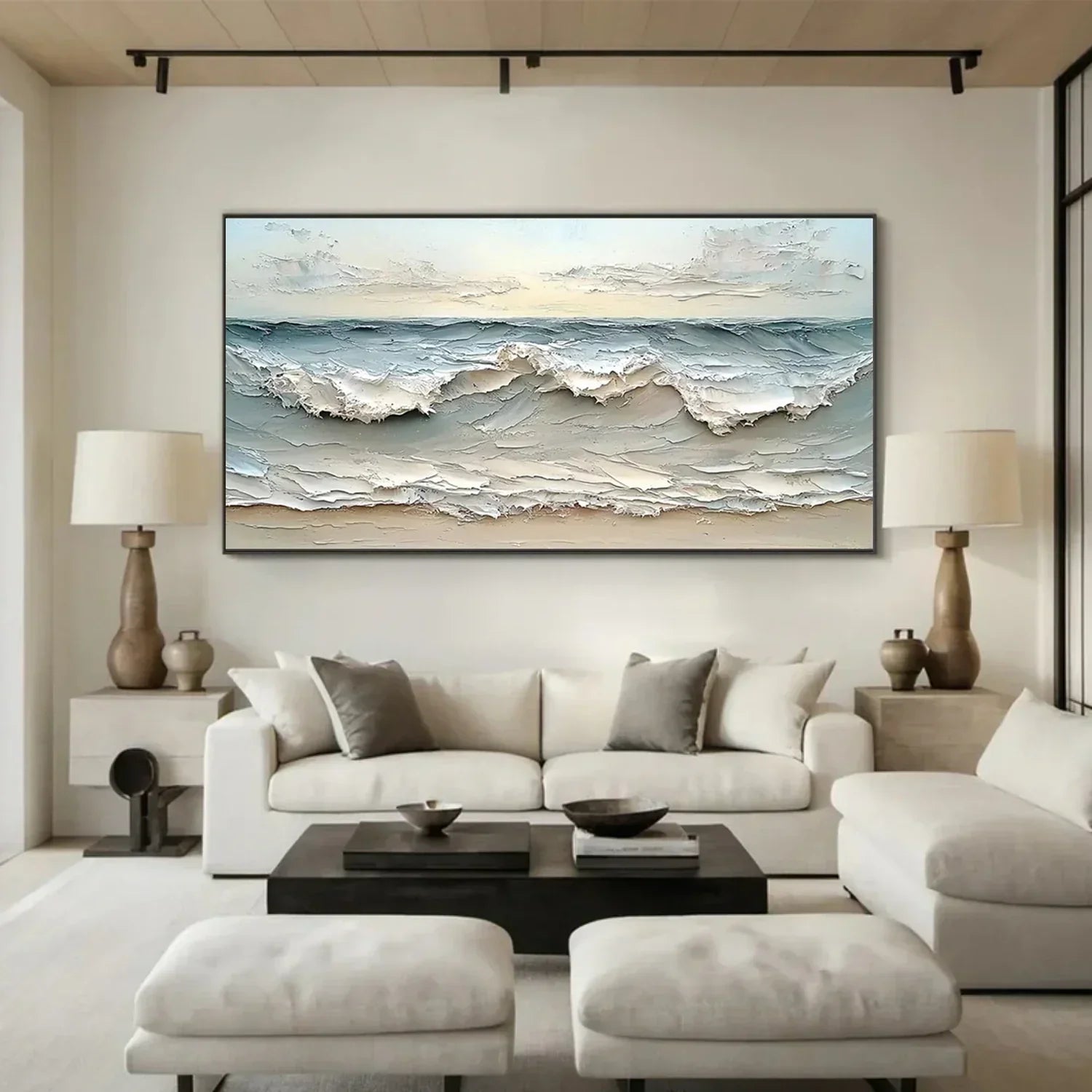
The 2/3 rule is a design principle stating that any artwork (or gallery wall cluster) hung above a piece of furniture—like a sofa, bed, sideboard, or fireplace mantel—should occupy roughly two-thirds to three-quarters of the width of that furniture.
The math is simple. If your artwork is too small, the furniture swallows it up, making the room feel unfinished. If it is too wide, the setup looks top-heavy and unbalanced. Staying within the 60% to 75% range creates a natural visual anchor that binds the furniture and the art together as a single, cohesive focal point.

Why Does the 2/3 Rule Work?
Interior designers often rely on visual balance rather than exact measurements. When artwork is roughly two-thirds the width of the furniture, it creates:
Better Proportion
Oversized furniture can make small artwork look insignificant, while artwork that's too large can overwhelm the room. The 2/3 rule helps keep everything in proportion.
A Stronger Focal Point
Artwork should naturally draw attention without overpowering the rest of the space. Proper sizing helps the artwork become a focal point without competing with the furniture.
A More Professional Look
Many beautifully designed homes follow similar proportional guidelines, even if homeowners don't realize it. That's why rooms styled with the 2/3 rule often feel polished and well planned.

How to Calculate Your Ideal Art Size
Grab a tape measure and use this straightforward formula:
How to Measure the 2/3 Rule
To ensure a flawless installation without putting unnecessary holes in your wall, follow this structural sequence:
Measure the anchor furniture
Measure the exact total width of your sofa, bedframe, or console table from arm to arm.
Calculate the target range
Multiply that width by 0.66 for the minimum size and 0.75 for the maximum. This gives you your sweet spot.
Map it out with painter's tape
Before buying or hanging anything, use low-tack blue painter's tape to outline the calculated dimensions directly on the wall. Step back to check how the scale feels in the actual room.
Account for spacing and frames
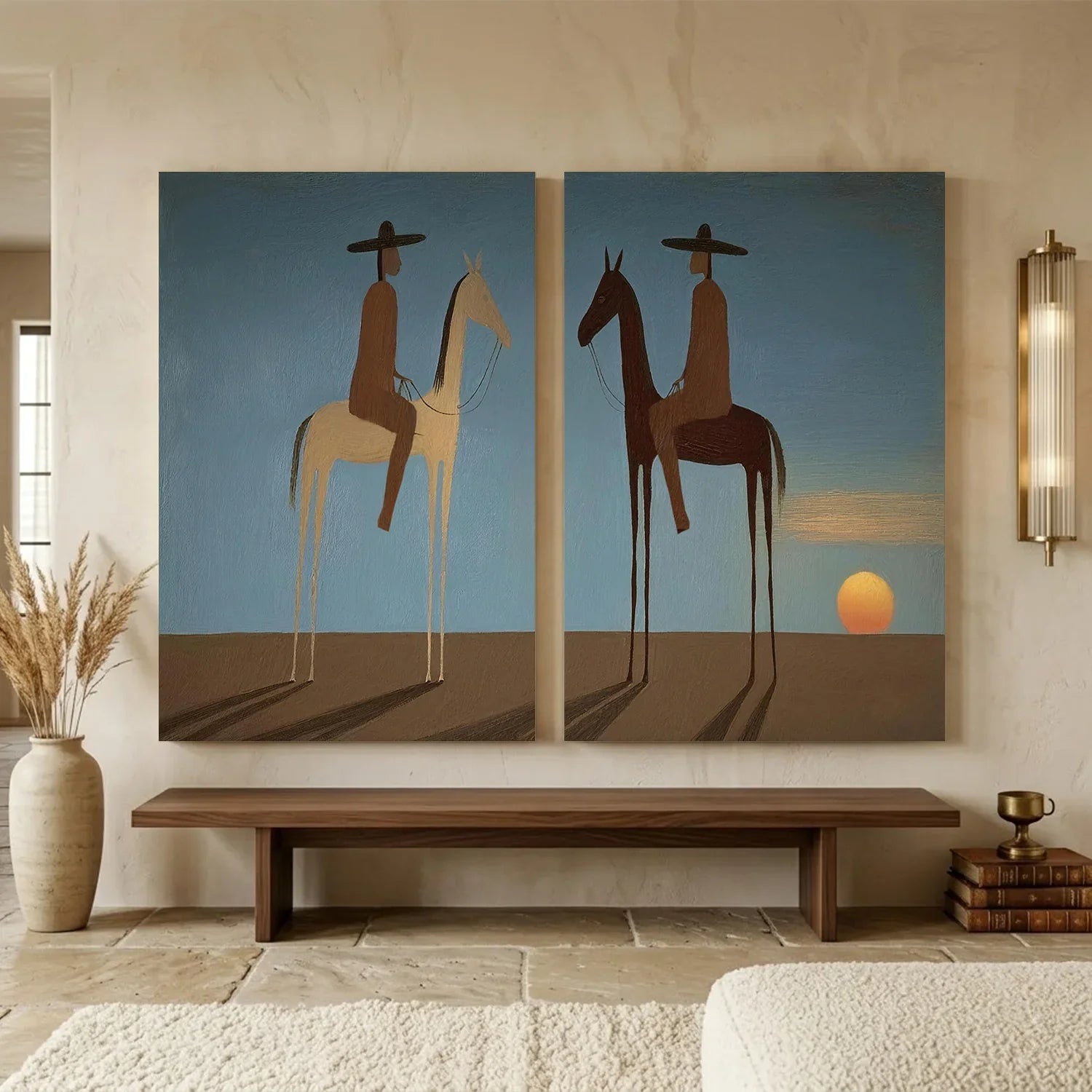
If you are hanging a multi-panel set (diptych or triptych), remember to factor in a 2 to 3-inch gap between each frame. The total width from the outer edge of the first frame to the outer edge of the last frame must fit your target range.
Hang at the correct height
The bottom of the frame should sit roughly 6 to 8 inches above the top of the furniture. Hanging it too high breaks the visual connection, making the art look like it's floating away.
The 2/3 Rule for Different Rooms
Above the Sofa
This is where the rule is used most often. Artwork that spans roughly two-thirds of the sofa width creates a balanced living room without making either element feel oversized.
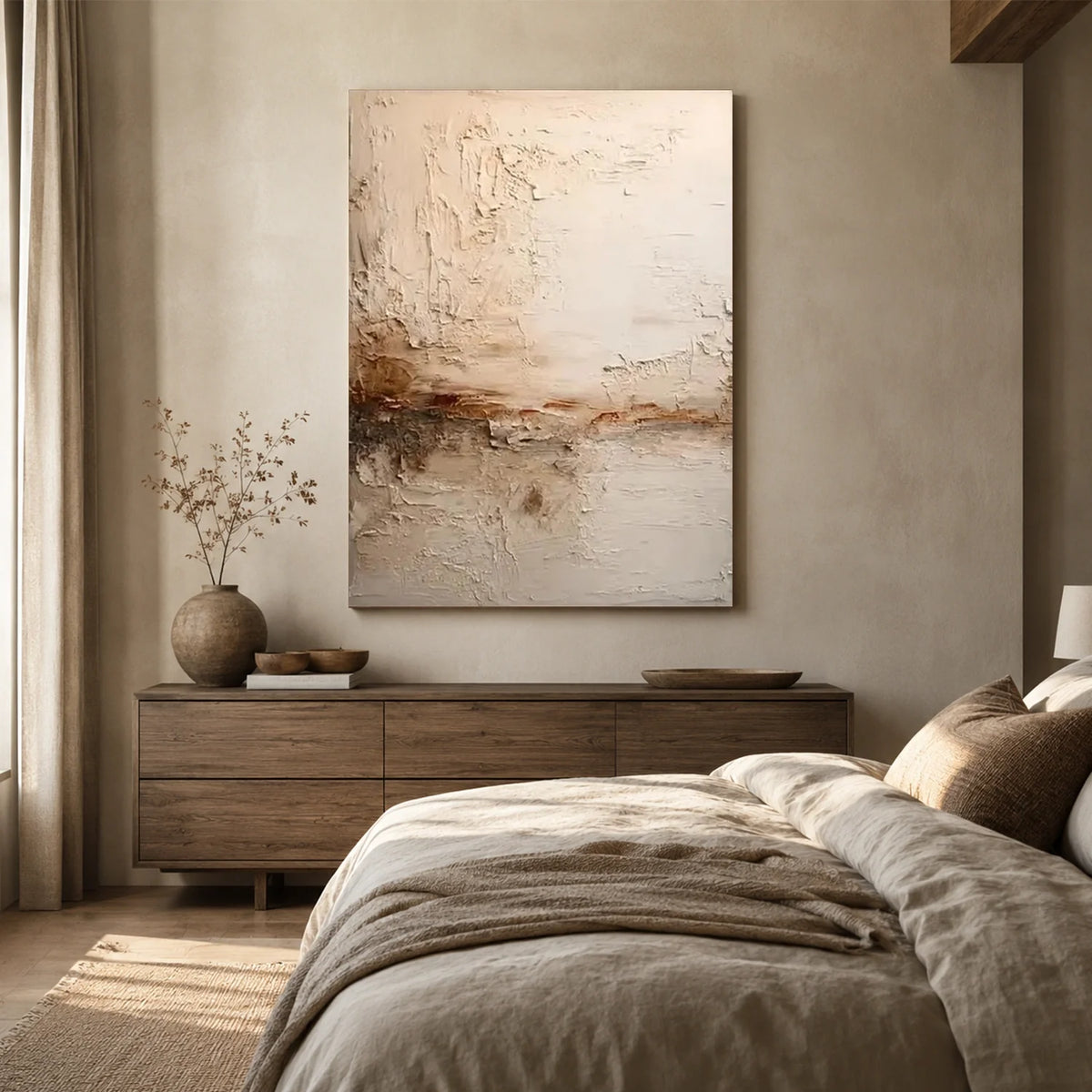
Above the Bed
Bedrooms benefit from the same principle. Whether you choose one large canvas or a set of framed prints, the overall arrangement should generally cover around two-thirds of the bed's width.
Above a Fireplace
Fireplaces naturally become the room's focal point. Artwork should feel connected to the mantel rather than the entire chimney wall. Measure the mantel or fireplace opening, then size your artwork accordingly.
Above a Console Table
Entryways and hallways often use console tables as anchors. Artwork that is about two-thirds the width of the table creates an inviting first impression.

Does the 2/3 Rule Apply to Gallery Walls?
Yes.
The rule applies to the entire gallery wall, not each individual frame. When arranging multiple pieces:
- Measure the combined width of all frames together.
- Include the spacing between frames.
- Compare the total width to the furniture below.
For example, three framed prints with small gaps between them should collectively cover around two-thirds of the sofa's width.
This creates one unified visual composition instead of several disconnected pieces.
When Can You Break the 2/3 Rule?
While interior design rules are great foundations, certain architectural layouts invite exceptions:
- Oversized Accent Walls: If you have ultra-high vaulted ceilings, you might want to break the rule vertically, choosing a massive vertical piece that draws the eye upward, even if it slightly breaks the horizontal 2/3 threshold.
- Off-Center Layouts: In minimalist or modern Japandi styles, designers sometimes intentionally place smaller artwork off-center to create asymmetrical balance, often counterweighted by a floor lamp or a tall vase on one side.
- Floor-to-Ceiling Gallery Walls: If you are turning an entire wall into a floor-to-ceiling art library, the furniture acts as part of the canvas rather than a strict anchor base.
FAQs
Is the 2/3 rule the same as the 60–75% rule?
Yes. Many designers describe the guideline as choosing artwork that covers 60% to 75% of the furniture's width. Two-thirds (about 66%) falls right in the middle of that range.
Does the 2/3 rule work for mirrors?
Yes. Decorative mirrors above sofas, mantels, beds, or console tables generally follow the same proportion guidelines as wall art.
Can I use multiple pieces instead of one large artwork?
Absolutely. A gallery wall can follow the 2/3 rule as long as the combined width of all the pieces, including spacing, is roughly two-thirds the width of the furniture below.
What if my wall is much wider than my furniture?
Focus on the furniture rather than the full wall. If the surrounding wall feels empty, add wall sconces, shelves, plants, or complementary décor instead of choosing artwork that's excessively wide.
Final Thoughts
The 2/3 rule is one of the simplest ways to make wall art look intentional and professionally styled. Instead of guessing, use it as a starting point to determine the ideal artwork size for your furniture and wall.
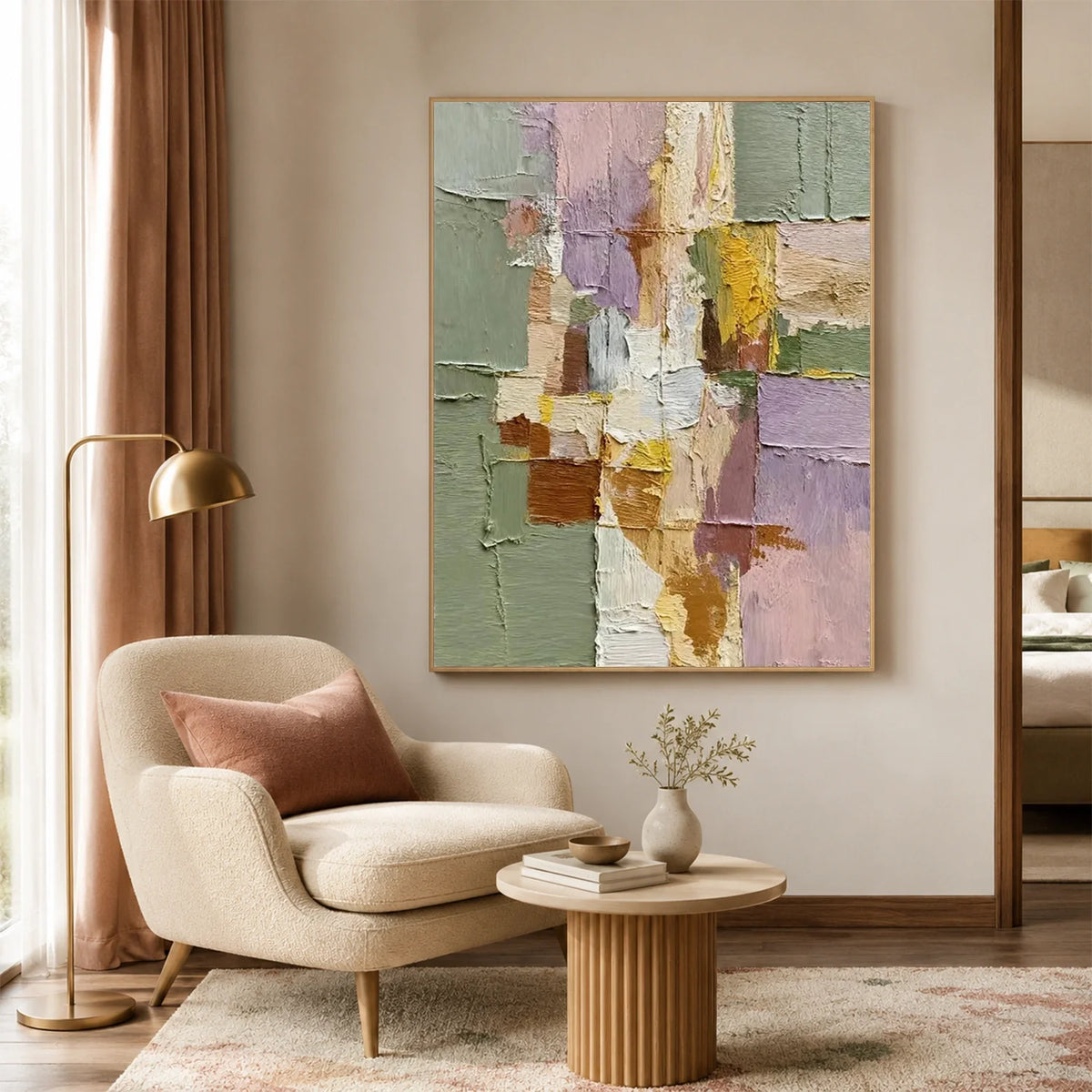
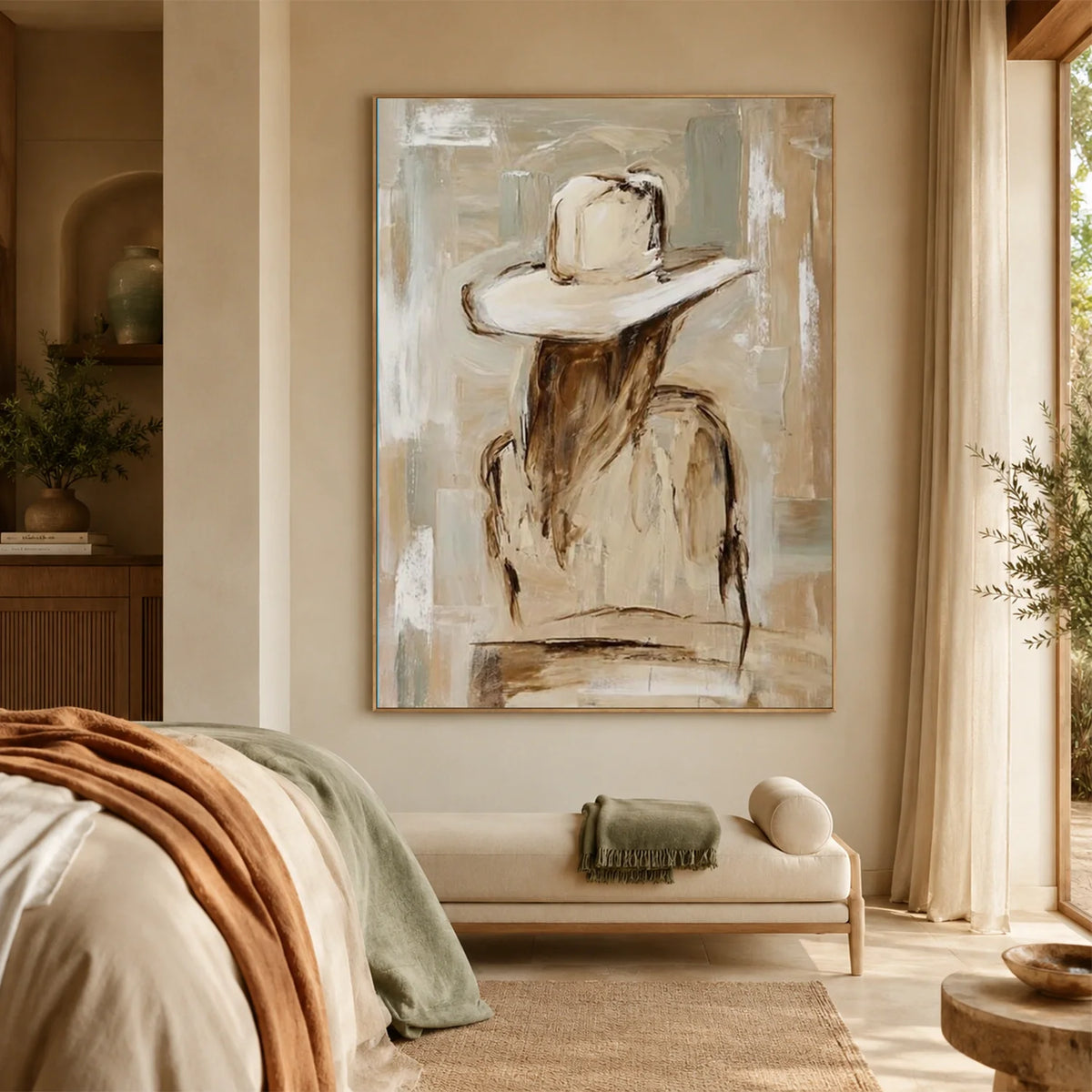
Once you've found the right dimensions, selecting artwork that matches your interior style becomes much easier. At Eleanos Gallery, you'll find handcrafted textured wall art, minimalist canvas paintings, and oversized statement pieces in a wide range of sizes, making it easy to choose artwork that fits both your space and the 2/3 rule.




Leave a comment
This site is protected by hCaptcha and the hCaptcha Privacy Policy and Terms of Service apply.