
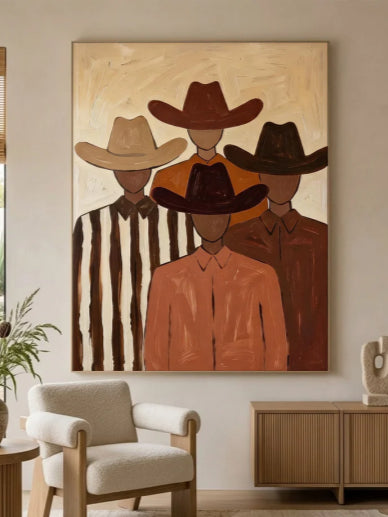
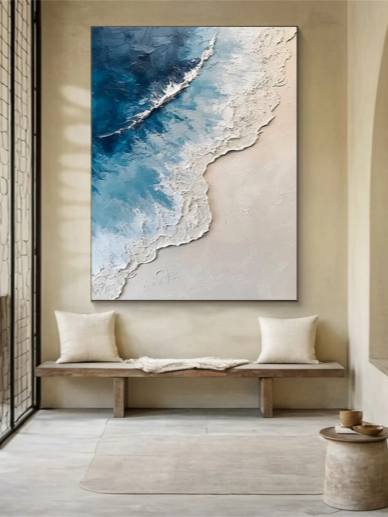
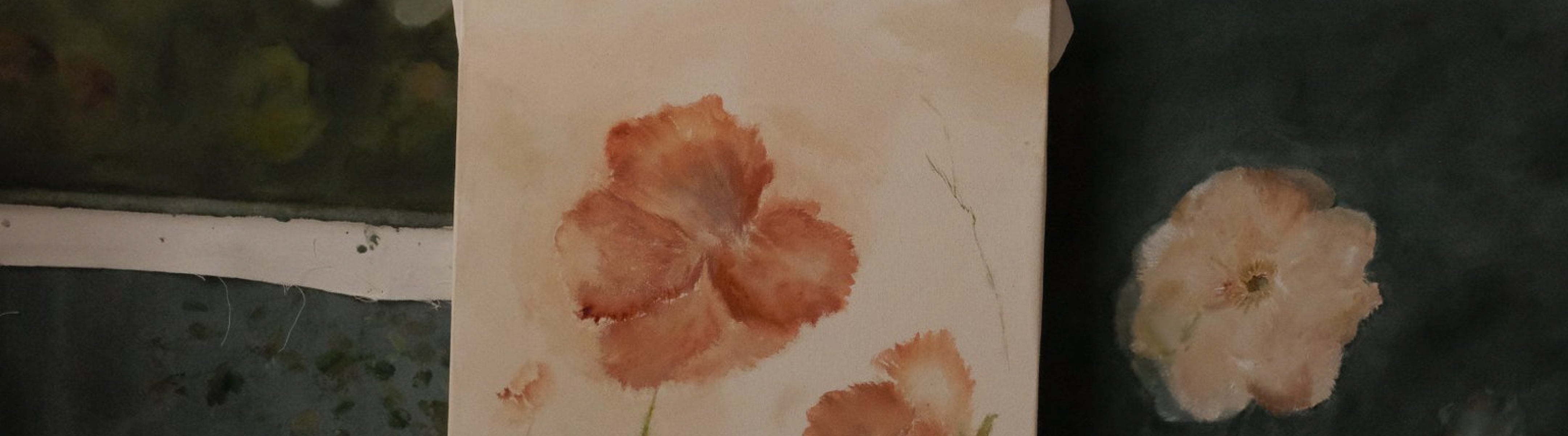


The living room is the most public room in your home. It's where you greet guests, where family gathers, where first impressions form. Yet when it comes to decorating these walls, many of us default to safe, forgettable choices. A print here, a family photo there—nothing that truly speaks. When you search for living room art, you're not just looking for something to fill empty space. You're looking for a visual voice, a conversation starter, a piece that makes your room feel like yours. This handbook walks you through everything that search entails: how to choose, how to size, how to source, and finally how to hang wall art for living room spaces with confidence.

Part 1: The Foundation – Defining Your Living Room Art Identity
Before you buy anything, you need clarity. What do you want your living room art to say? This isn't about matching your sofa—it's about matching your sensibilities. Start by observing your room. What mood does it already have? Is it bright and airy, filled with natural light and pale furniture? That space might welcome bold, saturated living room art that provides contrast. Is your room already dramatic, with dark walls and leather furnishings? Perhaps you need something softer, more textural, to balance the weight.
Look at your existing pieces. Your rug, your throw pillows, your favorite ceramic vase—these all hold clues to your aesthetic. Extract two or three colors from these items and use them as a guide when evaluating wall art for living room options. This doesn't mean your art must match exactly. But a visual connection between art and environment creates harmony rather than chaos.
The biggest mistake people make is buying art that looks good in the gallery but feels foreign at home. Before you commit, ask yourself: Would this piece still interest me in five years? Does it spark something beyond "that looks nice"? Great living room wall art rewards repeat viewing. It reveals something new each time you pass it.

Part 2: Size Matters – The Art of Scaling Living Room Wall Art
The most common error in decorating is simple: the art is too small. A tiny canvas lost on a large wall doesn't look intentional—it looks like you gave up. Getting the scale right transforms everything.
For large wall art for living room applications, the golden rule involves your sofa. Measure your sofa's width, then look for art that spans 50 to 75 percent of that measurement. A six-foot sofa calls for art roughly three to four and a half feet wide. This creates a visual connection between furniture and art, anchoring the composition.
Ceiling height changes the equation. Standard eight-foot ceilings call for art that respects that vertical limit—pieces that don't crowd the ceiling but also don't float too low. Higher ceilings can accommodate vertical orientations that draw the eye upward and emphasize the room's proportions.
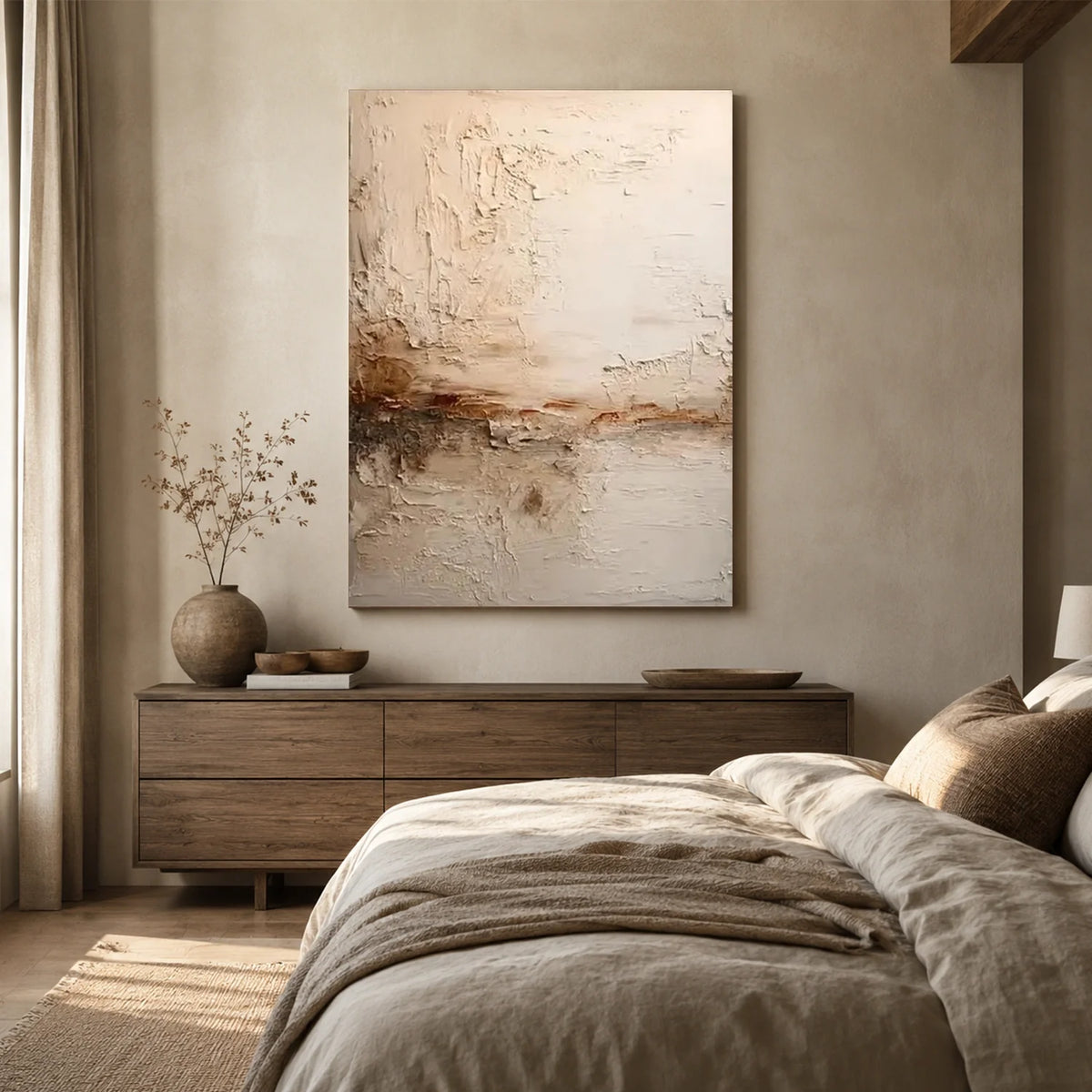
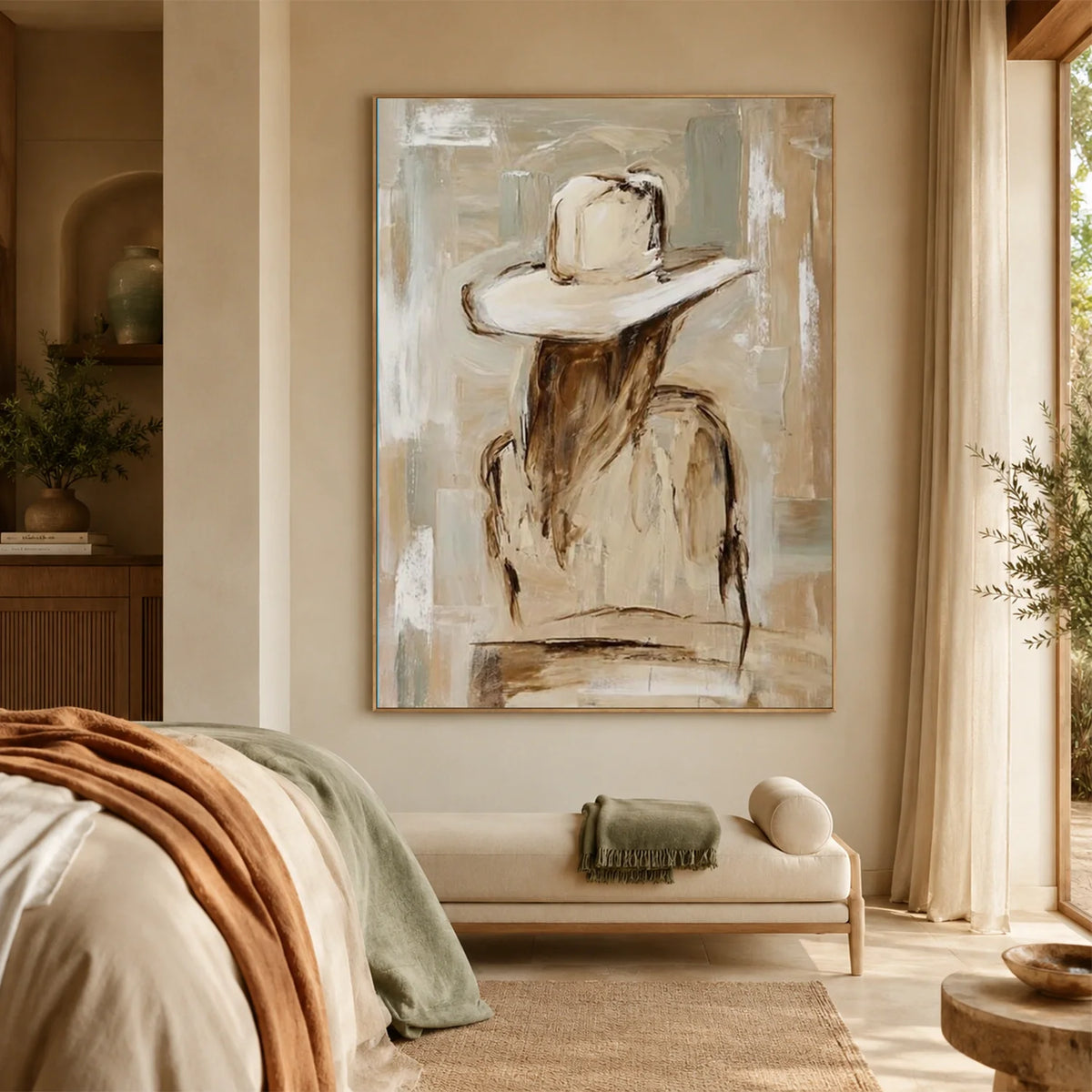
When you venture into extra large wall art for living room territory, you're making a statement. These pieces dominate the room. They become the reference point around which everything else arranges itself. This works beautifully when you have one truly commanding wall and the rest of the room can play supporting roles. A single extra large wall art for living room piece eliminates the need for multiple smaller works—it does all the talking.
For long walls without furniture below, consider horizontal orientation. A panoramic abstract or landscape can stretch across the space, filling it with presence. For narrow walls flanking doorways or windows, vertical pieces add height and sophistication.

Part 3: Style & Color – Making Living Room Wall Art Work With What You Own
You've measured your wall. You know what size you need. Now comes the harder question: what kind of living room wall art actually belongs in your space? Three strategies guide this decision. The first is extraction. Look at your room's dominant colors—the ones that appear in your largest pieces, your upholstery, your flooring. Find wall art for living room that incorporates these colors, not as exact matches but as harmonious relatives. A blue sofa might welcome art with touches of indigo, cerulean, or teal. The connection feels intentional without being matchy-matchy. The second strategy is contrast. If your room is neutral—beige walls, gray sofa, natural textures—a shot of bold color in your art wakes everything up. A piece with unexpected orange or electric blue becomes the room's energy source. This approach works because the art stands alone; nothing competes with it.
The third strategy is monochrome. All-white rooms with all-white art create serene, gallery-like spaces. All-black rooms with black art feel moody and intimate. This is harder to pull off but stunning when done well. Style matters as much as color. A traditional room with wingback chairs and Persian rugs might embrace landscape paintings or figurative works. A modern loft with concrete floors and leather sofas calls for abstract compositions or photography. A bohemian space with layered textiles and plants welcomes organic forms and earthy tones.
The best large wall art for living room doesn't fight its surroundings. It enters into dialogue with them. It acknowledges what's already there and adds something new to the conversation.

Part 4: Budget & Sourcing – From Investment Pieces to Do It Yourself Wall Art for Living Room
Once you know what you want, the question becomes where to find it. Your budget determines your options, but constraints can breed creativity. At the entry level, under $100, you're looking at prints, posters, and small originals from emerging artists. Quality varies wildly. Look for archival materials—acid-free paper, pigment-based inks—that won't fade or yellow within months.
Between $100 and $500 opens more possibilities. Limited edition prints from established artists, small-scale originals, and quality reproductions on canvas all live here. This is also where do it yourself wall art for living room becomes viable. A large canvas, a few tubes of paint, and a weekend can yield something entirely unique. The key with DIY is accepting that your first attempt may not be gallery-ready—but it will be yours, and that counts for something.
For those ready to invest between $500 and $2000, original works from mid-career artists become accessible. You're buying not just an object but a piece of someone's creative journey. This price point often includes works on canvas or panel, framed and ready to hang. Above $2000, you're in serious collecting territory. These pieces often come with provenance, exhibition history, and investment potential.
For those seeking living room art that balances quality with character, professional galleries offer something invaluable: curation. At Eleanos Gallery, the Living Room Art collection brings together pieces specifically suited for residential scale and style. Whether you need a statement piece above the sofa or a series to fill a long wall, the collection takes the guesswork out of finding art that belongs in your home.
For the hands-on reader, do it yourself wall art for living room projects offer satisfaction no purchase can match. Start with a large pre-stretched canvas. Choose two or three colors that speak to your room. Use a palette knife rather than brushes—it forces looseness and prevents overworking. Apply paint in layers, letting some under-colors peek through. Stop before you think you're done; abstract art often succeeds through restraint.

Part 5: Hanging & Lighting – The Final 10% That Makes 90% of the Difference
You've chosen your piece. You've waited for delivery. Now it sits against the wall, waiting for its moment. How you hang it determines whether it soars or sinks. The gallery standard places artwork center at 57 to 60 inches from the floor. This aligns with average eye level and creates visual consistency throughout your home. For large wall art for living room above a sofa, the formula adjusts: leave six to eight inches between the top of the sofa back and the bottom of the frame. This connects art to furniture while maintaining breathing room.
For multi-piece arrangements, layout on the floor before you make holes. Start with your largest piece, build around it, and maintain consistent spacing—two to three inches between frames works for most compositions. Photograph your floor layout and refer to it as you hang.
Lighting transforms everything. A picture light mounted above your living room wall art casts focused illumination that makes colors sing and textures emerge. Adjustable track lighting lets you shift emphasis as you rearrange. Even a simple floor lamp positioned to graze the art's surface adds dimension that overhead ceiling lights cannot achieve.
For extra large wall art for living room, lighting becomes architectural. Consider multiple fixtures working together—one from above, another from below, perhaps a third from the side. The interplay of shadows across a heavily textured surface creates drama that changes throughout the day.
Part 6: The Living Room Art Checklist – Before You Click "Buy"
You're ready to commit. Run through this mental checklist first:
Take painter's tape and outline your proposed artwork dimensions on the wall. Live with that empty rectangle for two or three days. Is it the right size? Does it feel too dominant or too timid? This simple test prevents expensive mistakes.
Download an image of the artwork and convert it to black and white on your phone. The grayscale version reveals whether the piece has enough value contrast to hold its own in your room. If it all blends into one gray tone, it may disappear against your wall.
Confirm the materials. Is it a giclée print on archival paper, an original oil on canvas, or a mass-produced poster? The difference affects longevity, appearance, and value.
Consider installation. Will you need professional help? For pieces over 30 pounds, the answer is often yes. Know your wall type—drywall requires different hardware than plaster or brick. Finally, the emotional check. When you look at this piece, do you feel something? Excitement? Calm? Curiosity? If the answer is a shrug, keep looking. The right living room art rewards you every single day.
For room-specific layouts, check this guide:How to Arrange Wall Art in Every Room: A Designer’s Guide to Pro-Level Hanging
Conclusion
Your living room walls are not background. They are the largest surface you own, the canvas on which you paint your daily life. Choosing living room art worthy of that space takes thought, patience, and a willingness to trust your own eye. But the result—a room that feels complete, personal, and alive—repays every bit of effort. Now it's your turn. Measure your wall. Define your style. Set your budget. And when you find the piece that makes you stop scrolling, that makes you imagine it in your space, that makes you smile just thinking about it—trust that feeling. Your walls are waiting.
Frequently Asked Questions
Q1: What size wall art for living room above a sofa?
Aim for artwork that's about two-thirds the width of your sofa. A piece that's too narrow gets lost; too wide feels crowded against surrounding elements.
Q2: How high should I hang large wall art for living room?
Center of the artwork at 57 to 60 inches from floor is the gallery standard. For above a sofa, leave six to eight inches between sofa back and frame bottom.
Q3: Can I mix different styles of living room wall art?
Absolutely. Cohesion comes from consistent framing, a shared color palette, or intentional spacing. A mix of styles often looks more collected and personal than a matching set.
Q4: Is do it yourself wall art for living room worth the effort?
If you value uniqueness and enjoy the process, yes. But be realistic about your skill level and time. Start small, learn as you go, and know that professional art exists for a reason.
Q5: What's the biggest mistake people make with living room art?
Buying too small and hanging too high. Art should feel connected to your furniture and human scale, not floating near the ceiling like an afterthought.


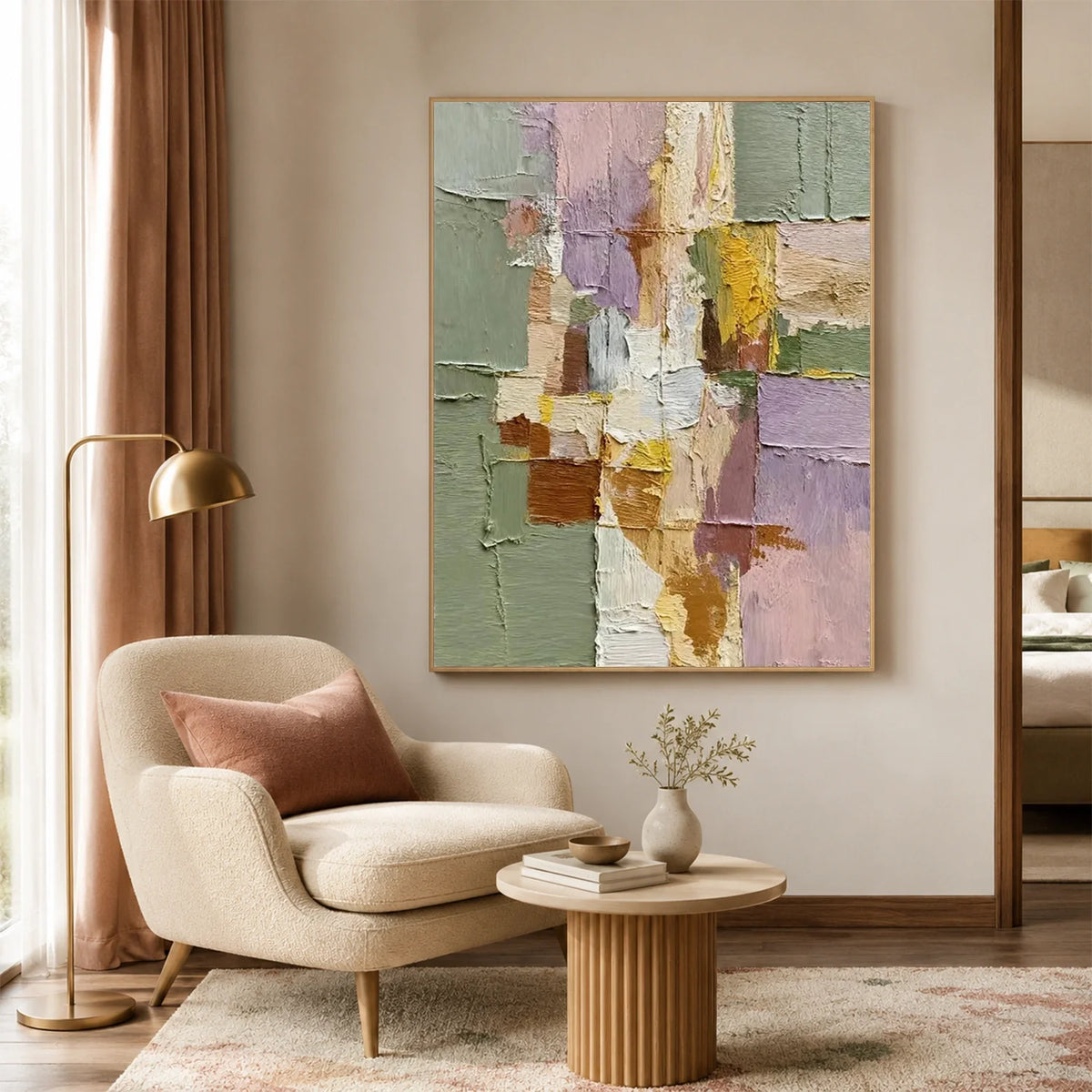


Leave a comment
This site is protected by hCaptcha and the hCaptcha Privacy Policy and Terms of Service apply.