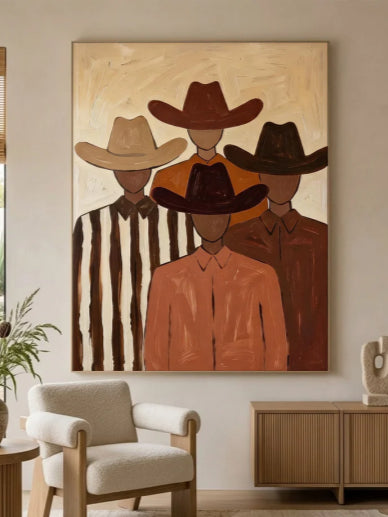
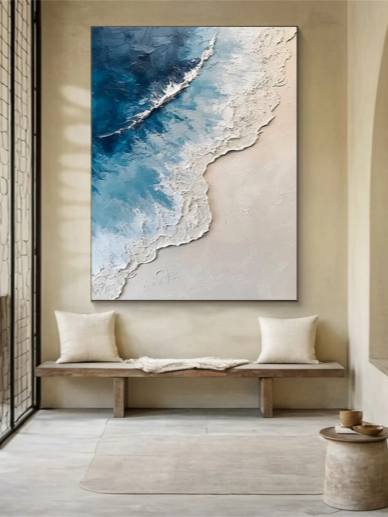
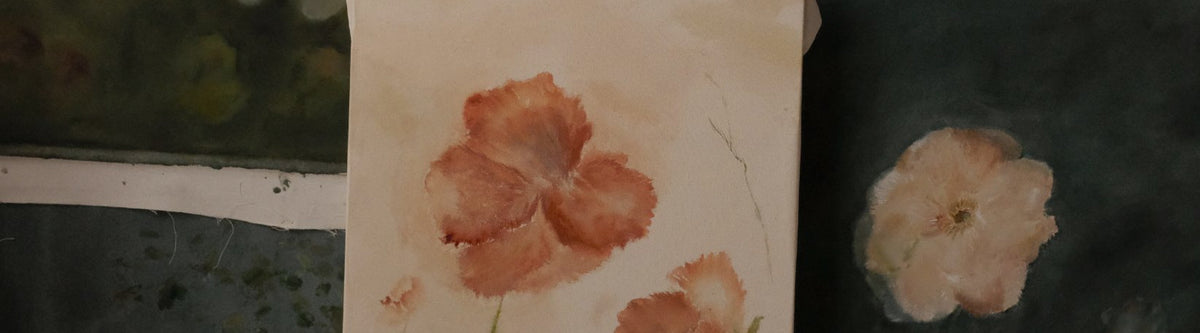


Color is the shortest path between a painting and a human heart. A single glance at a vibrant canvas can shift your mood, alter your perception of a room, and make a space feel unmistakably alive. That's the power of colourful abstract art paintings. Unlike representational work that asks you to recognize something, abstract art asks you to feel something—and color is its primary language. This guide serves two audiences: those searching for the perfect colorful wall art to transform their homes, and those eager to create their own, whether they're wondering "how to make a brown colour with paint" or dreaming of their first original composition. Either way, you're in the right place.

Part 1: Why We Gravitate Toward Colourful Abstract Art Paintings
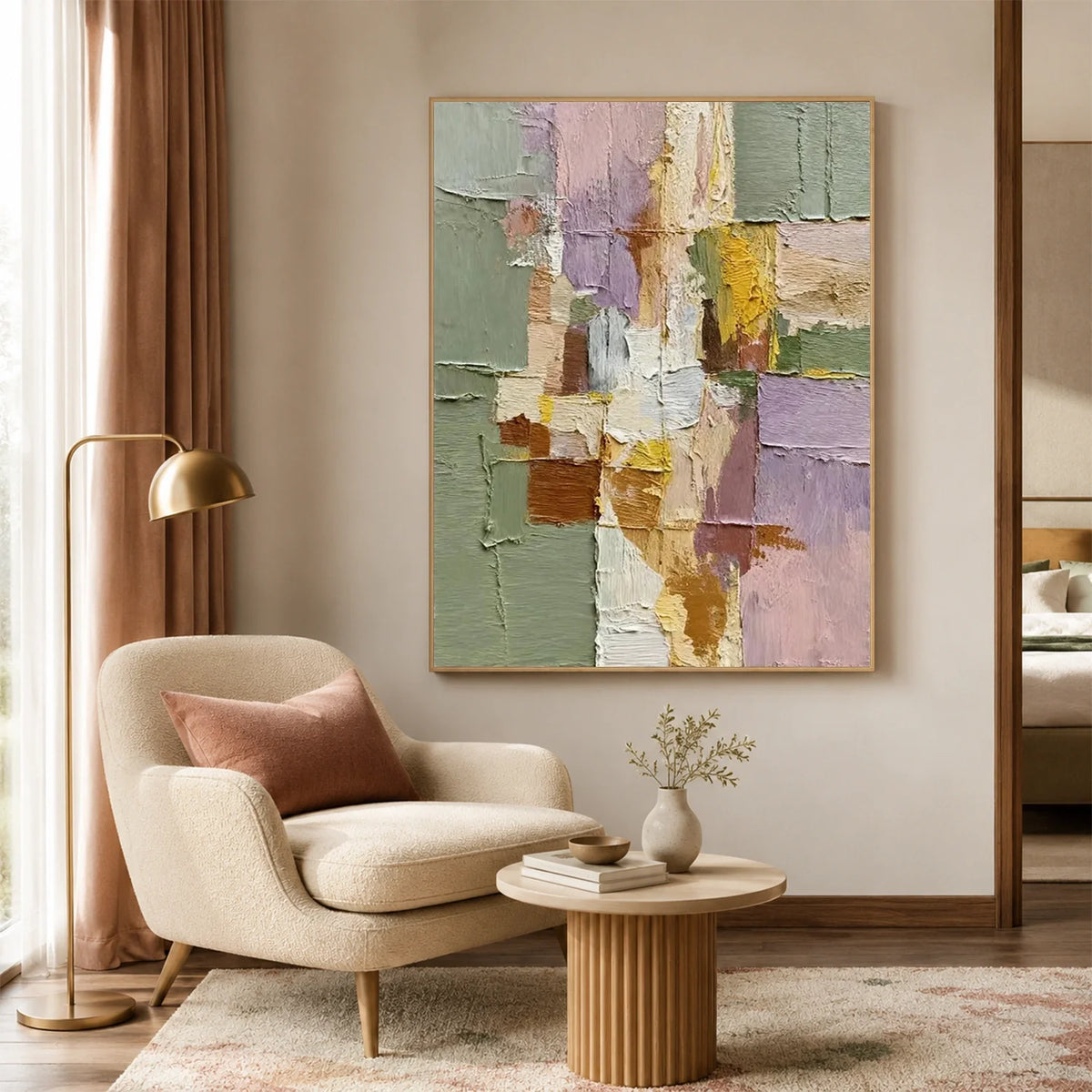
There's a reason colourful abstract art paintings dominate the walls of designers, collectors, and homeowners alike. They offer something no other art form quite can: direct emotional access without intellectual barriers. Color psychology tells us that hues affect us on a subconscious level. Reds energize and excite. Blues calm and center. Yellows lift and optimism. When these colors appear in abstract forms, free from the constraints of recognizable subjects, they speak directly to our emotional centers. A piece of abstract colorful wall art doesn't require you to understand a story or recognize a face. It simply asks you to feel.
This is particularly powerful in homes where multiple people gather. A single colorful canvas wall art piece can anchor a room's emotional tone. It can turn a sterile white box into a warm sanctuary, or a quiet corner into an energizing nook. The best colourful abstract art paintings do this without shouting—they simply radiate. For those building collections, the versatility of color is unmatched. A well-chosen piece can move from living room to dining room to home office as your needs change, adapting its emotional contribution to each new context.

Part 2: How to Make a Brown Colour with Paint – The Unsung Hero of Colourful Abstract Art
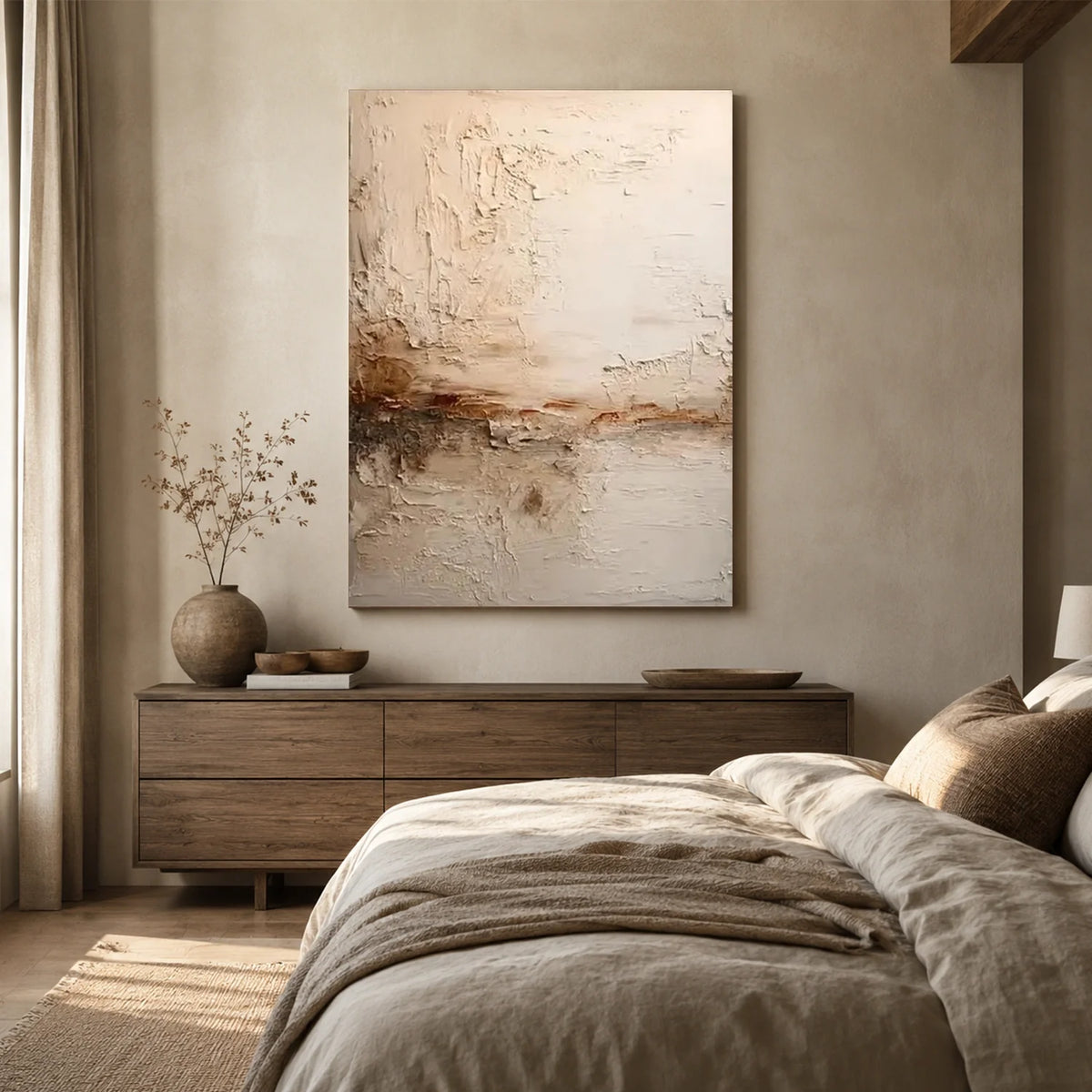
If you're a creator rather than just a collector, you've likely faced this moment: you're mixing colors, everything's going well, and then you need brown. You mix red and green and get mud. You mix blue and orange and get something that looks like swamp water. What went wrong? Understanding how to make a brown colour with paint is one of the most valuable skills in any abstract artist's toolkit. Brown may seem humble compared to vibrant primaries, but it plays an essential role in colourful abstract art paintings. It grounds compositions. It provides visual rest. It prevents canvases from feeling like they're screaming at viewers.
There are 3 reliable paths to beautiful browns:
The first is complementary mixing. Take any two colors opposite each other on the color wheel—blue and orange, red and green, yellow and purple—and mix them in varying proportions. The resulting brown's character depends entirely on which color dominates. More red yields warm, earthy tones. More blue creates cooler, more contemplative browns.
The second method is primary mixing. Combine all three primaries—red, yellow, blue—in unequal amounts. The imbalances create complexity. Extra red gives you reddish browns perfect for warm, inviting passages. Extra yellow moves toward ochre and gold. Extra blue pushes toward taupe and grayed tones.
The third approach builds on the first but adds nuance. Start with a blue-orange base, then introduce tiny amounts of a third color to shift the temperature. A whisper of red makes it warmer. A touch of green adds earthiness.
The secret all professional abstract painters know is this: never use brown straight from the tube. Tube browns are flat, dead, uninteresting. Browns you mix yourself carry the energy of their component colors. They vibrate with hidden life. In colourful abstract art paintings, these living browns become the foundation that makes the bright colors sing even brighter.

Part 3: The Power of Restraint – Black and White with Color Wall Art
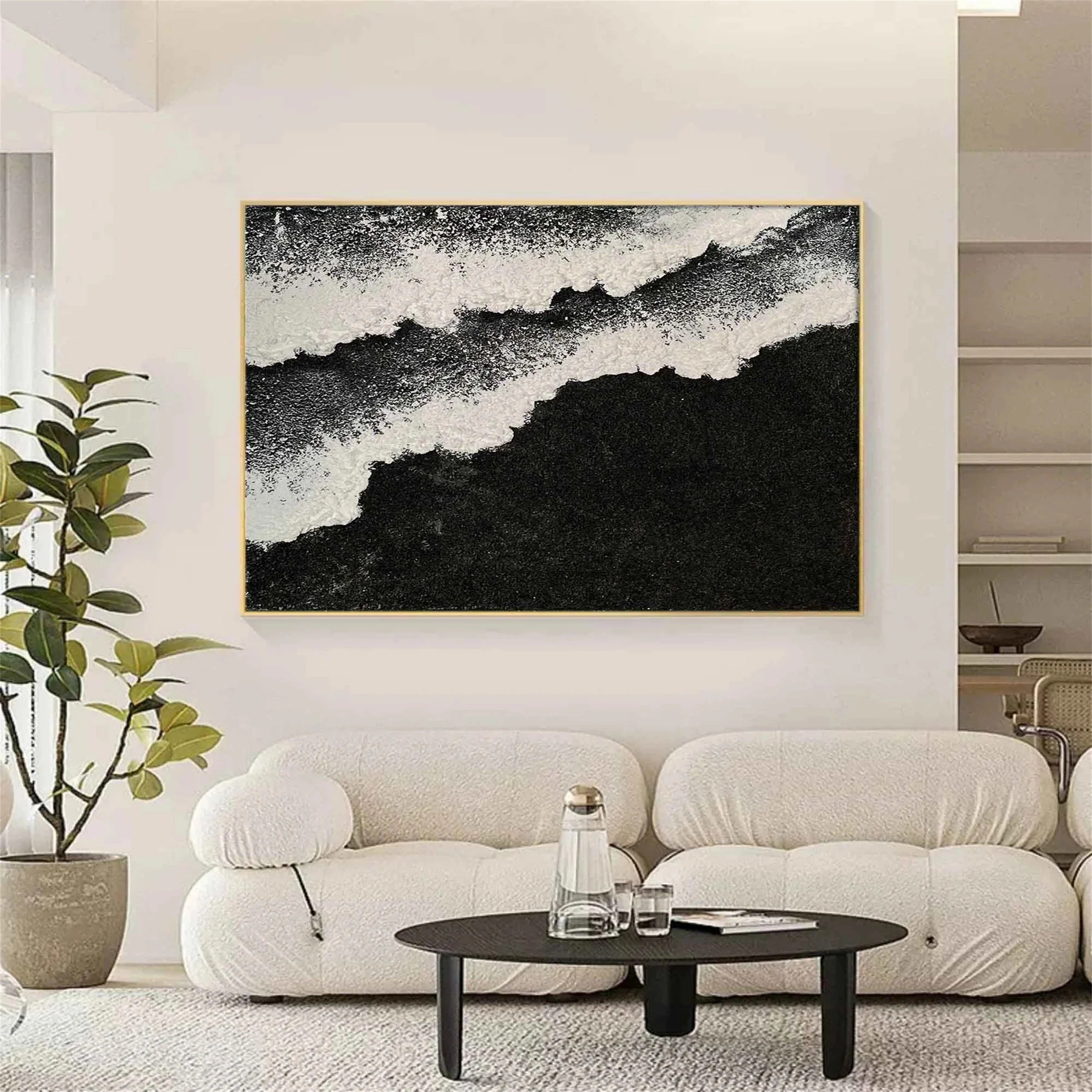
Not every exploration of color requires an explosion of hue. Some of the most powerful colourful abstract art paintings use color sparingly, creating impact through contrast rather than saturation. Black and white with color wall art operates on a simple principle: color seen in isolation is color amplified. When a canvas is largely composed of blacks, whites, and grays, a single area of pure color becomes almost unbearably intense. It draws the eye immediately. It carries emotional weight far beyond its physical size.
Think of a painting that's mostly gestural black marks on a white field, with one small passage of cadmium red deep within the composition. That red doesn't just sit there—it glows, it pulses, it demands attention. The surrounding monochrome work creates a stage on which the color performs. This technique works beautifully in spaces that already have strong visual elements. If your room features colorful furniture or busy patterns, a black and white with color wall art piece can provide sophisticated counterpoint. It acknowledges the room's energy while offering visual rest.
For collectors, these pieces often become the most talked-about elements in their collections. They demonstrate confidence—the confidence to use color not as decoration but as weapon.

Part 4: Making a Statement – Selecting Large Colorful Wall Art for Your Space
Size transforms everything about how we experience art. A small canvas invites intimate viewing, a private conversation between viewer and work. Large colorful wall art makes a different demand entirely. It announces itself. It claims territory. It becomes architecture.
When you're considering large colorful wall art for your home, the first question isn't "Do I like it?" but "Can my room handle it?" Measure your wall. Then measure it again. The ideal width for a piece above a sofa is 60 to 70 percent of the sofa's length. For a standalone wall with no furniture below, the piece can occupy 60 to 75 percent of the available wall space.
But numbers only tell part of the story. Abstract colorful wall art at scale has presence that measurements can't capture. It creates a field of energy that affects everything around it. A large red painting makes a room feel warmer, more passionate. A large blue painting can make the same room feel cooler, more contemplative.
The practical challenge with large colorful wall art is visualizing it in your space before commitment. Here's a reliable method: use painter's tape to outline the proposed dimensions on your wall. Live with that rectangle for several days. Move through the room at different times. Does the outlined area feel proportionate? Does it dominate appropriately or overwhelm? This simple test prevents the most common and costly mistake in art buying.
For those seeking colorful wall art that truly transforms a room, professional galleries offer invaluable curation. At Eleanos Gallery, the Abstract Art collection includes works ranging from intimate explorations to commanding large colorful wall art pieces. Each has been selected not just for individual quality but for its ability to inhabit real spaces with grace and power.

Part 5: From Viewer to Creator – Painting Your Own Colourful Abstract Art
If the sections on color mixing have sparked something in you, consider this your invitation to create. Painting your own colourful abstract art paintings is not as distant a goal as you might think. Start without expectation. Gather a pre-stretched canvas, a few tubes of acrylic paint (titanium white, a warm red, a cool blue, a yellow, and the browns you've learned to mix), and a palette knife. The knife is important—it forces you to commit, to avoid the endless fussing that brushes enable.
Begin with a ground color. Cover the entire canvas with a mid-tone, perhaps one of your hand-mixed browns. This kills the intimidating white and gives subsequent layers something to play against.
Then work in layers. Apply color, step back, apply more. Let some of that grounding brown peek through. Those glimpses of underlying color create depth that flat applications never achieve. When you feel stuck, return to the question: what am I trying to feel? Not "what am I trying to say"—abstraction isn't about statements. It's about sensations. Trust that your hand knows more than your head.
The first colorful canvas wall art you create may not be gallery-ready. It may be awkward, unbalanced, uncertain. But it will be yours, and that counts for something no purchased artwork can replicate. And with each attempt, your color sense will deepen, your confidence will grow, and the question "how to make a brown colour with paint" will become second nature rather than stumbling block.

Part 6: Let There Be Light – Displaying Your Colourful Abstract Art Paintings
You've chosen your piece. You've waited for delivery or finished your creation. Now it leans against the wall, waiting. How you light it determines everything about how it lives in your space. Colourful abstract art paintings are uniquely sensitive to light because color itself is light. A painting that glows in midday sun can look dull and lifeless under a single overhead fixture.
Natural light is your best friend, but it requires management. Morning light from east-facing windows has different color temperature than afternoon light from the west. Observe your chosen wall throughout the day. If the piece will receive direct sun, consider UV-filtering glass or film to prevent fading.
For evening viewing, dedicated art lighting transforms the experience. Adjustable picture lights mounted above the frame cast focused illumination that makes colors sing. Track lighting lets you angle light precisely, creating shadows that add dimension to textured surfaces.
The color temperature of your bulbs matters enormously. Warm light around 2700-3000K enriches reds, oranges, and yellows. Cooler light around 3500-4000K makes blues and greens more vibrant. Experiment with both to see which serves your particular colourful abstract art paintings best.
Part 7: Your Buying Guide for Colourful Abstract Art Paintings
For those ready to invest in colourful abstract art paintings, this checklist ensures you make decisions you'll love for years.
- First, confirm size with the tape test described earlier. There's no substitute for living with the outline.
- Second, examine color in person if possible. Screens lie. They oversaturate, shift temperatures, and compress subtlety. If you must buy online, request photos in natural light and ask about return policies.
- Third, understand what you're buying. Original paintings carry the artist's unique energy and hold value differently than reproductions. Limited edition prints offer quality at lower price points but lack the physical presence of originals. Open edition prints are decorative rather than collectible.
- Fourth, consider the source. Galleries like Eleanos Gallery provide provenance, artist information, and quality guarantees that anonymous online platforms cannot match. Their Abstract Art collection offers the confidence that comes with professional curation.
- Finally, the emotional test. Does this colourful abstract art paintings make you feel something every time you see it? Does it reward repeated looking? Does it feel like it belongs in your life? If yes, stop analyzing. Trust that feeling.
Conclusion
Color is worth the effort it demands. Whether you're searching for the perfect colorful wall art to complete a room, learning how to make a brown colour with paint for your next canvas, or standing in front of a finished piece you created yourself, you're participating in one of humanity's oldest and richest traditions: using color to communicate what words cannot. The best colourful abstract art paintings don't just decorate. They transform. They make rooms feel more like homes, and homes feel more like sanctuaries. May you find or create the colors that speak most deeply to you.





Leave a comment
This site is protected by hCaptcha and the hCaptcha Privacy Policy and Terms of Service apply.