

Abstract landscape painting is not about copying nature, but about translating its essence, emotion, and memory into a visual language of color, form, and texture. Beyond mere technique, this guide explores the process—a flexible, intuitive framework that moves from internal inspiration to a finished, resonant piece of art. We will move past rigid rules to embrace a method that values personal expression, helping you capture not a scene, but a feeling of a place.

Part 1: What Is Abstract Landscape Art?
At its heart, abstract landscape art is a dialogue between the outer world and the inner self. It departs from literal representation to convey the emotional core, atmosphere, or memory of a place. Think of it as visual poetry: where a traditional landscape might describe a tree in detail, an abstract landscape seeks to evoke the sensation of standing beneath its canopy—the dappled light, the rustling silence, the sense of scale.
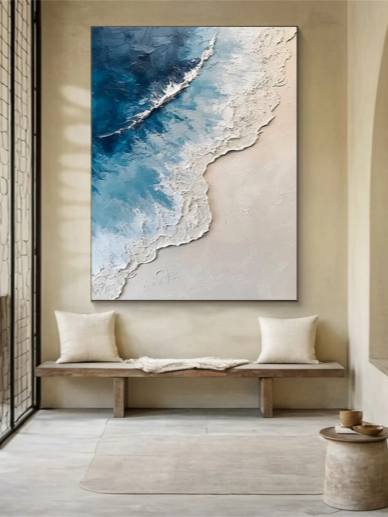
This genre occupies a beautiful middle ground. It is distinct from pure, non-representational abstract art because it maintains a foundational link to the natural world—horizons, landforms, skies, water. Yet, it is liberated from realism through simplification, exaggeration of color, expressive mark-making, and textured surfaces. The goal is to create a new reality on the canvas, one that feels true to an experience rather than a photograph.

Part 2: The Mindset & Materials for Abstract Landscape Art
Before touching a brush, cultivate the right mindset: one of curiosity, play, and permission to make “happy accidents.” Your primary tools are not just physical but perceptual—learn to see landscapes as compositions of shapes, color fields, and lines.
In terms of physical materials, begin with what is forgiving and versatile. Acrylic paints are highly recommended for their fast drying time, allowing for rapid layering and reworking. Invest in a few quality brushes, but also gather unconventional tools: palette knives for scraping and adding thick impasto texture, old credit cards, sponges, and even your fingers.
A medium (like gel or modeling paste) can add fascinating body and depth to your paint. Remember, the material’s physicality—its texture—becomes a direct carrier of emotion and a vital element of the abstract language itself.

Part 3: How to Paint Abstract Landscape Art - The 5-Step Creative Process
This is not a rigid formula but a guided journey from conception to completion. It synthesizes classical art principles with an abstract, intuitive approach.
Step 1: Conception & The Internal Sketch
Begin not outdoors, but in your mind’s eye. Close your eyes and recall a landscape that stirs you—a windswept coast, a quiet forest path, a vast desert. What is the core emotion? Is it tranquility, turbulent energy, or nostalgic warmth? Hold that feeling. Now, make a series of quick, small sketches using only basic shapes—a rectangle for the sky, a curve for a hill, a line for the horizon. This “internal sketch” prioritizes composition and emotional intent over detail, setting your creative compass.
Step 2: Laying the Groundwork: Color Fields and Emotional Atmosphere
Your first layers on canvas establish the painting’s emotional weather. Mix large pools of your foundational colors. Using a big brush or a rag, freely apply washes and broad strokes to define your sky and ground. Don’t paint “blue sky” and “green grass”; paint “calm expanse” or “stormy depth.” This stage is about mood. Consider the lessons of masters like Piet Mondrian, who, even in his later geometric work, began with studies reducing trees and dunes to their essential rhythmic structures. Let colors blend and bleed. These initial, often translucent layers will create a history of color that peeks through later, adding depth and mystery.
Step 3: Defining Structure: The Art of Simplification
Here, you introduce the landscape’s architecture, but abstractly. Refer to your initial shape sketches. Using a brush or palette knife, define the horizon. Suggest a mountain range with a single, sweeping gesture. Indicate a river’s path with a broken, meandering line. Remember Paul Cézanne, who taught us to see nature as an assembly of cylinders, spheres, and cones. Simplify a cluster of trees to a cohesive, textured shape. The key is to use the minimum number of marks to imply the maximum amount of form. This step builds the scaffold upon which everything else hangs.
Step 4: Building Depth and History with Texture & Layers
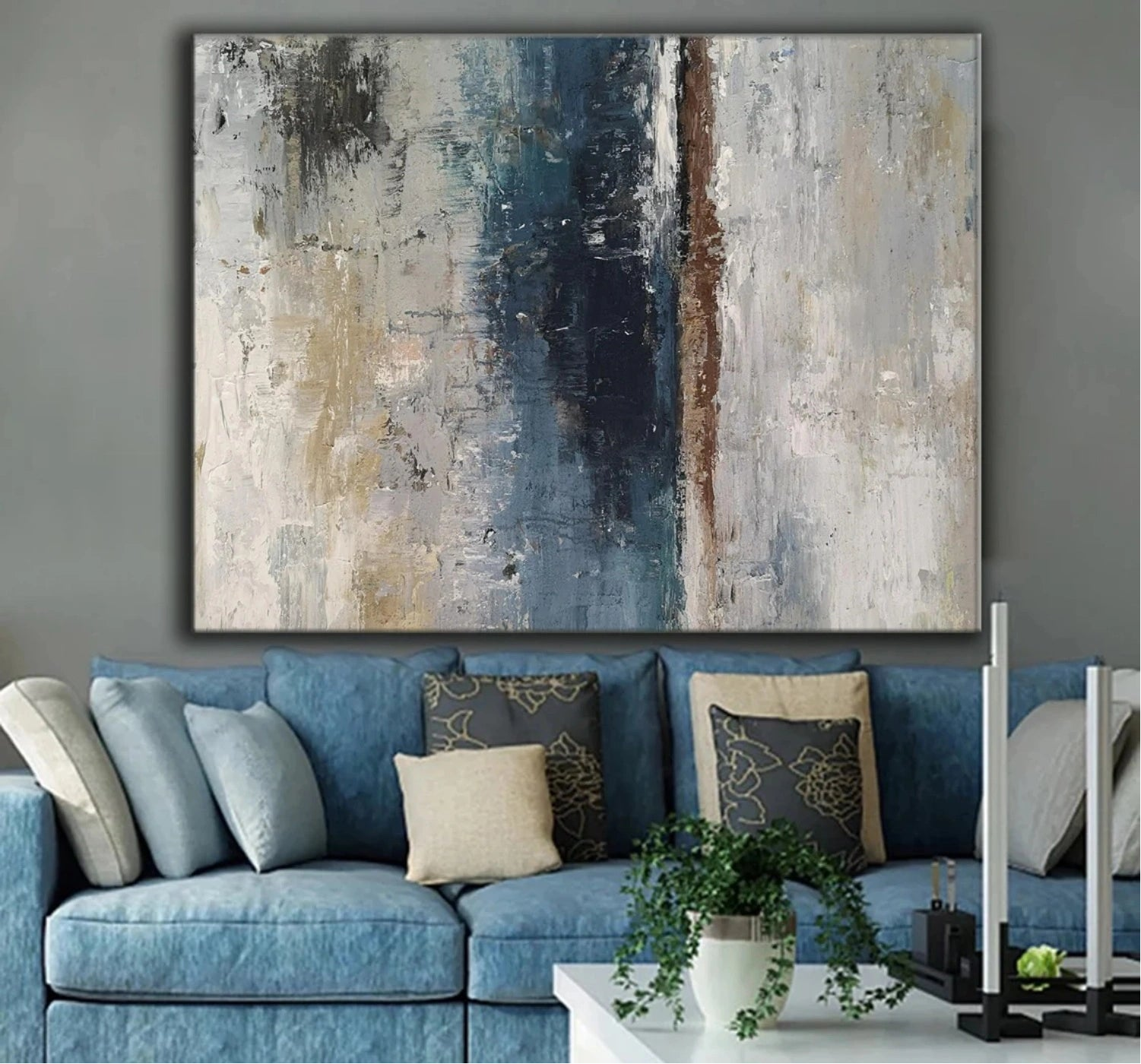
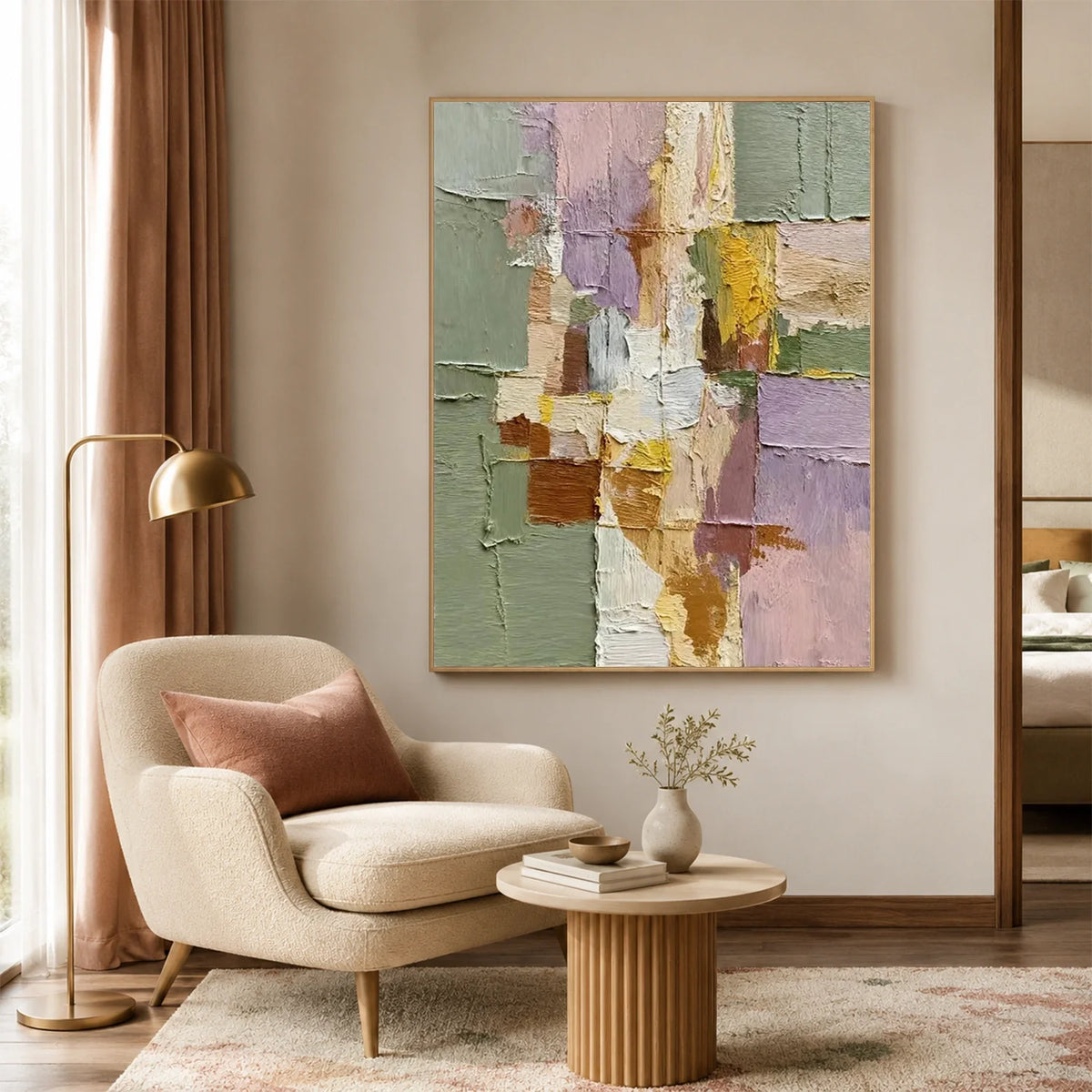
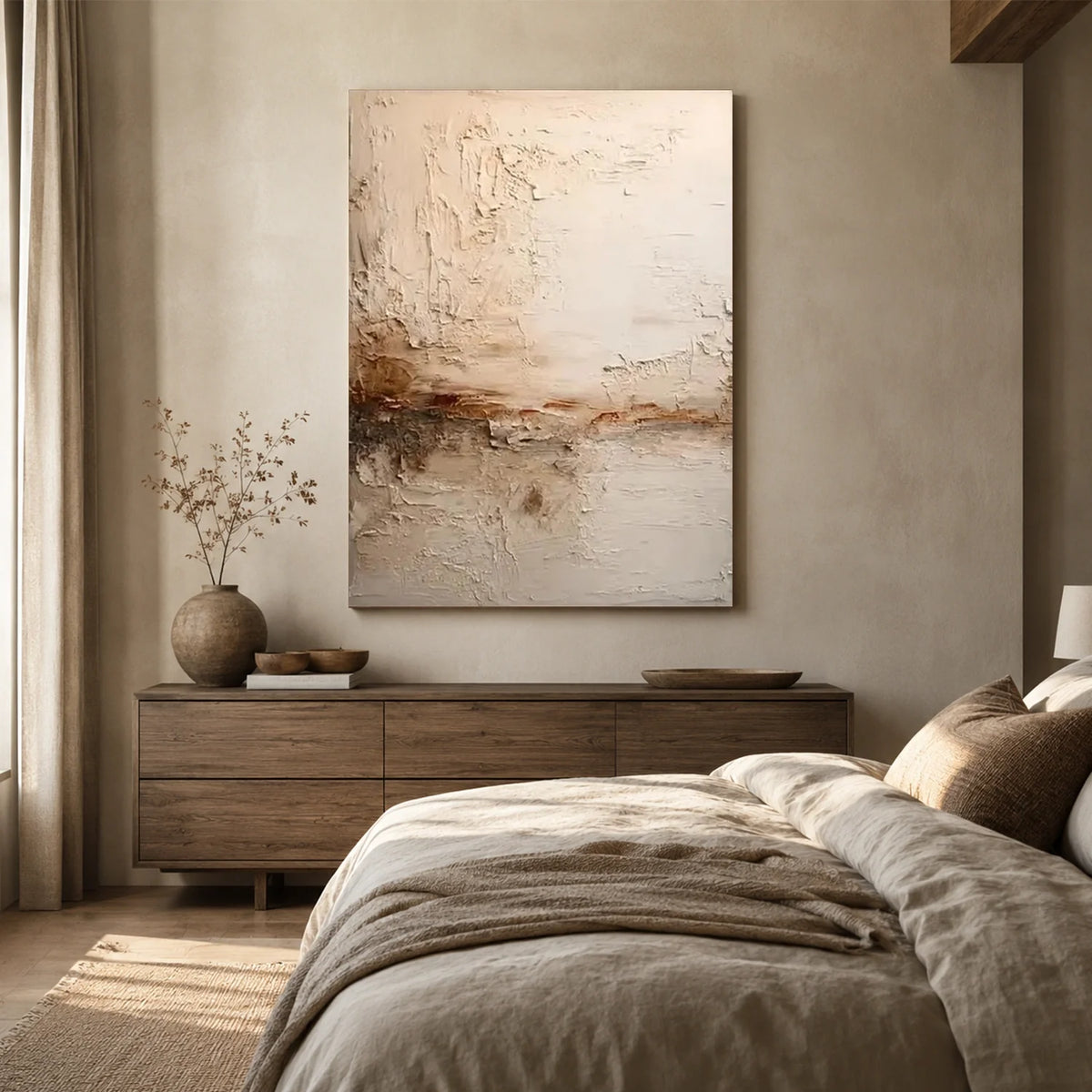
This is where your painting gains soul and tactile presence. Texture is the handwriting of your process. Mimic the land’s ruggedness by applying thick paint with a knife and scraping it back. Create the illusion of foliage by dabbing with a crumpled sponge. Suggest water reflections with soft, horizontal glazes (thin, transparent layers of color).
Employ techniques like resist (using wax or masking fluid to preserve lower layers) or collage (adding pieces of paper or fabric) to build complex, intriguing surfaces. As contemporary artist Isabelle Cornaro demonstrates, the organization of material—whether paint or found objects—creates a “poetic association” that evokes landscape through memory and metaphor. Each layer is a decision, a reaction to the last, building a visual history that invites the viewer to look into the painting, not just at it.
Step 5: Unification & The Final Resonance
Step far back from your canvas. You are now the editor. Does the composition hold together? Is there a compelling focal point? Use the 80/20 rule as a guide: does roughly 80% of the painting have a cohesive feel (calm, textured, dark), balanced by 20% of contrast (a vibrant accent, a smooth area, a light mark) to create interest?
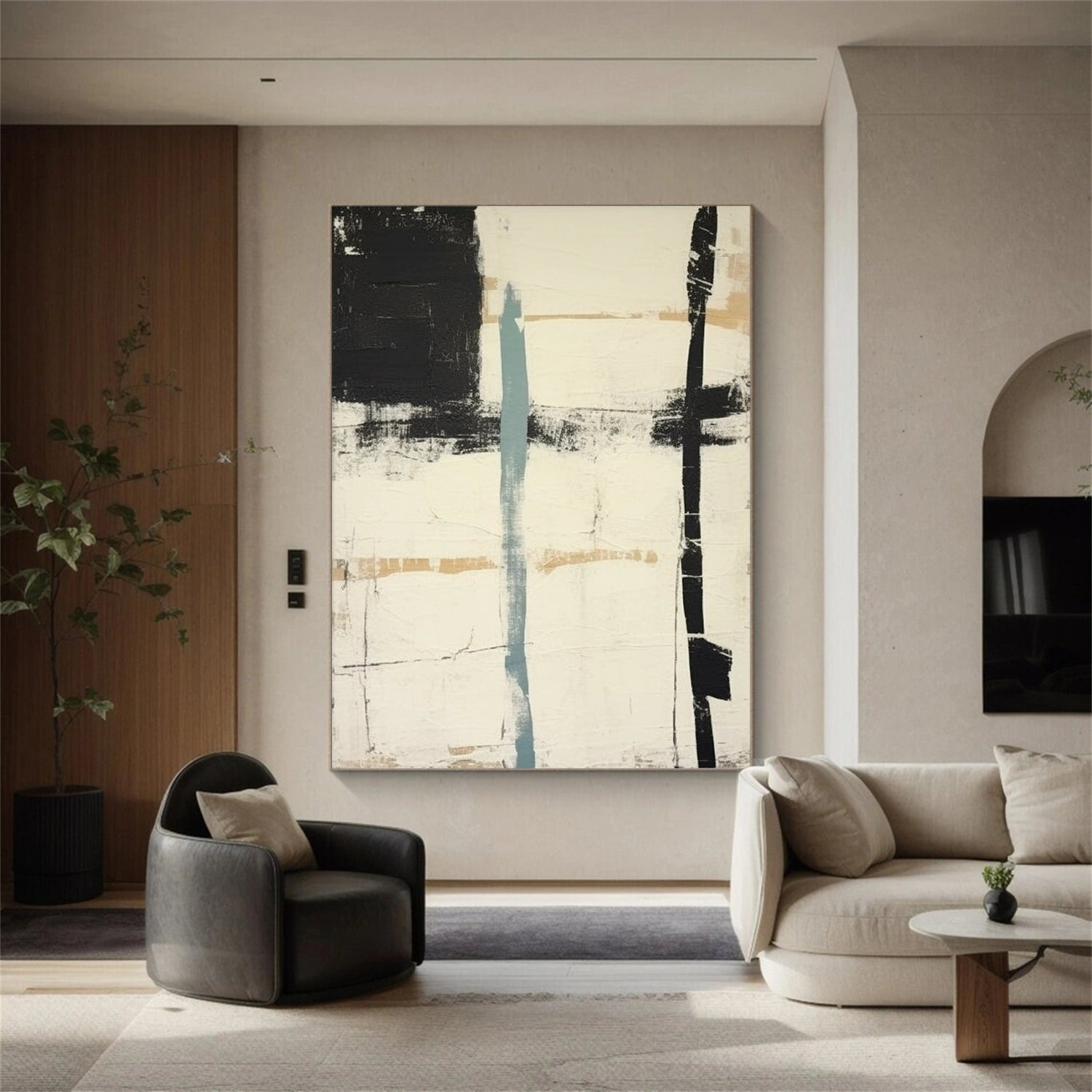
This is the time for final, deliberate gestures—a few sharp lines to sharpen an edge, a bright highlight to bring an area forward, or a unifying glaze to harmonize colors. Channel the philosophy seen in Chinese landscape traditions and artists like Lu Qinglong, who masterfully uses “blank space”—areas of quiet or minimal texture—to create breath and vastness. Knowing when to stop is critical. The painting is finished not when you can add nothing more, but when you can take nothing away without harming its emotional resonance.

Part 4: Finding Your Unique Voice
Your style will emerge through consistent practice. Experiment with different source materials: work from memory one day, a blurred photo the next. Study how other artists solve problems. Observing a diverse range of professional abstract landscape paintings can be a masterclass in itself. Analyze how artists at galleries like Eleanos Gallery use color harmony, compositional tension, and mark-making to evoke place. Let this exposure fuel your experimentation, not imitation.

Part 5: From Your Studio to Your Space
The process of creating abstract landscape art deepens your appreciation for all art. The textures, decisions, and emotions embedded in a piece tell a rich story. Whether you’re building a collection of your own creations or seeking to live with the work of others, this genre has the unique power to transform a space with atmosphere and meaning.
For those looking to bring this evocative energy into their homes, exploring curated collections can be a profound source of inspiration and connection.

Conclusion
Painting abstract landscapes is a journey of perceiving and expressing the soul of the natural world. It empowers you to move beyond replication to creation, using the elements of art to build a new place that feels authentically true. Embrace the process, trust your intuition, and let each painting be a step in developing your own visual language.
Frequently Asked Questions
Q1: What’s the main difference between traditional and abstract landscape art?
Traditional landscapes aim for recognizable depiction, focusing on accurate detail and perspective. Abstract landscapes prioritize emotion and essence, using simplified forms, expressive color, and texture to convey the feeling of a place, not its photographic reality.
Q2: I’m a beginner. What’s the single best piece of advice for starting?
Embrace play and let go of the fear of “messing up.” Your first goal is not a masterpiece, but to explore how paint moves, how colors mix, and how marks feel. The technical skill grows naturally from this foundation of fearless experimentation.
Q3: How do I know if my abstract landscape is “finished”?
A painting is finished when it achieves a sense of resolved balance and communicates the initial feeling you intended. If you find yourself making tiny, fussy adjustments without improving the whole, step away. Often, the most powerful statements are made with bold, decisive layers, not overworked details.




Leave a comment
This site is protected by hCaptcha and the hCaptcha Privacy Policy and Terms of Service apply.