

In our perpetually connected, visually saturated world, the quest for a moment of genuine peace has moved from a luxury to a necessity. Our homes are no longer just living spaces; they are our sanctuaries. Yet, filling these sanctuaries with mere decoration often adds to the noise rather than quieting it. This is where true art transcends ornamentation. When you search for “Eleanos Gallery Abstract Tranquility”, you are not looking for a picture to match your sofa. You are seeking an anchor—a visual instrument designed to recalibrate the energy of a room and, by extension, your own state of mind.
Eleanos Gallery’s Abstract Tranquility series is a direct and profound response to this deep-seated need. It operates on a compelling premise: it does not merely depict serenity; it actively generates it. This collection moves beyond representation to create an experiential field of calm, using the fundamental language of abstract art—color, form, texture, and light—to compose silent hymns to peace. This article will guide you through the philosophy that breathes life into this series, decode the artistic grammar of its quietude, and show you how to make it the soul of your personal space.

Part I: Deconstructing “Tranquility”: The Philosophy of Emotional Abstraction
At its core, the Abstract Tranquility series is an exercise in emotional alchemy. It is built on the understanding that certain visual principles can directly influence our psychological and emotional landscape.
1.From Representation to Evocation
Traditional art often tells us what to feel by showing us what to see: a serene lake, a quiet forest. Abstract art, in its highest form, bypasses this narrative shortcut. It engages directly with our subconscious, evoking emotions through pure sensory experience. The Abstract Tranquility series embraces this power. A wash of soft grey isn't a sky; it's the feeling of mist at dawn. A gentle gradient of earthy ochre isn't a landscape; it's the warmth of stillness. This approach resonates with ancient aesthetic wisdom, such as the Chinese philosophical pursuit of capturing the spirit of the mountains rather than their literal form, aiming to express the “rhythm of the universe” itself.

2.The Psychology of a Restful Palette
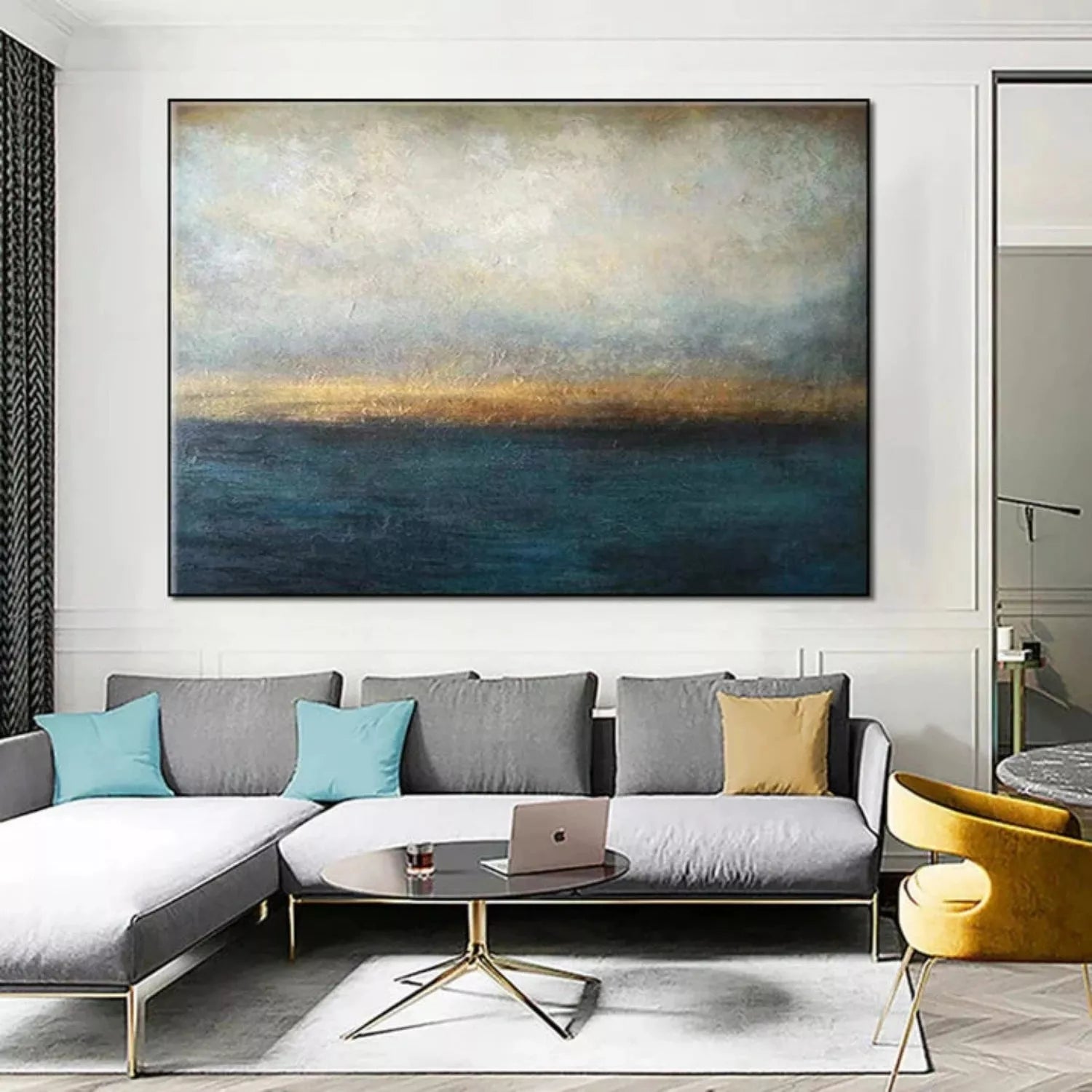
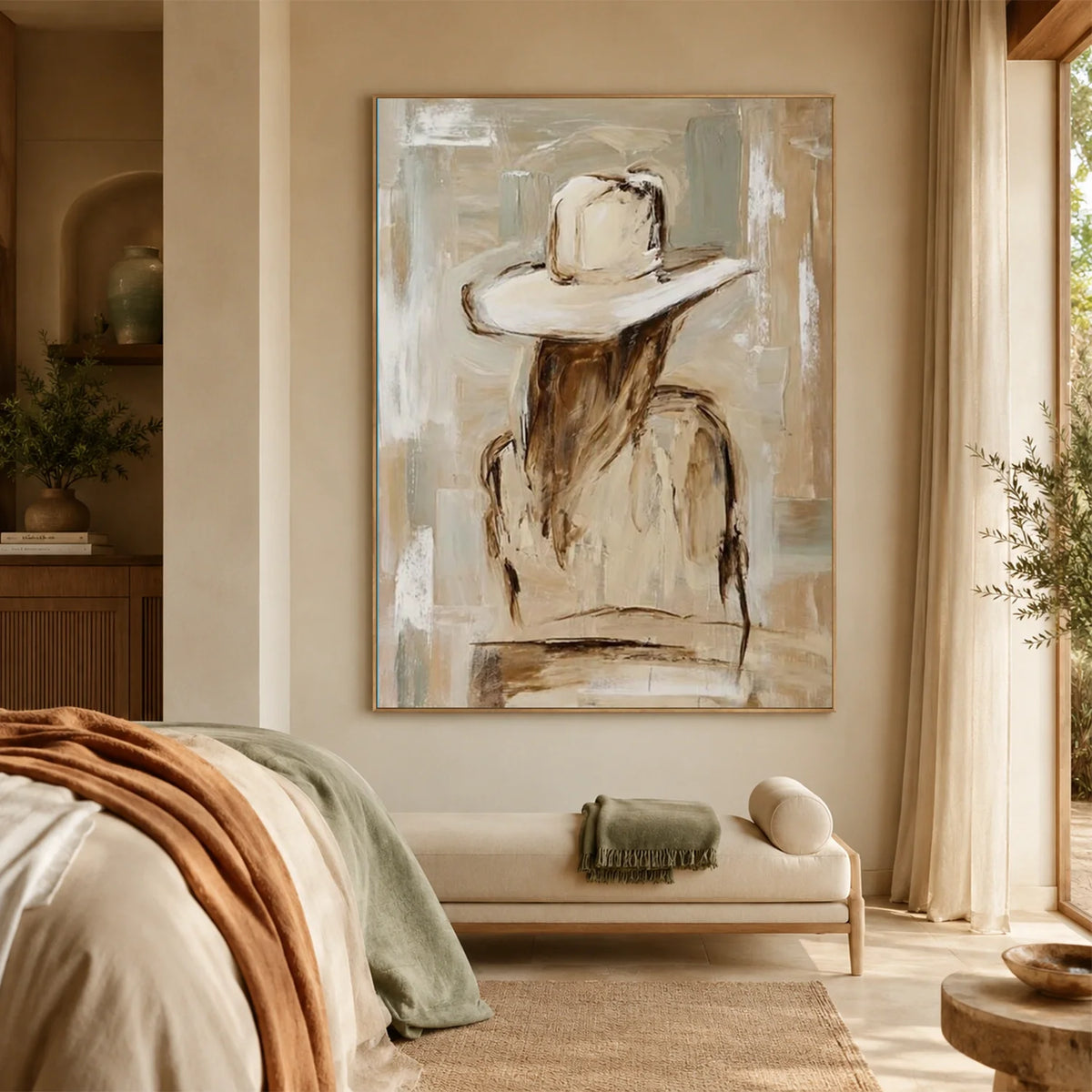
The series’ distinct color scheme is its first and most powerful tranquilizer. Eschewing high contrast and saturated hues that stimulate and demand attention, it employs a sophisticated lexicon of muted tones: ash grey, misty blue, faded clay, and organic white. These are colors found in nature after the storm has passed, in stones smoothed by time, in the quiet space between twilight and dark. Art historian and critic Lawrence Alloway, in discussing systemic painting, highlighted how color and form could be organized to create self-contained, contemplative systems. Here, the palette is meticulously curated to lower visual cortisol, creating what psychologists might recognize as a visual “breathing space” that can counter the anxiety of modern life.

3.Imperfection as the Door to Authenticity
While the series is abstract, it subtly incorporates the Wabi-Sabi recognition of beauty in transience and honesty. The slight undulation of a hand-painted line, the delicate texture of paint on high-quality linen canvas, the almost imperceptible variation in a monochromatic field—these are not flaws. They are records of the human hand and the moment of creation. They are what differentiate an original abstract painting with a soul from a sterile, mass-produced print. This embrace of the imperfect authenticates the tranquility on offer; it feels earned, organic, and deeply human, much like the Japanese concept of ‘wabi-sabi’ which finds profound beauty in asymmetry, roughness, and the marks of time.

Part II: The Anatomy of Calm: A Four-Dimensional Artistic Grammar
How does the series technically achieve this effect? The tranquility is architected through four interconnected dimensions.
1.Dimension of Space: The Power of “Ma” (Negative Space)
Perhaps the most critical tool is the masterful use of emptiness. In Japanese aesthetics, “Ma” is the purposeful pause, the space between objects that gives them meaning and breath. The Abstract Tranquility compositions are often vast, open fields where forms are suggested rather than confined, hovering in generous, breathable space. This visual “room to breathe” directly translates to a psychological one, inviting the viewer into a state of contemplation rather than quick consumption. This technique has roots in traditional Asian art perspectives, where space is often treated as an active, subjective element rather than a void to be filled.

2. Dimension of Texture: The Haptic Whisper
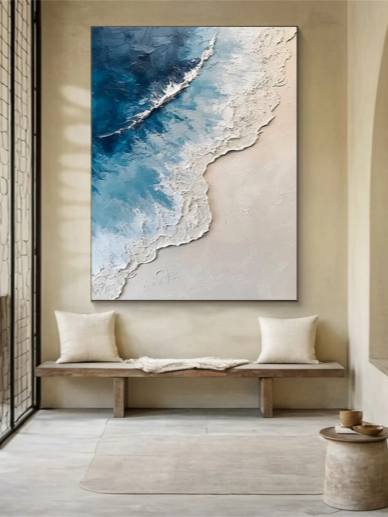
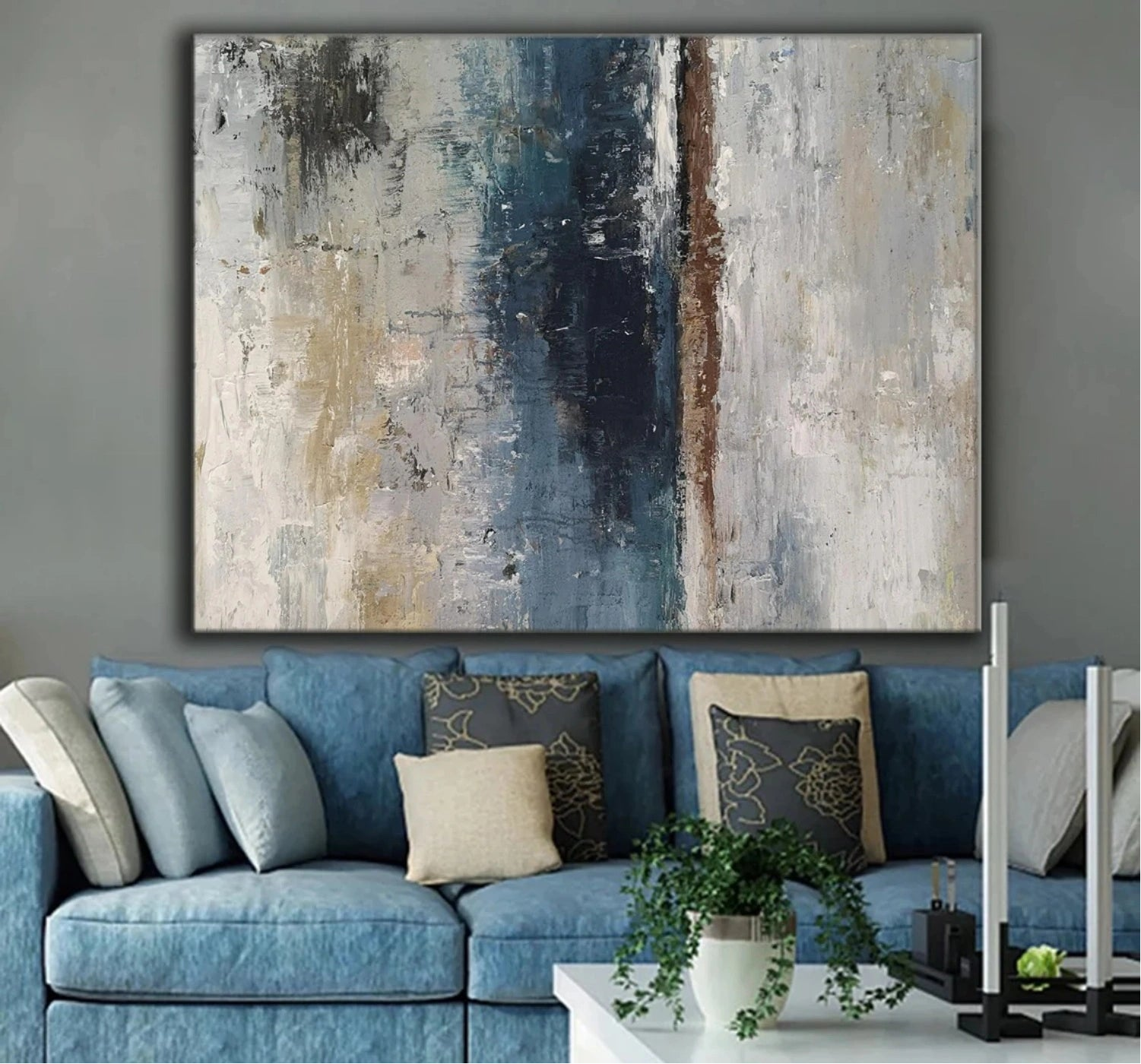
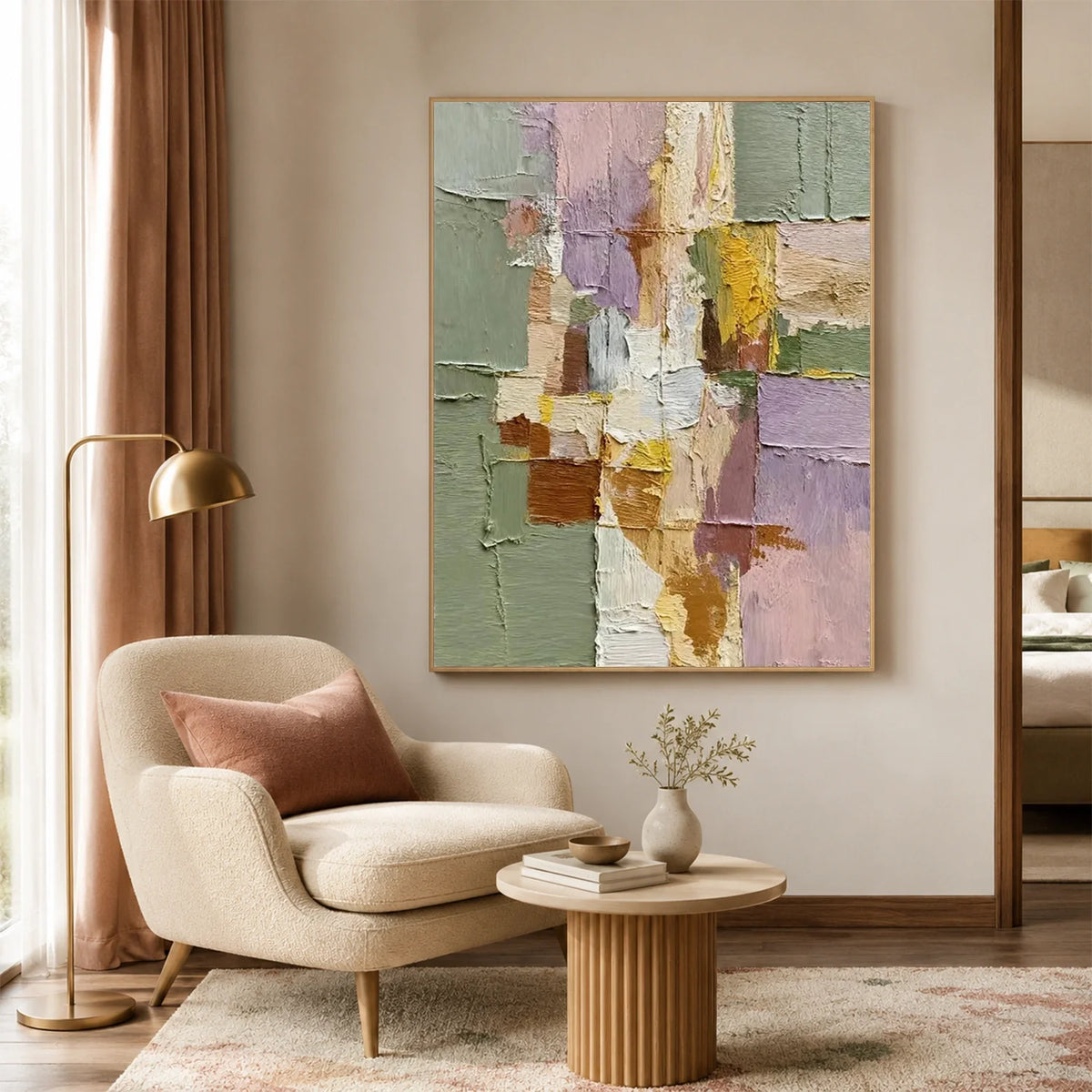
Moving beyond the visual, this series strongly appeals to our sense of touch, even from a distance. Many works explore the territory of 3d abstract wall art, not through gimmicky projections, but through tangible, hand-applied texture. Layers of oil or acrylic paint create gentle topographies on the canvas—subtle ridges, valleys, and peaks that catch light differently throughout the day. This 3d abstract art effect is subtle and sophisticated. It transforms the painting from a static image into a living surface that dialogues with changing light, creating a slowly evolving, meditative focus in the room.
3. Dimension of Simplicity: The Discipline of Reduction
This is where the series meets the ethos of simplistic abstract art and Minimalism. It practices a rigorous economy of form, stripping away all but the essential. Shapes are soft and organic, lines are sparing, and compositions are resolved with an elegant balance that feels innate, not forced. This reduction is not a lack of complexity, but a distillation to purity. It aligns with the Minimalist credo of using only fundamental forms and colors to create a direct, unmediated experience. The goal, as echoed in the pursuit of the ultimate in splendor is simplicity, is to use limitation to achieve limitless resonance.

4. Dimension of Light: The Unseen Co-artist
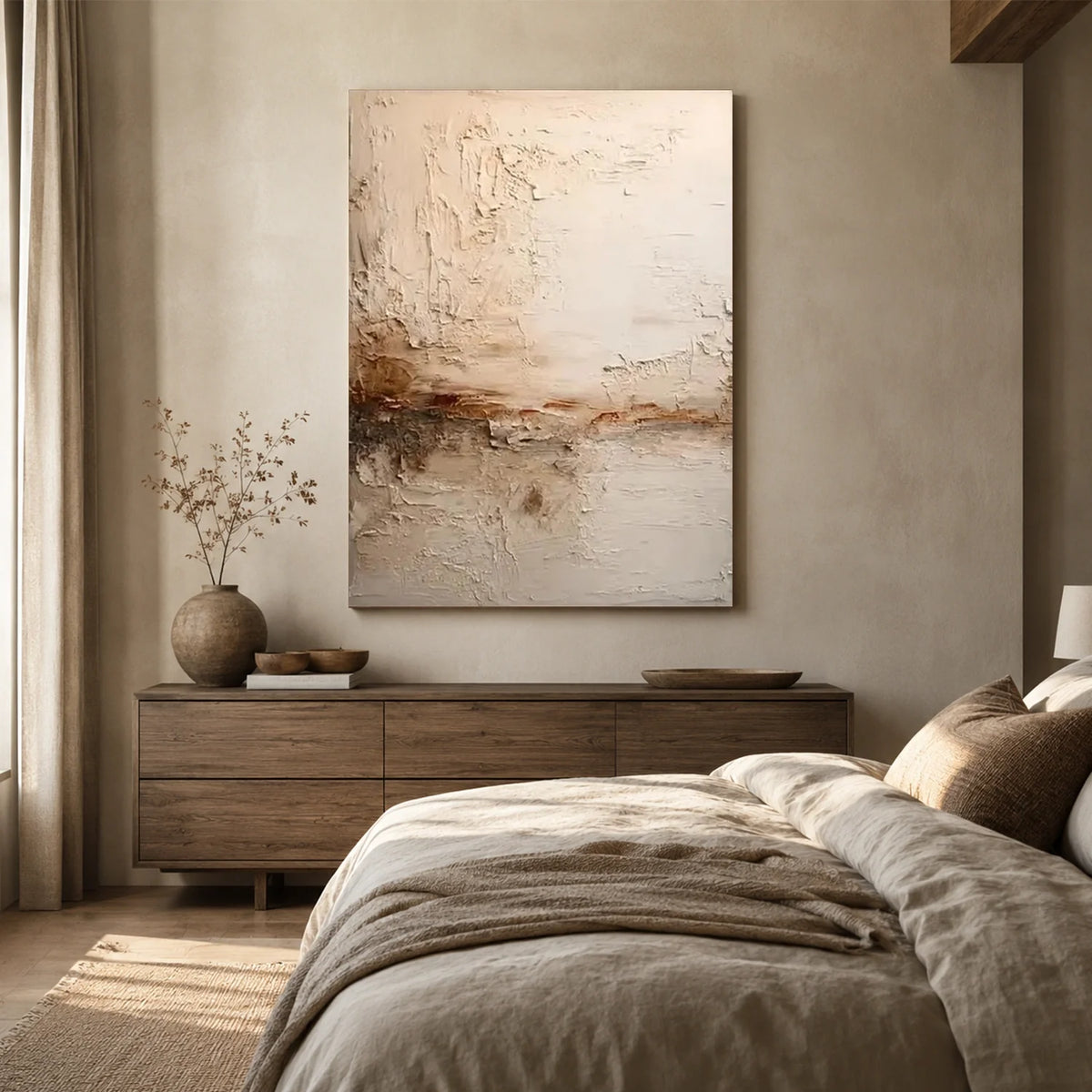
An Abstract Tranquility painting is conceived as a collaborator with light. The textured surfaces and nuanced color layers are designed to interact with ambient illumination. Morning sun might graze a ridge of paint, casting a soft shadow; evening lamplight might cause a deep blue to glow with inner warmth. This dynamic quality means the art is never quite the same twice, fostering a continuously renewing relationship with the viewer and embodying the Zen appreciation for impermanence and the fleeting moment.
Part III: Integrating the Atmosphere: From Gallery to Sanctuary
Choosing your piece is the beginning of the journey. Integrating it thoughtfully allows its tranquil atmosphere to permeate your home.
1. Diagnose Your Spatial Need
Consider the emotional function of the room. Does your living room need a calming anchor amid activity? A large-format painting with expansive negative space can serve as a visual “quiet zone.” For a bedroom, seek softer hues and even more subdued compositions to encourage rest. A study or meditation corner might benefit from a piece with more pronounced texture, offering a tactile focus for contemplation.
2. The Art of Placement and Companionship
Hang your artwork where it can live peacefully. Avoid clashing with busy patterns or competing statement pieces. Let it hold its own space. Frame it simply in natural wood or a slim, neutral profile to keep the focus on the work itself. Complement it with materials that share its ethos: linen textiles, raw wood, stone, and gentle, diffuse lighting. The painting can even subtly echo the grand, serene forms of an abstract mountain painting, connecting your interior to the timeless calm of nature.
3. Cultivating a Living Relationship
The final step is to shift your perception of the piece from a furnishing to a companion. Its true value is revealed over time, as you notice how its mood shifts with the weather, the season, and your own inner weather. It becomes a silent partner in your daily life, a visual cue to pause, breathe, and center yourself. In this sense, it functions as a form of visual therapy, a private art of wabi sabi art that teaches acceptance and presence, much like the art therapy practices that use creation and reflection for mental well-being.

Conclusion: Investing in a Pause
To choose a work from Eleanos Gallery’s Abstract Tranquility series is to make a conscious investment in peace. It is an acknowledgment that our environments shape us and that we have the agency to shape them into sources of strength and stillness. This collection proves that profound quietude can be rendered not through depiction, but through the sophisticated orchestration of artistic elements that speak directly to our nervous system. In a world that shouts, these paintings whisper. They offer not an escape from life, but a deeper, more centered way of inhabiting it. Explore the Abstract Tranquility collection with this new lens. Find the piece that doesn’t just match your wall, but resonates with your breath—and discover the profound power of an atmosphere made visible.




Leave a comment
This site is protected by hCaptcha and the hCaptcha Privacy Policy and Terms of Service apply.