

If you’ve scrolled through design feeds lately, you’ve likely encountered wabi sabi decor. It’s in the cracked ceramic vase, the linen sofa, and the muted, earth-toned palette. The term “wabi-sabi” itself has become a kind of aesthetic slang, a shorthand for “perfectly imperfect.” But here lies the central misunderstanding: Wabi sabi is not something you can buy. It is not a style you can simply source and install. To treat it as such is to miss its profound essence entirely. True wabi sabi is a lens, a philosophy of perception that teaches us to find beauty, meaning, and quiet awe not in spite of life’s impermanence and flaws, but precisely because of them. It’s not about what you possess, but about how you see, feel, and connect with the world immediately around you.

Part 1: The Misunderstanding: When a Profound Philosophy Becomes a Hashtag
How did a 15th-century Japanese aesthetic and spiritual concept, rooted in Zen Buddhism, become a popular Pinterest board? The digital age has a knack for compressing complex ideas into marketable trends. The search for “what is wabi-sabi slang” reveals this disconnect—users are seeking a quick definition, a neat box to check. In the process, the depth is often lost. We see the aesthetic outcomes (the raw wood, the asymmetry) but miss the internal process that gives them meaning.

This reduction to a decor trend focuses on the superficial “imperfection,” often artificially created and curated. It becomes a performance of authenticity, which is inherently contradictory. The real journey of wabi sabi begins not with a shopping list for wabi sabi wall art, but with a shift in mindset—a conscious decision to value authenticity over polish, process over product, and soul over status.
Part 2: The Deep Meaning: Unpacking the “Art” in Wabi Sabi
To move beyond the jargon, we must understand its two core pillars. “Wabi” originally conveyed the loneliness of living in nature, away from society. It evolved to signify a kind of rustic simplicity, quietness, and a conscious appreciation of the modest and unpretentious. It is the beauty of the humble, the unadorned, the stripped-back. “Sabi” points to the passage of time. It is the beauty that emerges with age and wear: the patina on copper, the weathering of stone, the softening of fabric. It speaks to tranquility, acceptance, and the graceful acknowledgment of life’s cycles.

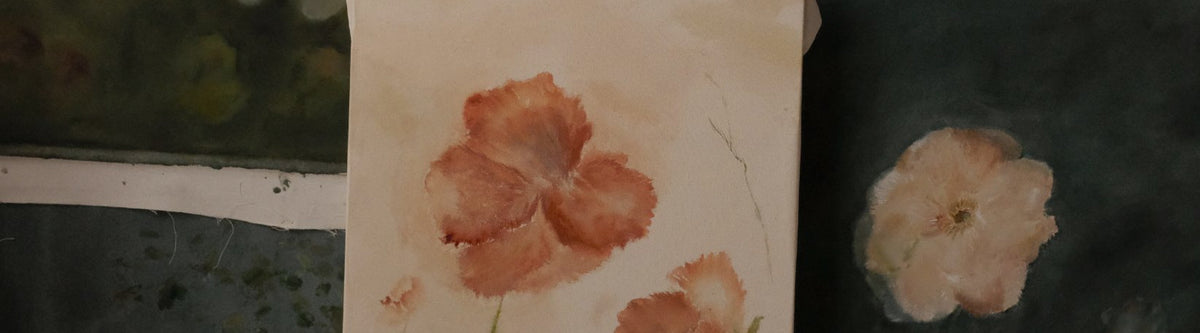
Therefore, the art of wabi sabi meaning is not about creating a specific object. It is the art of cultivating a specific awareness. It is the practice of finding elegance in austerity (wabi) and poetic melancholy in decay (sabi). This is where it connects intimately with the creation and appreciation of visual art. A painting isn’t merely an image; it is a physical object with a life. The art of wabi sabi is present in the visible brushstroke that reveals the artist’s hand and moment of decision, in the subtle crackle of aged varnish that tells of decades passed, and in the way pigments settle into canvas, creating a unique, unreproducible texture. It values the evidence of the human touch and the conversation between material and time—principles at the very heart of original, handcrafted painting.
Part 3: From Philosophy to Your Walls: Cultivating a Wabi Sabi Spirit at Home
So, if you can’t buy “wabi sabi,” how do you bring its resonant peace into your living space? The answer lies in curation, intention, and a new way of seeing.
Shift from Acquisition to Appreciation: Don’t search for “wabi sabi decor” items. Instead, look at what you already have. The well-loved book with a creased spine, the hand-thrown mug with a slightly uneven rim, the wooden table bearing the gentle scars of family meals—these are your foundational pieces. Practice seeing the narrative they hold.
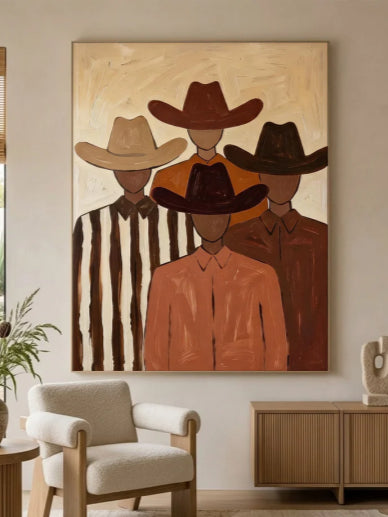
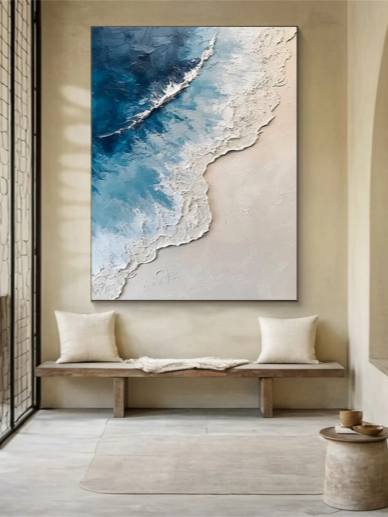
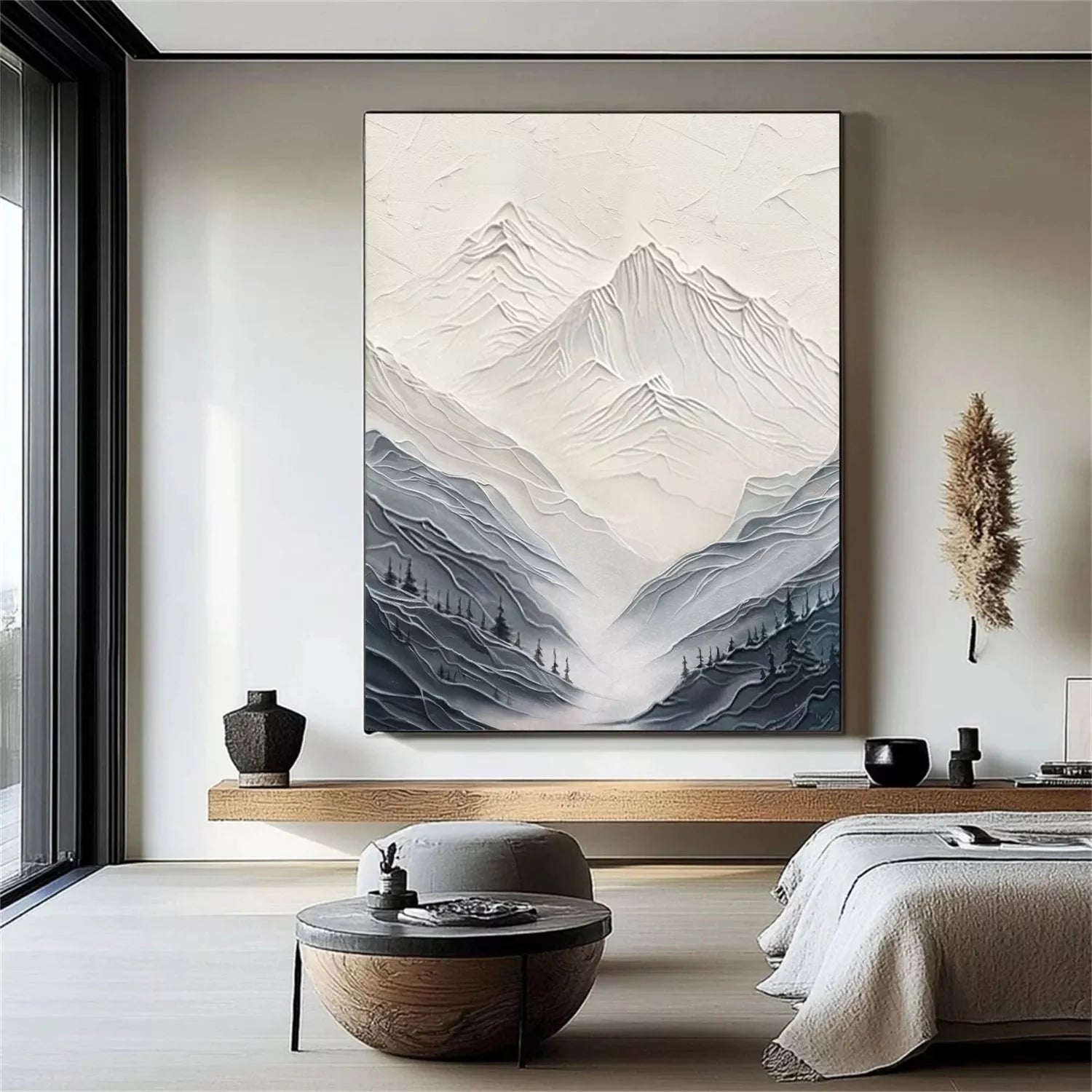
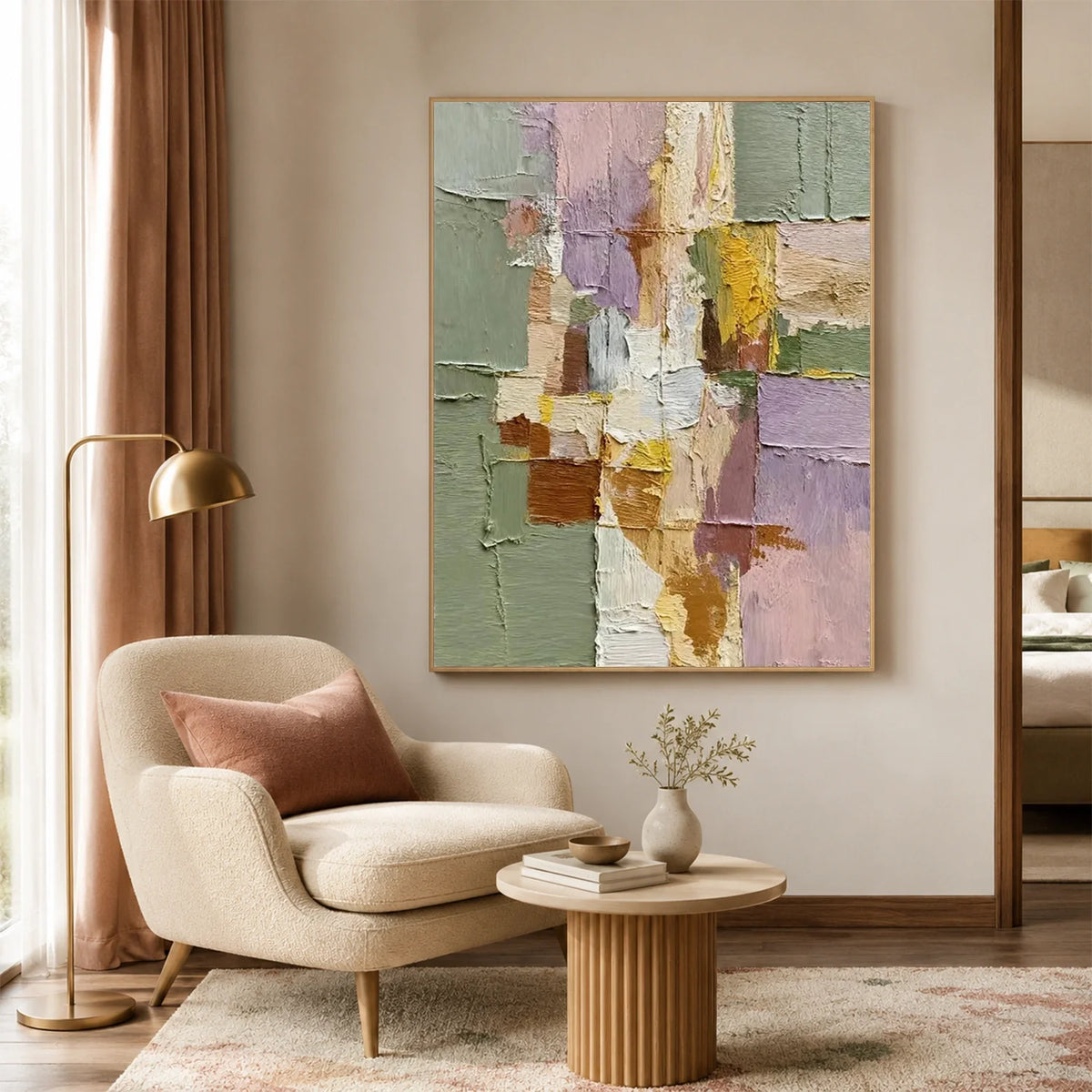
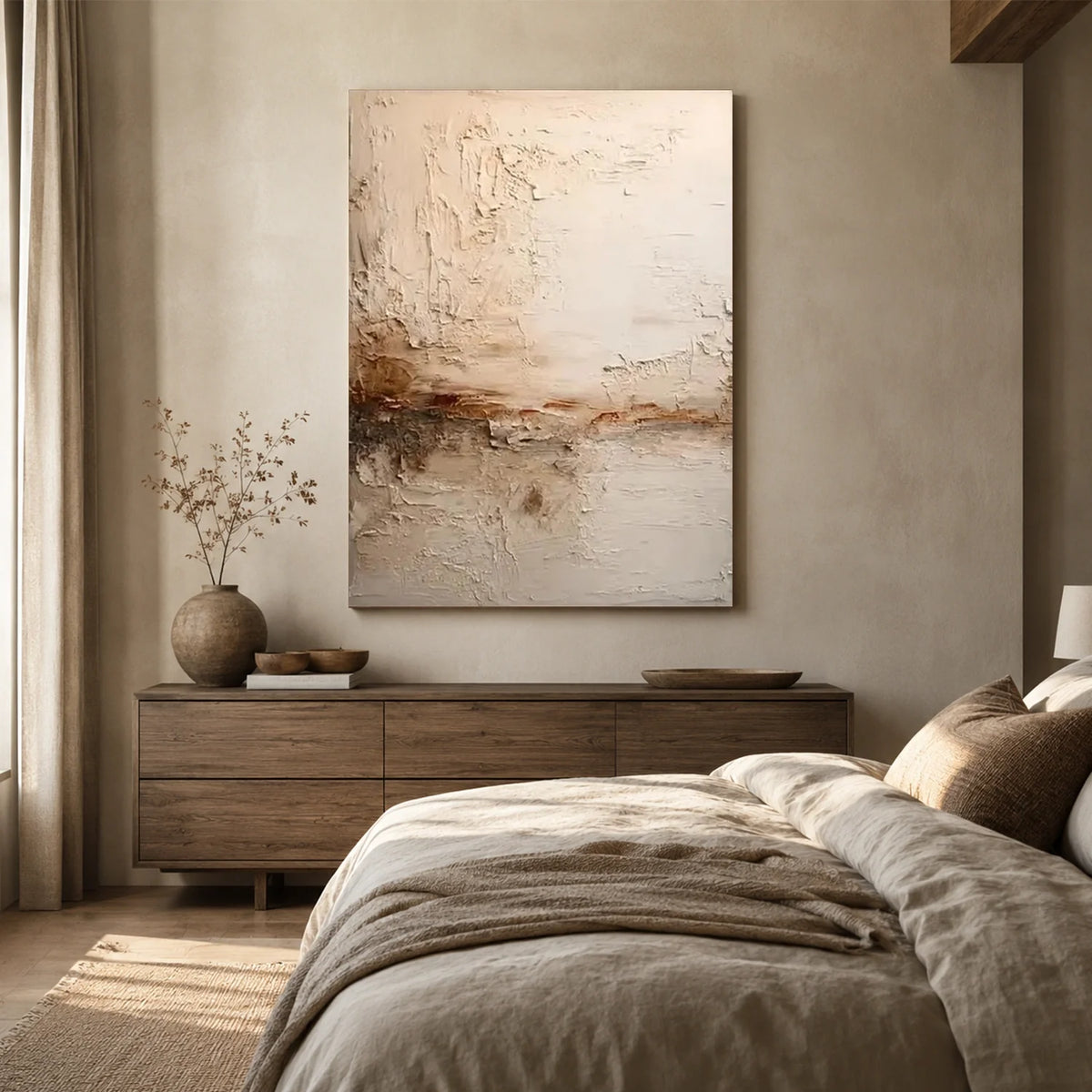
Honor Material Truth: Invite materials that age with character and tell their own story. Raw linen that softens, undyed wool, unvarnished wood that darkens with touch, natural clay, and forged iron. Their inherent textures and reactions to light and use are the decoration. In this context, a painting with rich, tactile impasto (thickly applied paint) does more than depict; it is a landscape of texture, casting small shadows and changing with the daylight, much like a weathered stone or a piece of driftwood.
Embrace Asymmetry and “Ma” (Negative Space): Reject sterile, forced balance. Arrange objects in odd numbers and off-center compositions. More critically, embrace “Ma,” the conscious use of empty space. A single piece of wabi sabi wall art given room to breathe on a wall is more powerful than a crowded gallery. This space is not empty; it is full of potential, silence, and a respect for the object within it.
Welcome the Dialogue of Light: Wabi sabi is inseparable from natural, changing light. It values the long, deep shadow of afternoon, the soft, diffuse glow of a cloudy day, and the way light grazes a textured surface to reveal its topography. Position your art and objects where they can participate in this daily dance.

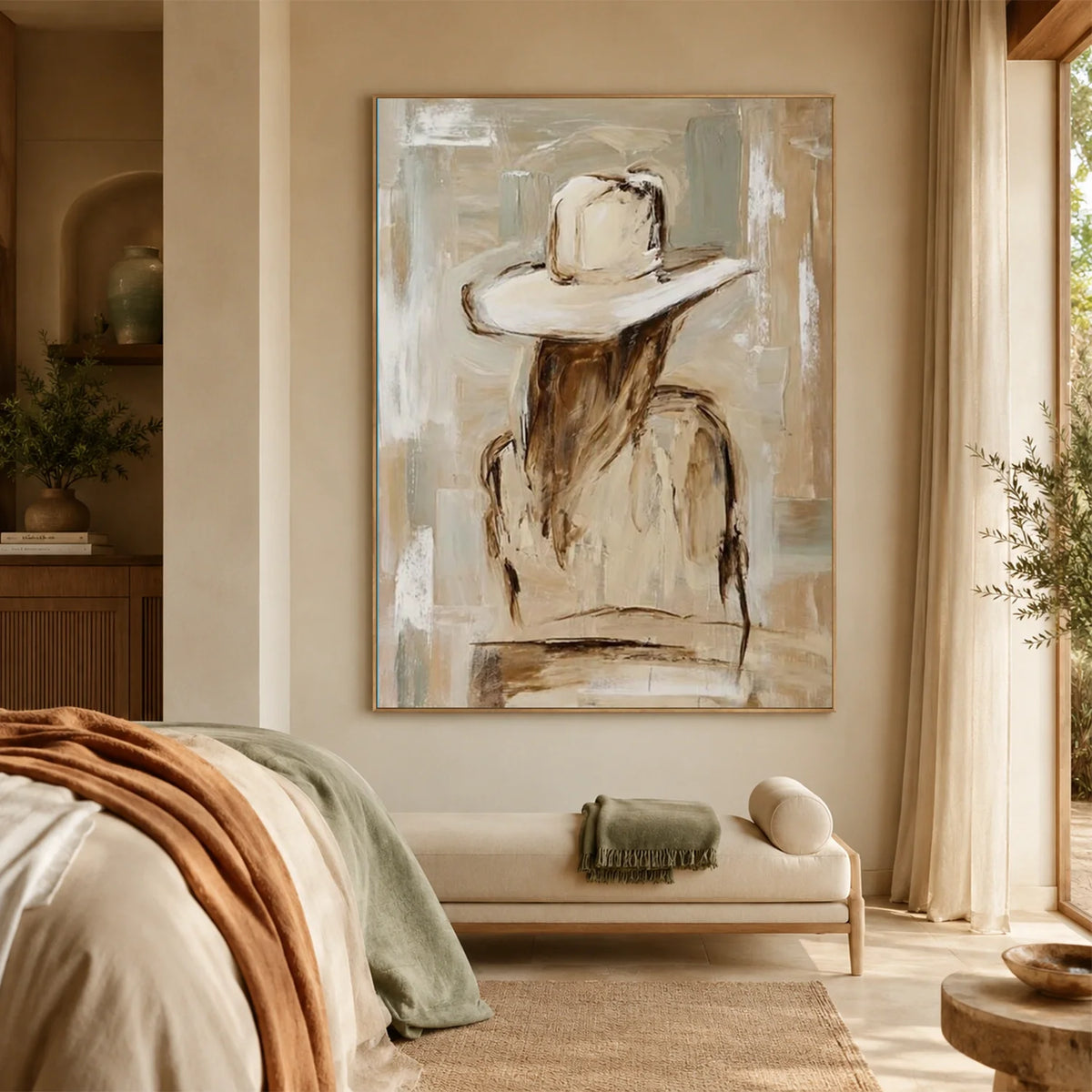
This mindful approach to your environment is exactly what guides the curation and creation of art at Eleanos Gallery. Each original painting is more than a depiction; it is a physical object born from a dialogue between artist, material, and inspiration. The layers of oil paint, the deliberate brushwork, and the choice of substrate are all testaments to a process that values authenticity over mere replication—a core tenet of the wabi sabi philosophy.
💡Tips: Sign up to Eleanos Gallery Newsletter to get 40% OFF. Get all resources, trends, tips, insights from Eleanos Gallery Blogs.

Part 4: How to Make Wabi Sabi Art
how to make wabi sabi art” often expects a tutorial on distressing paper or mixing muted colors. While techniques exist, the true starting point is internal. You are not learning a craft to produce a “wabi sabi object”; you are practicing a craft to experience wabi sabi.
Focus on the Process, Not the Product: Let go of the expectation for a “finished” or “beautiful” outcome. Immerse yourself in the act of making—the feel of the clay, the drag of the brush, the blending of pigments. The value is in the mindful engagement.
Collaborate with Natural Materials and Forces: Use materials that have their own will. Work with handmade paper that buckles, watercolors that bloom unpredictably, or wood that grains uniquely. Leave a piece outside to be touched by rain and sun. Introduce elements of chance and allow nature to be a co-creator.

Practice “Kintsugi” Thinking: Kintsugi, the art of repairing broken pottery with gold lacquer, is a direct application of wabi sabi. Apply this metaphor to your art. A “mistake” or “crack” is not an end, but a new beginning—a unique event in the object’s history to be highlighted, not hidden. A stray brushstroke can become a new path for the composition.
Seek Imperfection and Incompleteness: Actively resist overworking a piece. Stop before you think it’s “perfect.” Allow raw edges, unfinished areas, and hints of the underlying process to remain visible. This “imperfection” invites the viewer in, allowing them to complete the story with their own imagination.
This creative practice is less about output and more about cultivating a sensitive, accepting, and deeply connected state of being. It trains you to see the world—and the art you choose to live with—differently.
💡You May Also Like: Explore the Painting Impermanence Art of Wabi Sabi Meaning
Finding Your Resonance in Art and Life
Wabi sabi, in its truest sense, is an invitation to a deeper relationship with reality. It asks us to slow down, to observe closely, and to find comfort in the fact that nothing is static, nothing is flawless, and nothing lasts forever. In this transient, imperfect state lies unparalleled beauty, quiet dignity, and profound peace.
This philosophy naturally extends to the art we choose to surround ourselves with. A mass-produced print, flawless and identical to ten thousand others, cannot engage in this dialogue. It has no story of its own. In contrast, an original painting is a testament to its unique creation—a frozen moment of human experience, bearing the subtle, honored marks of its making.
At Eleanos Gallery, we believe that art should be this kind of companion: an object with soul, texture, and a story that evolves with time. Our collection of original, handcrafted paintings is created with this resonance in mind. We invite you to explore not just with your eyes, but with your newfound understanding.
Perhaps, within our collection, you will find a piece whose quiet presence, textured journey, and honest expression speaks directly to your own cultivated sense of peace—a true reflection of wabi sabi in your daily life.
✨Explore the collection at Eleanos Gallery and discover art that resonates with depth.




Leave a comment
This site is protected by hCaptcha and the hCaptcha Privacy Policy and Terms of Service apply.